
A quick gesture against another that takes at least twenty seconds: which one truly protects against the viruses circulating this season? Since the pandemic, the bottle of alcohol-based gel has slipped into every pocket and every purse. It has become the very symbol of modern, rapid, constraint-free hygiene. Yet, as the flu re-emerges and vaccination campaigns run at full tilt, scientists remind us of a truth many seem to have forgotten along the way. Between these two everyday habits, only one truly stands out in the face of the most stubborn viruses.
- Handwashing with water and soap for at least twenty seconds mechanically removes viruses, bacteria, and dirt, unlike gel which acts only through chemical disinfection.
- The hydroalcoholic gel loses its effectiveness on visibly dirty hands and remains most useful while on the move, due to the lack of water available.
- In the face of a flu epidemic deemed high in hospitalizations, health authorities recommend combining vaccination and barrier measures, including hand hygiene.
- Why alcohol-based gel has won over our habits
- What scientists reveal about the real action of soap
- The limits of gel against dirt and resistant viruses
Why Alcohol-Based Hand Gel Has Become a Habit
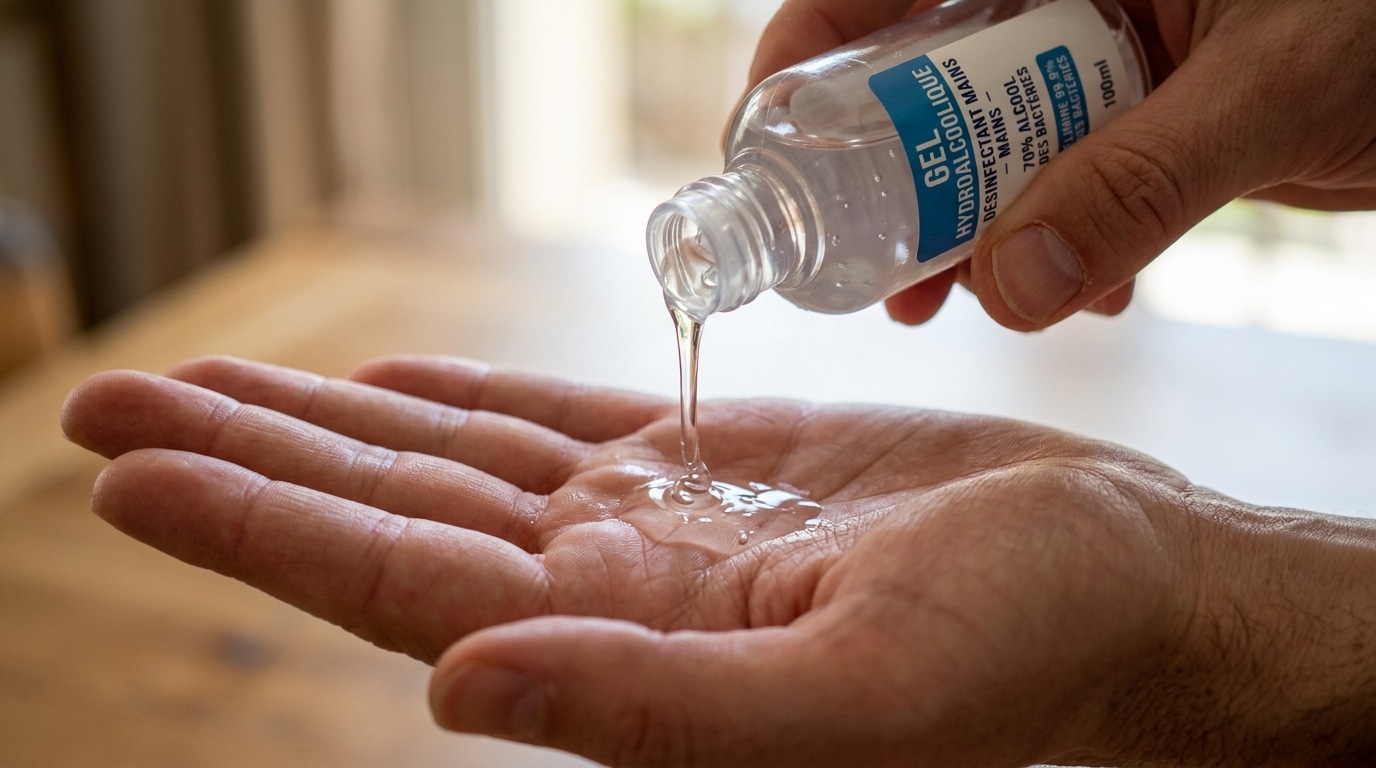
You can’t deny it: gel has changed the rules of daily hygiene. No more need for a water source, no towel required, a simple squeeze of the bottle gives the impression that microbes have been neutralized in seconds. This simplicity has won over people for good, to the point that the reflex has embedded itself far beyond the original sanitary context. And it must be acknowledged that it has real utility in certain precise situations, where soap is simply inaccessible. Here are the cases where gel remains fully relevant:
- In public transport, when no sink is within reach
- While traveling, when traditional washing isn’t possible
- In public places lacking a water source
This current context is by no means insignificant. The latest assessment from Santé publique France describes a flu epidemic of moderate intensity in cities, but high in institutions and in terms of mortality. More than one emergency department visit for flu/flu-like syndrome led to hospitalization last winter, the highest value observed so far. In this climate, the joint vaccination campaign against flu and Covid-19 has begun, reminding us that vaccines alone are not enough: they must be complemented by the well-known barrier measures to limit the spread of respiratory viruses, and hand hygiene is part of them just as much as wearing a mask and isolating sick people. Gel therefore has its place in this toolkit, but certainly not as a single solution.
What Scientists Reveal About the Real Action of Soap
Where gel merely neutralizes chemically, soap acts mechanically and decisively. Its mode of action is almost spectacular at the microscopic scale: it directly attacks the lipid envelopes of viruses and destabilizes bacterial membranes, causing their collapse in just a few seconds. But its effectiveness does not stop there. Soap also eliminates dirt, sweat, and organic substances that can literally serve as hiding places for pathogens. The American CDC confirms this logic: the surfactants in soap physically detach soils and microbes from the skin, and simply rubbing the hands longer during washing strengthens this effect even more. It is precisely this combination of water, soap, and mechanical friction for at least twenty seconds that creates a deep-clean that is hard to match with a gel applied without prolonged rubbing. A 2019 study in the scientific journal mSphere supported this observation, showing that handwashing removed the flu virus more quickly and effectively than a dose of hydroalcoholic gel. Its author, Ryohei Hirose, from Kyoto Prefectural University of Medicine, offers a useful caveat: the protocol compared gel applied without friction to water with rubbing, which somewhat limits the scope of these results. A reminder that a simple, well-executed gesture is sometimes better than a miracle product misused.
The Limits of Gel in the Face of Dirt and Resistant Viruses
Gel may boast a high alcohol concentration capable of neutralizing many germs, but its effectiveness drops sharply as soon as hands are truly dirty. When faced with grease, soil, or organic matter (sweat), it loses much of its power since it disinfects without ever cleaning in depth. That is why health authorities state clearly: gels are less effective if hands are visibly dirty; water and soap are needed to remove both embedded grime and the microbes hiding in it. That is why, in environments such as nurseries, hospitals, kitchens, or after gardening and DIY, traditional washing remains the essential reference. The nuance, however, deserves to be noted, because not everything is as clear-cut as it seems. A 2018 Spanish study in Pediatrics, conducted among 911 children aged three years or younger in daycare, even observed the opposite: the group using soap showed a 21% higher risk of respiratory infections compared to the gel group. A result that reminds us that effectiveness also depends heavily on the quality of the gesture, its duration, and the context of use, not solely on the product chosen. Still, for deep cleaning capable of overcoming the toughest dirt, water and soap create a synergistic effect that keeps scientists’ edge against resistant viruses.
Ultimately, it isn’t about picking a side once and for all, but about knowing which gesture fits which moment. Soap remains the reliable choice for a thorough home-cleaning, while gel remains a valuable ally on the go, when water is not available. A timely reminder as winter viruses take advantage of any lapse to circulate a little more quickly.
