
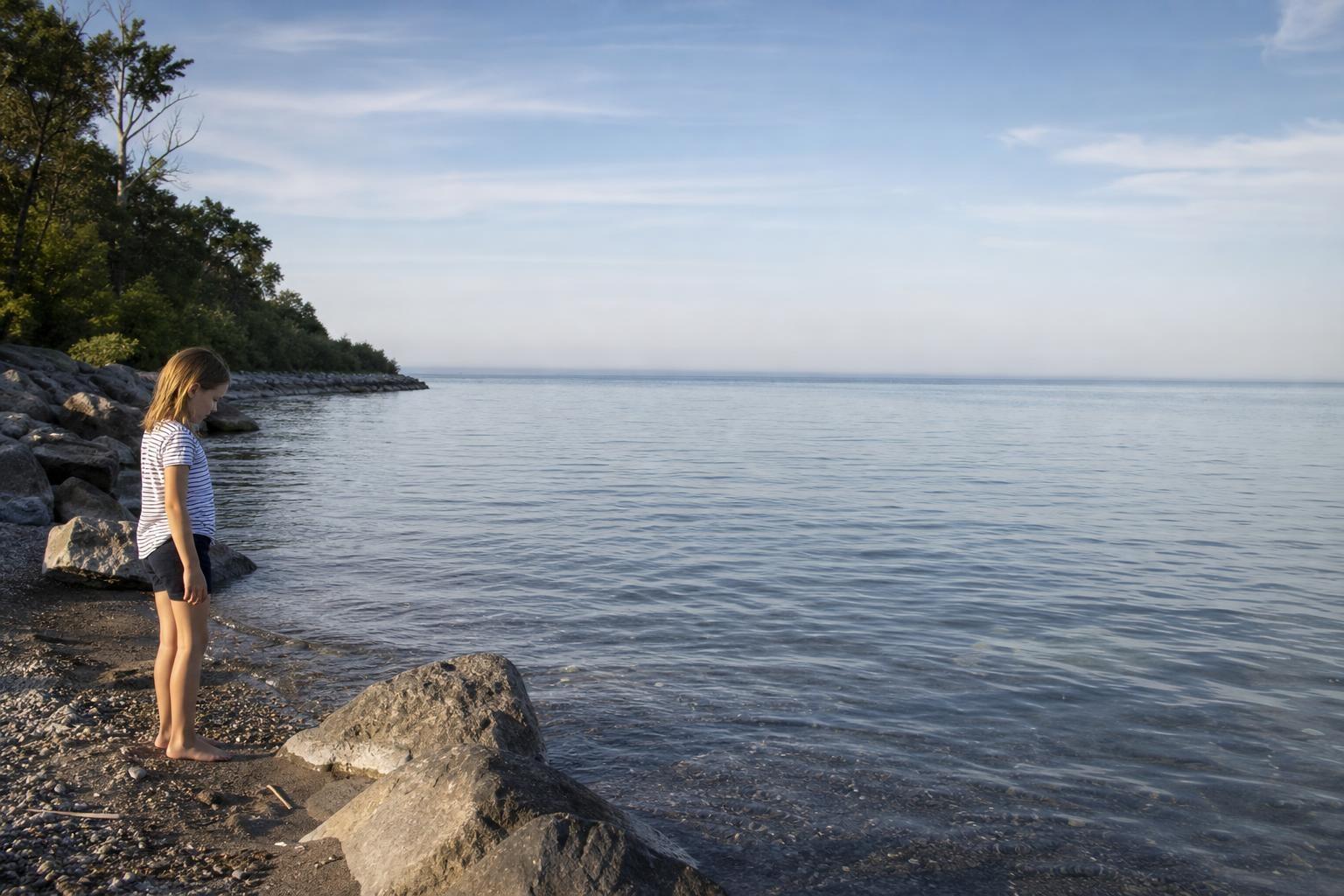
Stand on a Lake Michigan pier at dawn and you’ll notice something quietly strange. The water is restless, yet it isn’t keeping the ocean’s familiar beat. There’s no predictable, twice‑daily rise and fall. Instead, the surface whispers and shifts, nudged by wind, air, and the shape of the basin. “Technically, they do have tides,” as one scientist likes to say, “just too small for everyday eyes.”
Gravity is working — just not loudly
The Moon and Sun still pull on these waters, and the lakes do respond in kind. But the astronomical tide here is typically only a centimeter or two, sometimes up to a few centimeters under the right geometry. That’s inches, not feet — easily masked by a gusty afternoon breeze or a passing front. Think of it as a murmur of gravity under a louder conversation.
Scale and resonance matter
Tides become dramatic when a basin’s size and depth let the water resonate with the 12‑hour lunar rhythm. The Great Lakes aren’t tuned to that note. Their lengths, widths, and average depths don’t align with the tidal wavelengths set by gravity and Earth’s rotation, so there’s no efficient amplification. “It’s like pushing a swing at the wrong moment,” and the energy just doesn’t build.
Wind and pressure take over
Over the lakes, wind regularly does what the Moon can’t. Prolonged gusts push water toward one shoreline, raising it on the downwind side while lowering it on the upwind side — a setup that can reach decimeters or more during strong storms. Air pressure adds its own thumb on the scale: lower pressure lets the surface bulge upward, while higher pressure presses it down. Fast‑moving squall lines can trigger sharp, tsunami‑like surges (meteotsunamis) that arrive without a lunar schedule. “If it feels sudden on the lakes, it’s probably the weather, not the Moon.”
Seiches: the slosh you actually notice
When wind or pressure piles water to one end of a lake and then relaxes, the whole basin oscillates — a standing wave called a seiche. Water sloshes back and forth for hours, sometimes longer, gradually fading like a bell’s lingering tone. These swings can move levels by many inches, even feet, and they confuse anyone expecting a tidy timetable. The rhythm isn’t tidal; it’s the basin’s natural pendulum, set in motion by the weather.
What actually moves levels day to day
If you’re near the shore, here’s what you’re most likely to feel:
- Persistent wind driving water setup and setdown
- Rapid pressure changes nudging levels up and down
- Seiche oscillations after fronts, gales, or storms
- Short, sharp meteotsunamis from fast pressure jumps
- Slower seasonal shifts from rain, snowmelt, and evaporation
Beaches without the ocean’s beat
Walk a sandy strand on Superior or Huron and the difference is instantly physical. There’s no reliable high‑and‑low appointment, just a living edge that advances or retreats with the breeze and the day’s systems. Marina operators and coastal engineers watch forecasts, not tide tables. Harbors can swing surprisingly as a seiche runs its course, and quiet bays can jump a few inches when a line of storms arrives. “The lake breathes,” locals will say, “but not on the Moon’s schedule.”
Salt doesn’t set the rules here
It’s tempting to think freshwater changes the game, but the key players are geometry and forcing, not salinity. Salt affects density and mixing, yet the size, depth, and shape of the basin decide whether tides can resonate. On these lakes, that structural math keeps the astronomical signal small and the weather signal large.
Numbers behind the quiet
Across the system, the astronomical tide is usually in the 1–5 cm range — measurable with precise gauges, but lost under wind‑driven swings that can be ten to a hundred times larger. Seiches often have periods of several hours, and during certain storms, rapid surges can rise and fall in minutes. “Think centimeters, not feet,” remains the simplest mantra for setting expectations along these shores.
What this means for your visit
Plan with the forecast, not a tide chart. Check wind direction, watch pressure trends, and note how embayments and harbors can amplify seiche motion. On placid mornings the lake may seem perfectly still, only to creep up the beach by afternoon as a breeze stacks water downwind. The rhythm is there — just subtle, weather‑written, and wonderfully local.
In short, the lakes do answer the Moon, but in a whisper. The loudest voice you hear on their shores belongs to wind, pressure, and the basin itself — a freshwater orchestra playing its own, inland tune.
