
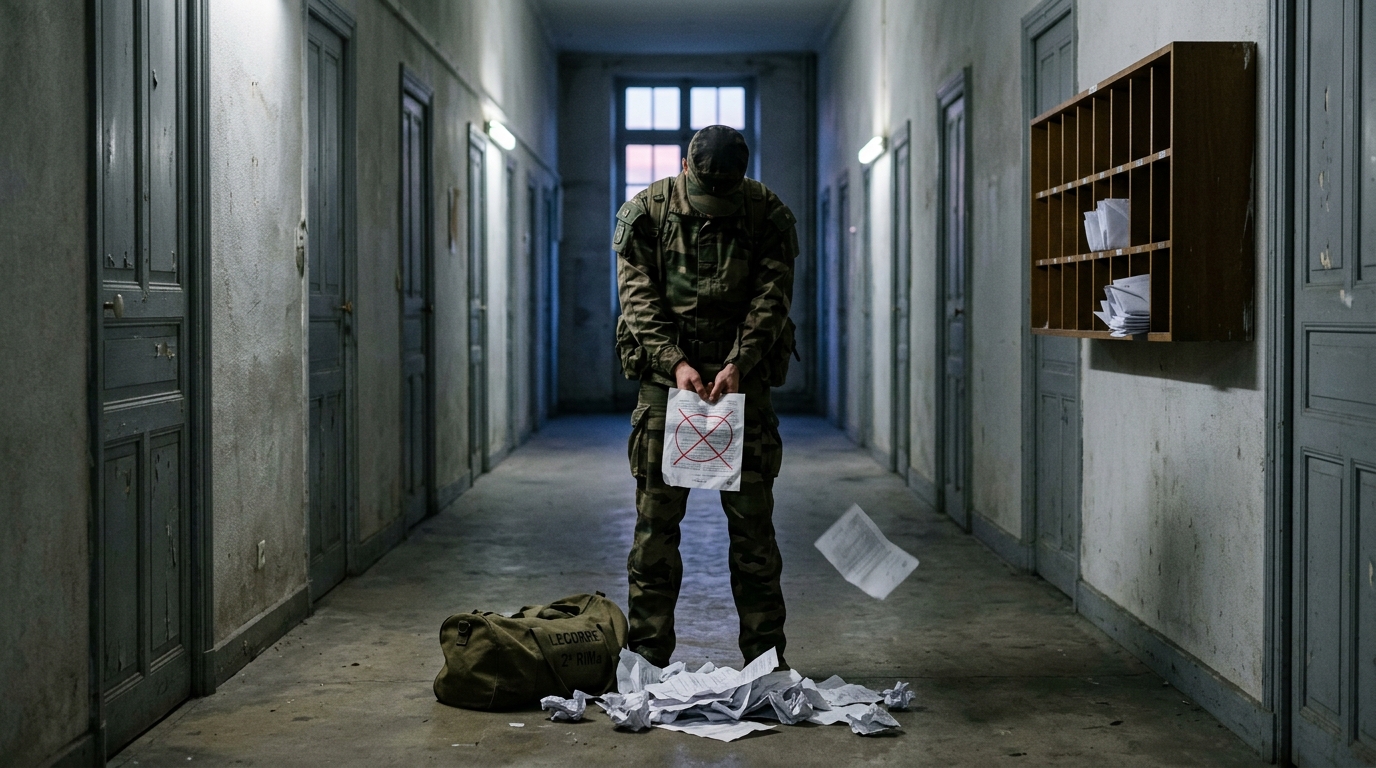
Imagine receiving a salary reduced by several hundred euros with no explanation, or having to reimburse a bonus paid in error two years earlier. This is what thousands of French military personnel endured for nearly a decade. The cause: Louvois, a payroll software that would swallow about a billion euros without ever functioning properly.
- The Louvois software, developed in-house by the Ministry of Defense from 1996, cost about 80 million euros and never worked correctly.
- Payroll errors led to 47 million euros in regularisations and up to 565 million euros in undue payments notified in 2018, some of which had to be abandoned.
- Louvois was replaced by Source Solde, deployed gradually across the armed forces until 2021, bringing the total bill for the whole affair to around one billion euros.
- A software meant to modernize the army, now the symbol of a one-billion-euro fiasco
- Miscalculated pay for years: when French military personnel paid the price of state software bugs
- Louvois shelved, Source Solde stepping in: the final bill of a software project out of control
A software meant to modernize the army, now the symbol of a one-billion-euro fiasco
Everything began with a premise that seemed sensible. In 1996, the Ministry of Defense launched a project named Louvois, an acronym for a unique inter-service payroll software. The aim, on paper, was simple: to unify the calculation of pay for all service members, whether in the Army, the Navy, the Air Force, or the joint services.
“The problem is that the ministry chose to develop largely in-house. It handled both the project ownership and the execution of the work, in other words it drafted the specifications and developed the calculation engine itself.” The Cour des comptes would later call this choice a major error for a software package of such complexity, akin to trying to build a submarine without ever consulting a specialized shipyard.
The numbers are dizzying. From 1996 to the early 2010s, spending directly tied to developing the calculator reached 47 million euros. Another 18 million euros were spent in a frantic bid to make the machine work. The Cour des comptes, for its part, estimated the total direct cost of the project, including outsourcing and human resources, at 80 million euros. And that was only the beginning of the tally.
Miscalculated pay for years: when French service members paid the price of state software bugs
Once deployed, Louvois did not deliver on its promises. Far from it. Service members found paychecks halved, others received bonuses they had never asked for, and some waited months before receiving any payment at all. The software meant to make the armies’ payroll reliable became, for thousands of households, a source of monthly anxiety.
To fix the most glaring errors, the state had to pay 47 million euros in regularisations to the affected military personnel. At the same time, it demanded the repayment of 363.2 million euros in overpayments to civilians who had received money by mistake, sometimes without even realizing it. It is hard to imagine a better summary of administrative chaos than this absurd mechanism of paying too much, then reclaiming the excess.
The situation worsened over time. By spring 2018, the cumulated amount of unduly payments notified since Louvois came into service exceeded 565 million euros. Of this sum, about 390 million euros had been recovered, leaving a balance of roughly 84 million euros still outstanding. The Ministry of the Armed Forces eventually wrote off the oldest debts, deemed impossible to recover. A confession of failure that speaks volumes about the scale of the disaster.
Louvois shelved, Source Solde stepping in: the final bill of a software project out of control
In the face of the scale of the malfunctions, the Minister of Defense ultimately decided to put an end to the project. During a visit to Varces, he officially announced the decision to replace Louvois, after concluding that the software would never operate satisfactorily. A rare verdict of failure for a public IT project of such magnitude, and it marks the true turning point of the case.
The replacement is called Source Solde. Its development and deployment were entrusted to a consortium led by Sopra, in partnership with HR Access. The contract, including ten years of maintenance, amounts to 128 million euros to manage the payroll of 250,000 service members. A substantial sum, but far more controllable than the budgeting drift of its predecessor.
Deployment occurred gradually, by service branch. The Navy opened the ball with its 39,000 personnel brought under the new system. The Army followed, then in the final stage the Air and Space Force and the Armed Forces Health Service, with payroll calculations fully handled by Source Solde from 2021. This transition alone is estimated at 152.5 million euros. When adding development, regularisations, unduly paid sums, and replacement, the total bill of this saga approaches one billion euros, according to parliamentary estimates.
It is hard not to view this as a lesson for all major state IT projects. Louvois will stand as the example of a project launched without sufficient technical expertise, conducted without safeguards, and whose final bill far exceeded the price of a mere software bug. As other administrations modernize their digital tools, this military fiasco remains a useful reminder: technology does not forgive improvisation or lack of oversight.
