
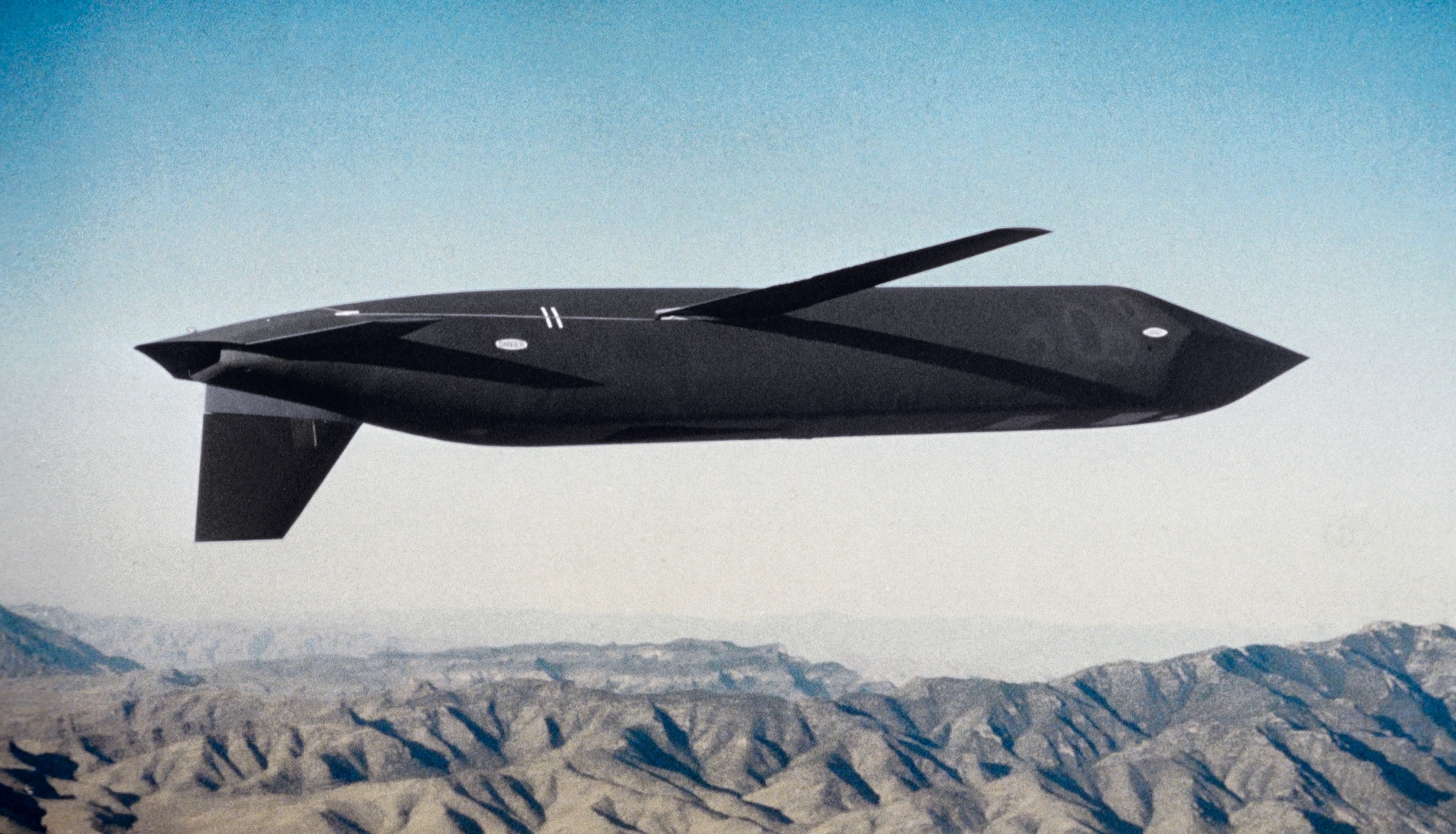
Eight Russian cruise missiles struck the city of Vinnytsia, in central-western Ukraine, completely destroying the airport. According to Reuters, cruise missiles may also have hit other Ukrainian targets in recent days, including a building housing the city council in the eastern city of Kharkiv on Wednesday. But what exactly are we talking about, and how far can these missiles travel?
Ballistic and Cruise Missiles
In times of war, one often hears about ballistic missiles and cruise missiles, but what distinguishes the two? A ballistic missile is a weapon capable of carrying one or more warheads along a ballistic trajectory, as the name indicates. This means that once its fuel is burned, the missile continues moving according to two parameters: gravity and the velocity gained from the initial thrust (much like a rifle bullet). Consequently, its direction cannot be altered. Ultimately, gravity will bring the missile (and its explosive payload) back to the ground, toward its target.
Cruise missiles, by contrast, are unmanned aerial vehicles that are propelled throughout their flight while remaining within the Earth’s atmosphere. These missiles can be launched from ground, air, or sea platforms and, like ballistic missiles, can be armed with a nuclear or chemical warhead. They are employed to strike terrestrial targets.
According to the Center for Arms Control and Non-Proliferation, these systems also have the ability to fly very low, which makes their detection extremely difficult. Note that most of these missiles are self-guided, but some, more advanced, also allow a remote operator to guide them manually as they approach the target (or to interrupt the strike).
What ranges do they cover?
The most modern cruise missiles are capable of traveling at high subsonic speeds (below the speed of sound), at supersonic speeds (faster than the speed of sound), and at hypersonic speeds (at least five times the speed of sound).
The former can have ranges as modest as tens of kilometers, while certain variants, such as the Russian Kh-101, offer a maximum range of over five thousand kilometers. Hypersonic missiles, on the other hand, can cover hundreds to thousands of kilometers or more, whereas most supersonic missiles have ranges of a few hundred kilometers. Some intercontinental versions can, however, travel thousands of kilometers. In development, the Russian Kalibr-M, for instance, would have a range of more than 4,300 km.
