
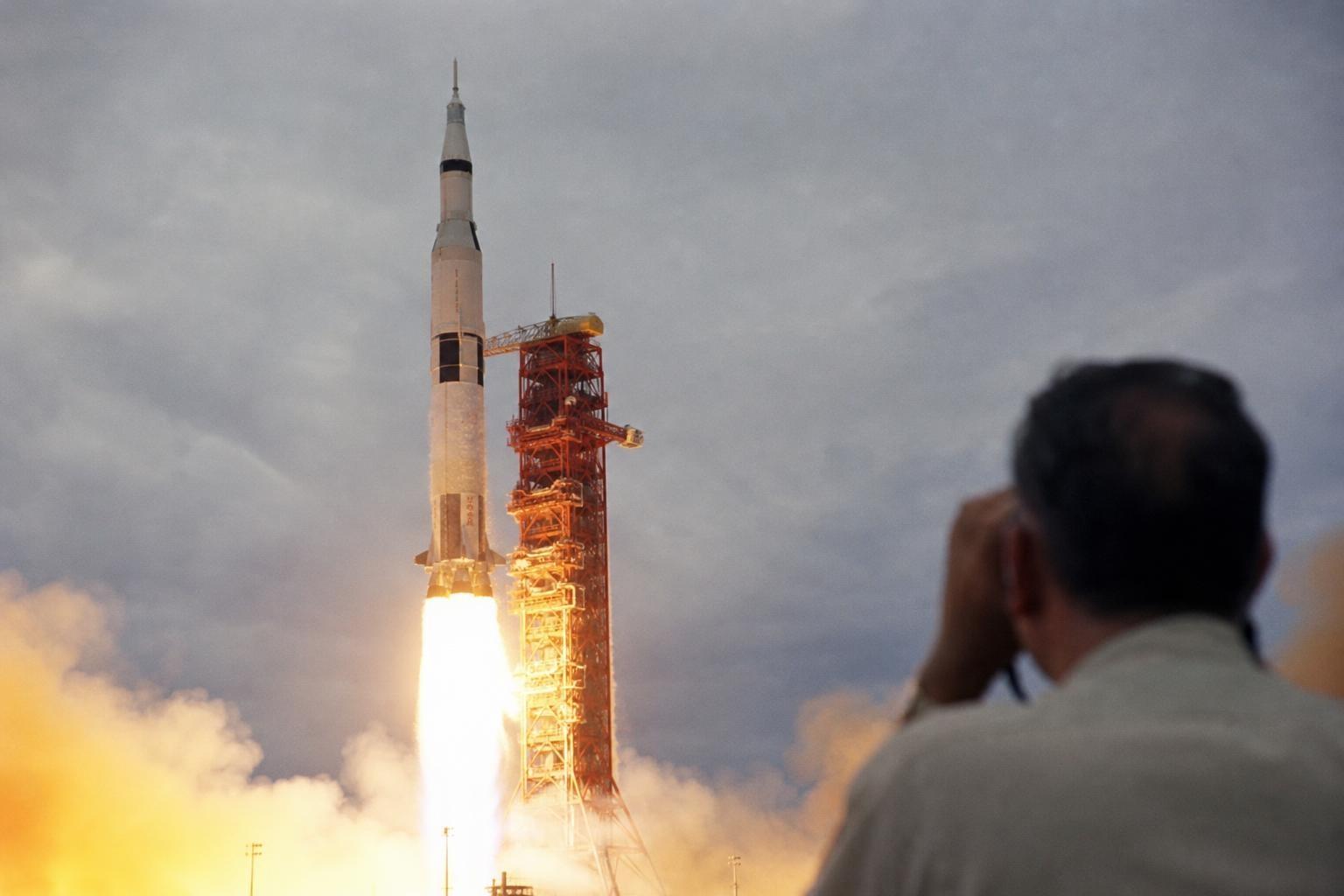
A century ago, a bold idea met a skeptical headline, and the ripples lasted nearly half a century. In the early days of modern rocketry, a quiet physics professor from Massachusetts imagined machines soaring through the vacuum of space, far beyond any earthly air. The world shrugged, a famous newspaper scoffed, and the march of evidence kept going anyway.
In July 1969, as three astronauts sped toward the Moon, a different kind of trajectory reached its destination: the arc from ridicule to recognition. History, it turned out, had a long memory—and impeccable timing.
From pamphlet to provocation
In 1919, Robert H. Goddard published “A Method of Reaching Extreme Altitudes,” a slim, precise, uncompromising work of physics. He laid out multistage rockets, liquid propellants, and flight in the vacuum—not fantasy, but coherent engineering. The document was cool where the public wanted spectacle, and technical where the press craved pizzazz.
He was no showman, only a meticulous experimenter, the sort who measured flame lengths and nozzle angles, then went back to the shop.
The paper that scoffed
In January 1920, a New York editorial waded in with unearned certainty. It accused Goddard of misunderstanding the very basics, sneering that he “does not know the relation of action to reaction, and the need to have something better than a vacuum against which to react—he seems to lack the knowledge ladled out daily in high schools.” The line landed with the weight of a confident chuckle and a public scolding**.
Goddard, wounded but stubborn, kept his head down and his tools out. “Every vision is a joke until the first man accomplishes it,” he later observed, a line as dry as his shop ledgers and twice as sharp.
Proof, piece by piece
On March 16, 1926, Goddard launched the first liquid-fueled rocket from a snowy field in Auburn, Massachusetts. It rose, sputtered, and proved principle—Newton’s third law does not stop at the edge of the atmosphere. More launches followed, then patents, then skeptical reports that invited more careful tests.
By the 1930s and 1940s, the logic of nozzles and the chemistry of propellants went from fringe to frontier. During and after World War II, the global race for range, thrust, and guidance made a desert of old doubts. The physics never blinked.
An apology at escape velocity
On July 17, 1969, with Apollo 11 already past the atmosphere, the paper returned to its own words. In a small item titled “A Correction,” it wrote: “Further investigation and experimentation have confirmed the findings of Isaac Newton’s Third Law of Motion, and it is now definitely established that a rocket can function in a vacuum as well as in an atmosphere. The Times regrets the error.”
The phrasing was spare, a late bow amid roaring boosters and orbiting proof. Even as television showed a silent Earth dwindling through the command module window, the sentence finally matched the math.
What this moment teaches
The gap between a lab bench and a cultural belief can be astonishingly wide. The correction that chased a single editorial across 49 years offers a brief, bracing syllabus for anyone who argues in public about science:
- Humility beats certainty, replication beats rhetoric, and experiments beat even the best editorials.
How science moves, and how we talk about it
Real progress is usually quiet, then suddenly loud. A single test fires, then a dozen, then a program, and only much later does the world notice the work behind the moment. By the time the cameras arrive, the key debates are often settled on benches with solder-burned hands.
Journalism, for its part, is a first draft, not a final judgment. It can amplify ideas, but it can also flatten nuance. The healthy posture is skeptical yet curious, wary yet open, with room for being gloriously, publicly wrong—and then righting the record.
Goddard’s shadow on the Sea of Tranquility
When Apollo’s descent engine throttled above the lunar surface, you could hear, beneath the hum of telemetry, the oldest argument ending. Rockets do not push on air; they push on the exhaust, and the exhaust pushes back on the rocket. The chain is as short as it is decisive, and it works just fine in the infinite stillness.
Goddard did not live to see that moment, but it bore his fingerprints: the cooled nozzle, the balanced stages, the serene confidence that equations keep their promises. “The dream of yesterday is the hope of today and the reality of tomorrow,” he once wrote, and the line reads less like a motto than a map.
Long before a footprint pressed into dust, a small correction found its place in the public record. It was modest, overdue, and exactly right—a reminder that the universe is not swayed by tone, only by truth.
