
Each center of the American SAGE network housed an IBM AN/FSQ-7 computer weighing 250 tons, containing 60,000 vacuum tubes and drawing up to 3 megawatts of power, roughly the electricity consumption of a small city. This machine, the largest ever built using discrete components, was already technically obsolete five years after it went into service. Yet two units kept running until 1983, a quarter of a century after their design.
Key takeaways
- A computer heavier than a whale that consumed as much power as an entire city to watch the sky
- It had become outdated even before full installation, but no one dared to stop it
- Two units held on for 25 years thanks to a trick dating from before modern computing
A Monster Born to Watch the Sky
We are in the midst of the Cold War, and the United States military seeks a way to detect Soviet bombers before they reach American soil. The answer is SAGE, for Semi-Automatic Ground Environment. The system comprised 23 command centers, including one in Canada, as well as three combat centers spread across the United States. Each of these reinforced concrete bunkers concealed a colossal electronic brain.
Inside the command centers were two AN/FSQ-7 computers, each occupying 7,500 square feet and built from 60,000 vacuum tubes, 175,000 diodes, 13,000 brand-new transistors, and 256 KB of magnetic-core memory. To give a sense of the installation’s scale, a typical SAGE building, like the one in Duluth, Minnesota, was described as a windowless four-story concrete blockhouse, with 18-inch-thick walls, and required the installation of a genuine power plant. In Duluth as well, Western Electric had installed six 650-kilowatt diesel generators, providing roughly 3.9 megawatts of capacity to meet a demand of about 3 megawatts. A computer that demanded its own power plant: it doesn’t get more extravagant than that.
In terms of processing power, the machine remained modest by today’s standards. Its performance hovered around 75,000 instructions per second, the equivalent today of a low-end microcontroller you might find in a connected coffee maker. But in 1958, this rate was enough to real-time process the data from dozens of radars and to display the trajectories of hundreds of aircraft on cathode-ray tube screens.
Two Computers to Never Stop
Entrusting 60,000 vacuum tubes to monitor the American sky was almost a leap of faith. These components—fragile, energy-hungry electronic parts—broke down regularly. IBM therefore designed each center with full redundancy. Only one AN/FSQ-7 operated at a time, the other kept in an active standby to minimize downtime.
This redundant architecture wasn’t simply a safety gadget; it was the system’s keystone. Despite a low individual failure rate thanks to a quality control process called marginal checking that detected tired tubes before they failed, every SAGE site included two redundant computers, one in perpetual active standby, allowing for remarkably high availability, sometimes reaching 99%. Switching from one side to the other also enabled maintenance without ever interrupting sky surveillance, a bit like a surgeon taking turns with a colleague to never close the operating room.
The operators’ comfort was not forgotten either. The system included around a hundred consoles, including the OA-1008 situational display equipped with an optical wand, not to mention, a notable detail for the era, a built-in lighter and ashtray at the workstation. It’s hard to imagine today an engineer lighting a cigarette in front of a strategic air defense console.
Outdated by 1963, Indestructible until 1983
The paradox is striking: as soon as the network was completed, the technology it carried was already passé. The vacuum-tube SAGE network was finished, and obsolete, by 1963. Transistors, followed by integrated circuits, were already making large tube-based computers obsolete, energy-hungry and costly to maintain.
Nevertheless, the system remained in service for two more decades. SAGE continued to be the backbone of NORAD’s air defense into the 1980s, at a time when the tube-based FSQ-7s were becoming increasingly expensive to maintain and entirely outclassed. Replacing such a network, with its concrete bunkers and dedicated power plants, would have been prohibitively expensive to do casually. So they kept the machine running, replacing a faulty tube one by one.
The end came in stages. The Joint Surveillance System (JSS) was sufficiently advanced by mid-1983 to allow the official retirement of SAGE, replaced by Hughes AN/FYQ-93 computers that were markedly more modern. On the ground, closures rolled out: the command center in Duluth, Minnesota, officially closed in 1983 alongside the Air Force base, while other sites, such as Syracuse, held on for another year before fading into abandonment.
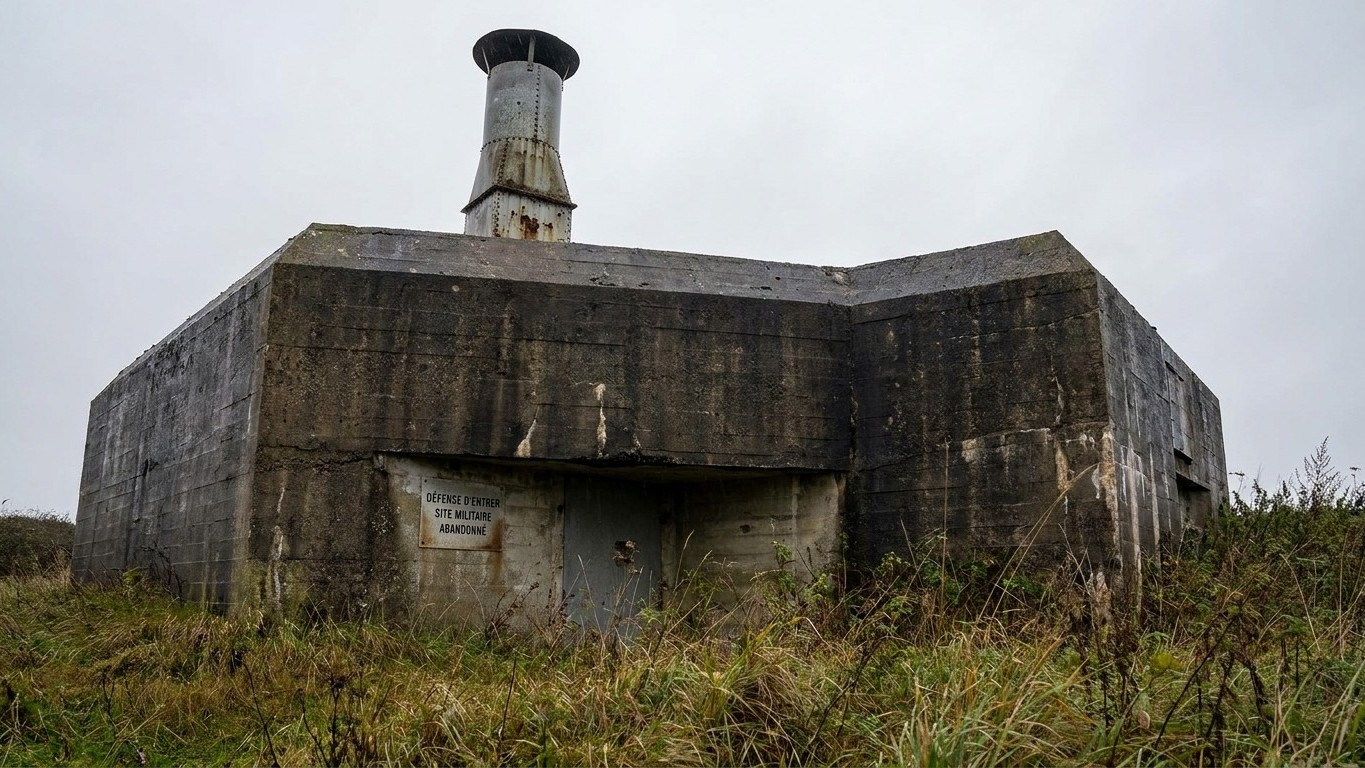
What stands out, in retrospect, is less the technical feat than the longevity of a device condemned from birth. A computer designed to last five years before becoming obsolete ultimately endured twenty-five, sustained by hardware redundancy built in from the start and by the absence of affordable replacement options. Several of these vault-like facilities survive today, repurposed as research institutes or commercial spaces, concrete remnants of a time when defending a continent required building your own power plant beside your computer.
Sources: en.wikipedia.org | ss.sites.mtu.edu
