
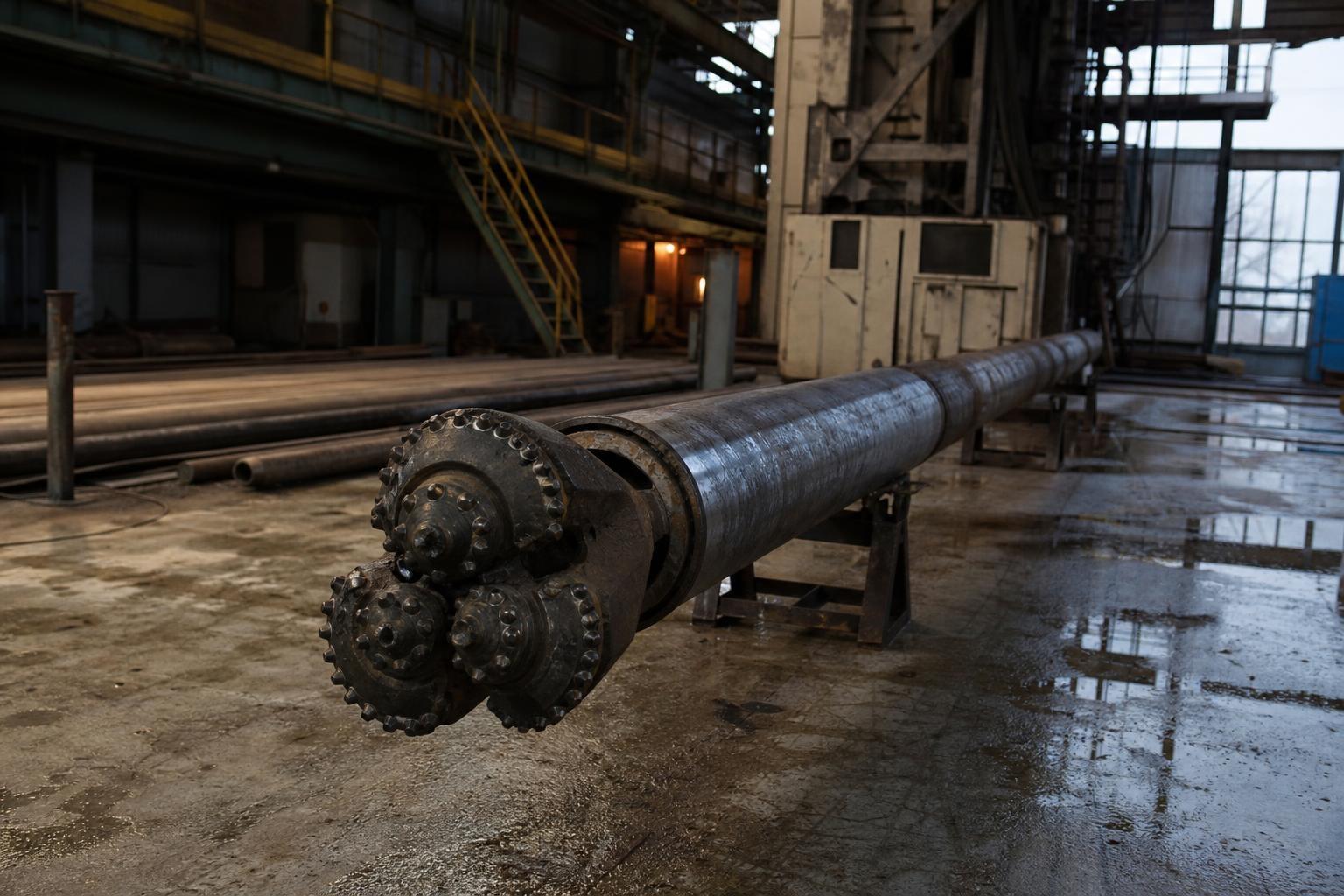
They aimed to listen to the planet. With a drill, a dream, and Soviet nerve, engineers chased the deep unknown beneath the Kola Peninsula. The hole reached 12,262 metres, but the real barrier wasn’t stone. It was a tangle of heat, physics, and the fragile limits of human tools.
The audacious plan
The project had a deceptively simple goal: keep turning the bit until the Earth started telling secrets. Geologists wanted to sample the ancient crust, test seismic theories, and rewrite maps of the planet’s interior.
Launched in the 1970s, the effort married experimental technology with Cold War ambition. “If space was for show, the deep Earth was for knowledge,” one observer quipped. The Kola Superdeep Borehole became a quiet epic of scientific endurance.
Pushing past expectations
Early metres fell quickly. The rig chewed through gneiss and granite, curving into a long, spiraled keyhole toward the lower crust. Crews swapped out motors, calibrated mud, and learned to keep the slim drill string alive at terrifying lengths.
By the mid-1980s, they were in uncharted territory. Predictions said the bottom would be near 100°C; instead, instruments screamed past 180°C. “We didn’t expect the Earth to be this hot, this fast,” echoed through the site’s cramped control room.
When heat beats steel
What finally stalled progress wasn’t granite. It was the way high temperature turns steel into a sluggish, creeping thing. Drilling mud thinned, electronics balked, and the string began to wander under its own tortured weight.
Friction rose; the borehole narrowed. Tool joints deformed; sensors died young. A spectacular failure of the drill string near the end shredded months of careful work. “The rock wasn’t our enemy,” a driller said. “Our hardware was.”
The heat also rewrote the budget. Specialized bits and custom metals burned money as eagerly as they burned out. After the Soviet collapse, the project’s political cover and steady cash flow ebbed away.
What they found down there
Despite the brutal conditions, the hole returned a treasure of surprises. The crust didn’t line up with textbook layers. A famous seismic boundary expected to herald basalt turned out to be a change in rock behavior, not rock type.
- Microscopic, carbon-bearing fossils from ancient marine life appeared in metamorphosed rocks more than six kilometres down.
- Pockets of chemically bound water emerged at depths once thought too tight for fluids to survive.
- Fractures and stress signatures showed the crust as a restless, heterogeneous machine—not a neat, layered cake.
- Temperatures soared to roughly 180°C at the bottom, a gradient far steeper than many early models allowed.
- The Moho—the crust-mantle boundary—remained elusive, reminding scientists that seismic signals don’t always equal material changes.
Myths, media, and meaning
With a name like “Superdeep,” legends were inevitable. Tapes of screams, “doors to hell,” and other lurid fantasies bubbled up in the press. None were real. What the team actually heard were tool vibrations, fluid flows, and the hard hum of our own machinery.
The truth was stranger and more useful. The hole proved that the Earth keeps its counsel through temperature, pressure, and unexpected chemistry. “Every metre down was a lecture,” a geologist might have said—on time, stress, and the limits of our instruments.
Engineering a path into the unknown
Drilling that deep is a choreography of failure management. Bits must stay sharp, mud must carry cuttings without boiling, and the slim steel spine must not corkscrew into metallic taffy. Downhole tools must measure without melting.
Engineers improvised: stronger alloys, smarter telemetry, and redesigned mud systems. The hole meandered in a controlled arc, a serpentine compromise with geology and gravity. Each kilometre taught hard lessons about how materials truly behave at the edge of feasibility.
Why it still matters
The borehole didn’t give us a neat map of the deep crust. It gave us something better: constraints. Seismic interpretations grew more honest. Thermal models broadened their ranges. Drilling technology absorbed a generation’s worth of wisdom about heat and depth.
Modern geothermal ambitions, ultra-deep hydrocarbons, and even planetary science borrow from these dusty reports. “The rock held stories we weren’t prepared to hear,” one might say. We’re now building tools fluent in that harsher language.
In the end, the greatest obstacle below Kola wasn’t hardness. It was the Earth’s quiet insistence on physics—heat that saps metal, pressure that warps plans, and complexity that laughs at simple diagrams. The hole stands capped, but the questions it opened still run hot, just beneath our feet.
