
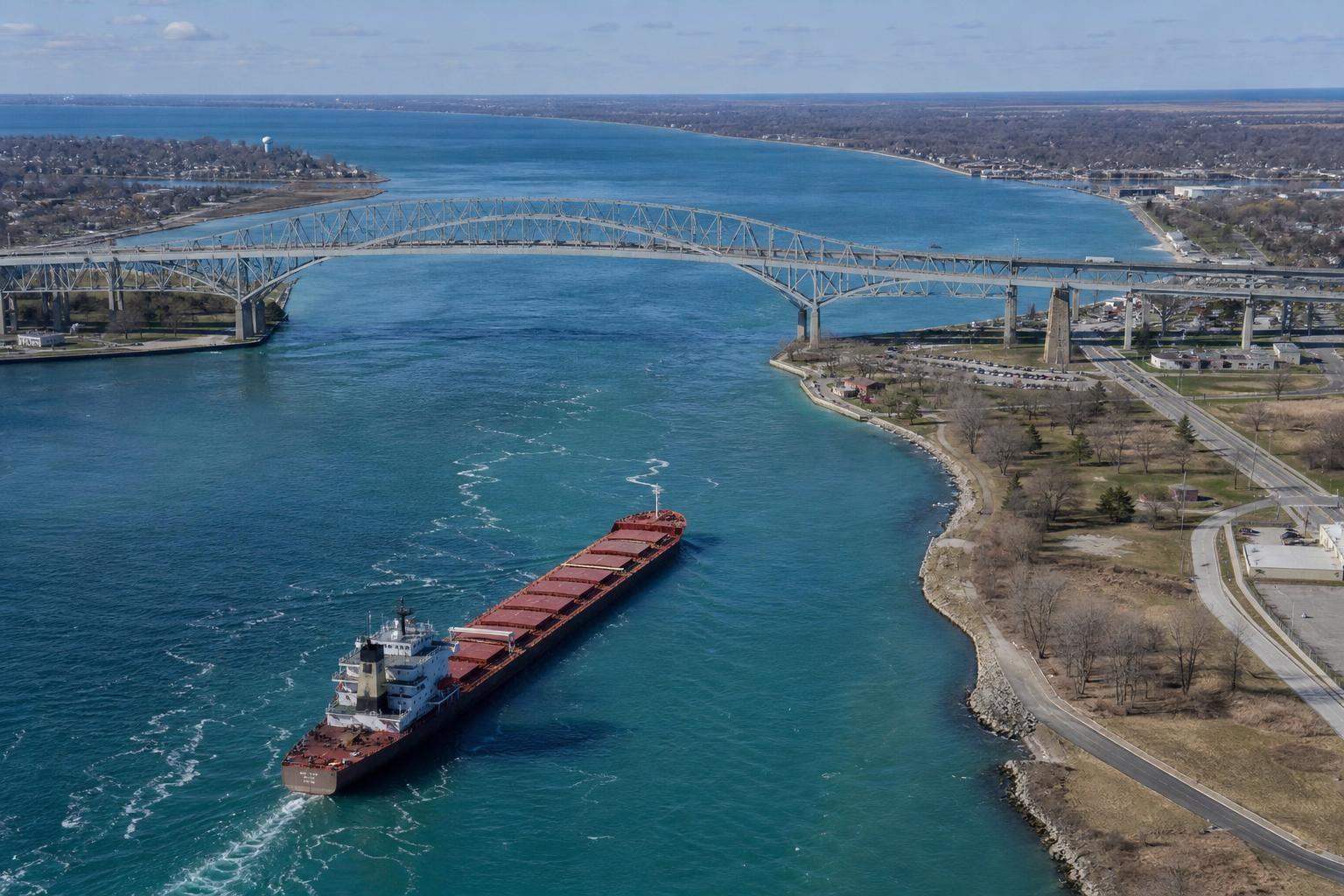
From orbit, the Great Lakes look like inland seas. Up close, their scale rewrites what we mean by freshwater. They anchor weather, economies, and identities across two nations.
An inland ocean hiding in plain sight
This basin holds a staggering share of North America’s surface freshwater. It’s enough to blanket the contiguous United States in roughly ten feet of water. That single fact resets our sense of abundance and our duty of care.
“Water this vast can feel infinite, but it isn’t limitless.” Glacial power carved these depths, then left a legacy we still inhabit. The basin’s five lakes function as one circulatory system, connected yet distinct.
The clock of renewal
While the volume is immense, the turnover is tiny—well under a percent in a typical year. In hydrologic terms, that’s a whisper, not a roar. Fresh inputs from rivers and rain inch their way through an enormous reservoir.
Residence times vary by lake, revealing a layered tempo. Superior holds water for well over a century, while Erie cycles in a handful of years. “What goes in today can shape tomorrow for generations,” runs a quiet warning.
This slowness is both shield and risk. It mutes short‑term shocks yet preserves long‑term scars. In a slow system, mistakes get stored, not erased.
Why slowness matters
With such inertia, pollution behaves like a memory, not a moment. Excess nutrients can seed algal blooms that recur like unwanted seasons. Toxins that bind to sediments may linger in dark pockets for decades.
Climate adds new layers of complexity. Warmer waters stratify longer, starving deep layers of oxygen. Ice cover becomes less reliable, reshaping evaporation and storms. “When the thermostat nudges up, the whole script changes.”
At the same time, these lakes stabilize regional weather and store planetary coolth. They are buffers and beacons, vulnerable and vital. Their patience is a gift we can quickly spend.
Human hands on a slow system
Cities drink, farms irrigate, ships haul steel and grain. Canals and diversions redirect flows, knitting watersheds that once were separate. Each intervention writes a small clause into a very long contract.
Invasive species found doors we opened: zebra mussels, quagga mussels, round goby. They filter, compete, and reshape food webs from plankton to predators. Microplastics drift like synthetic snow, nearly everywhere we look.
“Abundance breeds complacency, until it doesn’t,” a hard‑won lesson echoes. Governance here is necessarily binational, braided through treaties, compacts, and communities. Sovereign Indigenous Nations carry knowledge that predates every modern map.
What real stewardship looks like
Because renewal is slow, prevention beats repair, and foresight outruns regret. Practical steps are neither mysterious nor easy. They ask for steady discipline, not sudden heroics.
- Track nutrients with precision, and reward farming that keeps phosphorus on fields, not in bays.
- Fix aging infrastructure so storms don’t trigger sewage overflows.
- Tighten ballast and canal controls to block invasive hitchhikers.
- Restore coastal wetlands that sponge floods, filter water, and shelter spawning grounds.
- Fund long‑term monitoring, because what you don’t measure you can’t manage.
Each action is a valve on a system that can’t change fast. Tightening many small valves beats one grand gesture. “In patience we prosper,” says the only timeline the lakes will honor.
Economy, culture, and the shape of value
Shipping lanes move heavy industry, but also carry heavy responsibility. Tourism thrives on blue horizons, which depend on clear water. Fisheries connect dinner plates to habitat, not just to harbors.
Valuing the lakes as mere supply misses their deeper wealth. They are climate infrastructure, cultural bedrock, and living archives. A safer economy grows from protecting the source, not just the symptom.
A different way to count
We often ask, How much water is left, today or this decade? Here the better question is, How much harm can we avoid loading into a slow ledger? “The future arrives by drips, then all at once.”
Think in centuries, act this morning. Treat slowness as a design constraint, not an inconvenient detail. Keep the lakes cold, clear, and connected—and they’ll keep us alive.
In a place where change moves quietly, attention is our loudest tool. The lakes do not bargain, but they do respond. Care taken now travels a very long way through very deep time.
