
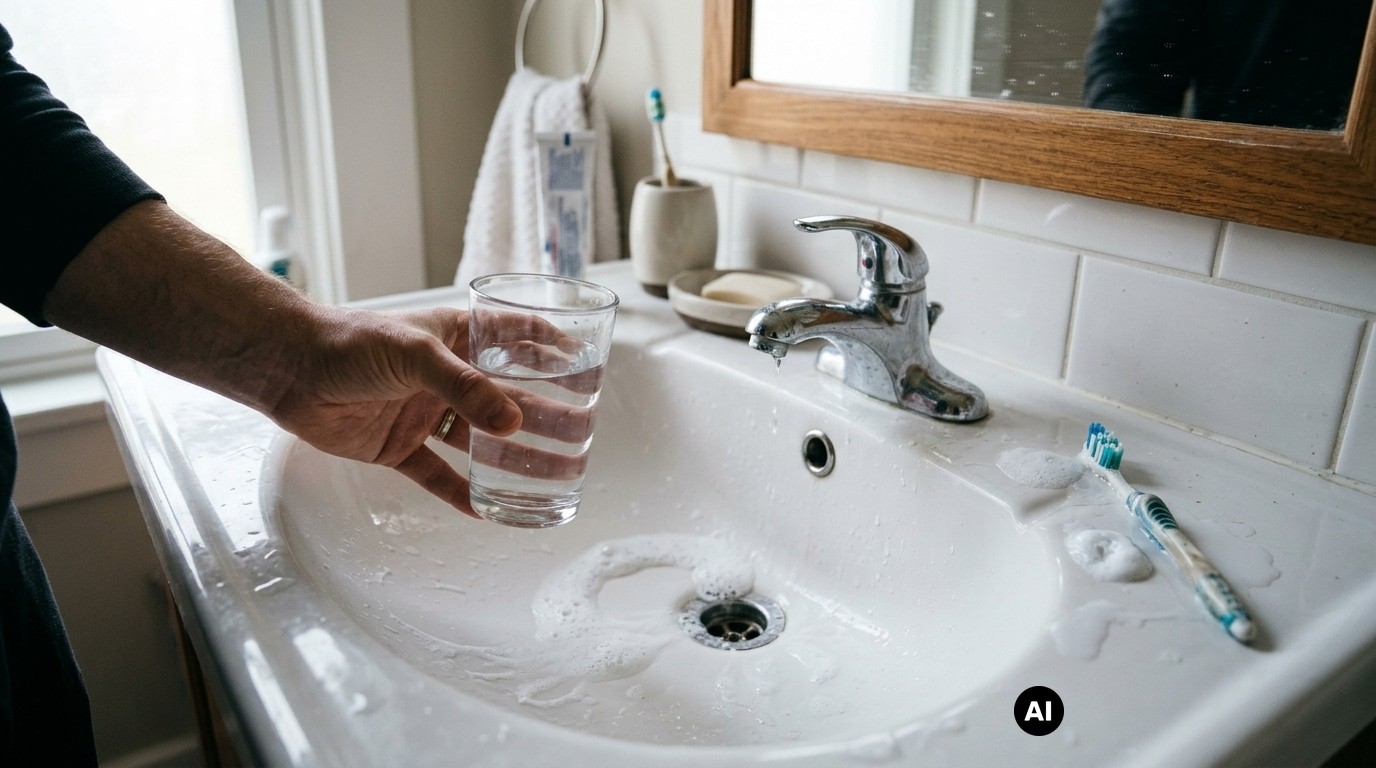
A glass of water swirled away too quickly after brushing can render part of the effort moot. This gesture, almost a reflex for most of us, is nonetheless the subject of clear recommendations from health authorities in Britain. Between the refreshing sensation you seek and the real effectiveness of brushing, there exists a compromise that few people know about. Two minutes of careful brushing, a carefully chosen fluoridated toothpaste, and motions applied to every surface of the teeth: all of this can have its impact diminished by a simple glass of water used to rinse at the wrong moment. A reason to rethink this seemingly trivial evening ritual.
What fluoride actually does to your teeth after brushing
Brushing does more than lift away plaque, that slim bacterial film responsible for cavities as well as gum disease. It also deposits, thanks to fluoridated toothpaste, a fine layer of fluoride that remains on the surface of the teeth after the brushing ends. It is precisely this residual coating that continues to work quietly long after you put the brush down. Fluoride helps to protect the teeth once brushing is finished. For this protection to take hold over time, you must give it the chance to act. A toothpaste containing at least 1,350 ppm fluoride, recommended for adults, only makes sense if its action can extend across the teeth rather than being cut off abruptly.
Why rinsing with water cancels part of this protective effect
This is where the well-known glass of water comes into play, often performed automatically to avoid tasting toothpaste in the mouth. The problem is that this gesture instantly dilutes the fluoride still present on the teeth, and ends up washing it away almost entirely. The NHS, the British health service, is clear on this point: it recommends spitting out the excess toothpaste without immediately rinsing the mouth with water, so as to let the remaining fluoride act on the teeth. A thorough rinse thus undermines this protective mechanism, carrying away a large portion of what brushing had just established. The same principle applies to mouthwashes used right after brushing: using both consecutively amounts to a second rinse, further diluting the residual fluoride. It is better to space them out during the day rather than have one follow the other by default. Of course this is not about swallowing toothpaste nor keeping the mouth foamy longer than necessary, but simply distinguishing two distinct steps: cleaning the teeth on one side, letting the fluoride protection set in on the other.
The right habits for truly effective brushing
Beyond that famous water rinse to push back, a few simple principles help you get the most out of each brushing session. The NHS recommendations can be summarized in a few easy-to-integrate points into daily life without turning things upside down:
- Brush your teeth twice a day for about two minutes, including one session before bed
- Spit out the excess toothpaste without rinsing the mouth with water immediately afterward, to let the fluoride act
- Choose a toothbrush with a small head, soft or medium rounded bristles, and a fluoridated toothpaste of at least 1,350 ppm for adults
- Use dental floss or an interdental brush before brushing, forming a C around each tooth to dislodge plaque and debris
- Avoid wooden toothpicks, which can injure the gums
Electric or manual brushing, the effectiveness remains comparable as long as all surfaces of the teeth are properly cleaned. For children, a few adjustments are necessary: family toothpaste is acceptable as long as it is formulated between 1,350 and 1,500 ppm, child-specific toothpaste with at least 1,000 ppm under the age of three in the absence of cavities, and a quantity limited to a small pea-sized amount before age three, then the size of a small pea until age six, ensuring they do not swallow it. Supervision is still required until at least seven years old. If there is any doubt about choosing a suitable brush or toothpaste, consulting a dental health professional remains the best compass.
This small detail about the water glass illustrates how oral hygiene can hinge on tiny gestures, often overlooked. Spitting rather than rinsing, spacing out mouthwash, choosing the right toothpaste: all simple adjustments that require no extra effort or special budget. They can restore the full meaning of those two minutes of brushing, so that a final awkward gesture does not erase the benefits.
Sources: How to keep your teeth clean – NHS (nhs.uk) | Oral self care – Lancashire and South Cumbria ICB (lancashireandsouthcumbria.icb.nhs.uk)
Article prepared with the help of AI · Our method
