
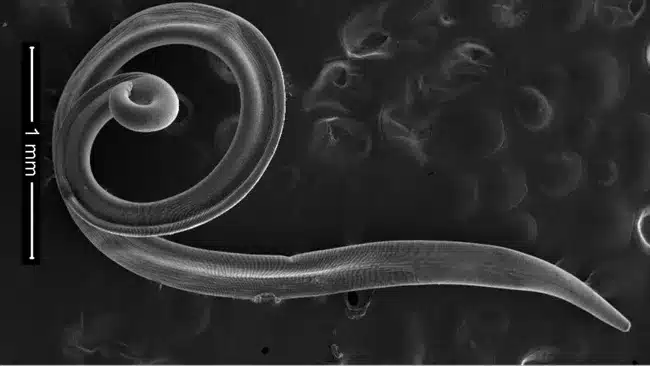
In July 2022, a 41-year-old woman living in Beijing consulted a physician for an odd sensation in her right eye. What seemed like a minor irritation soon became a rare and surprising medical finding: live parasitic worms under her upper eyelid. This unusual case illuminated a little-known disease and raised questions about the links between human and animal health.
Unusual Symptoms That Worsened
It all began with persistent discomfort. When examining the patient’s eye, clinicians noted that her cornea appeared slightly damaged, probably due to irritation. To relieve her symptoms and prevent infection, they prescribed eye drops and sent her home. However, one month later, the woman returned, her eye red and swollen, with a persistent sensation of a foreign body.
During a thorough examination, doctors identified an inflammation beneath her upper eyelid. A closer look revealed an unexpected discovery: four white worms writhing beneath the inflamed ocular tissue. This finding naturally led to rapid intervention. After numbing the area, the doctors removed the parasites with a fine forceps and sent the specimens to the laboratory for identification.
The Oriental Eye Worm: An Astonishing Parasite
Analyses revealed that the worms belonged to the species Thelazia callipaeda, also known as the Oriental eye worm. This parasite is responsible for a disease called thelaziosis, an ocular infection that primarily affects animals, including cattle, dogs, and cats. The larvae of the parasite are transmitted by flies that feed on the tears of animals. These larvae settle in the eyes, where they develop into adults capable of laying additional larvae. The latter are then picked up by a fly, perpetuating the cycle.
Although human cases are rare, they typically occur in people living near infected animals or in agricultural areas. Symptoms include itching, swelling of the eye, excessive tearing, and, in severe cases, ocular ulcers or even blindness. Globally, China accounts for the highest number of reported human cases, with 653 infections documented between 1917 and 2018.
Complex Transmission Pathways and Gaps in Knowledge
In this case, the doctors could not definitively determine how the patient contracted the parasite. Employed as an office worker, she recalled no direct contact with flies. However, her domestic cat, an American Shorthair, suffered an ocular illness, which could have played a role. Unfortunately, the owner declined to have the animal examined, leaving this hypothesis unconfirmed.
This case underscores the complexity of the transmission of Thelazia callipaeda and the challenges involved in preventing such infections. It also serves as a reminder that even urban environments are not entirely free of risk.
Treatment and Recovery
Once the parasites were removed, the patient received an antibiotic ointment to apply daily to prevent any secondary bacterial infection. One week after starting treatment, her symptoms had markedly improved. Two months later, the infection appeared to be fully resolved. This fortunate outcome highlights the importance of swift diagnosis and treatment in addressing rare but potentially serious infections.
