
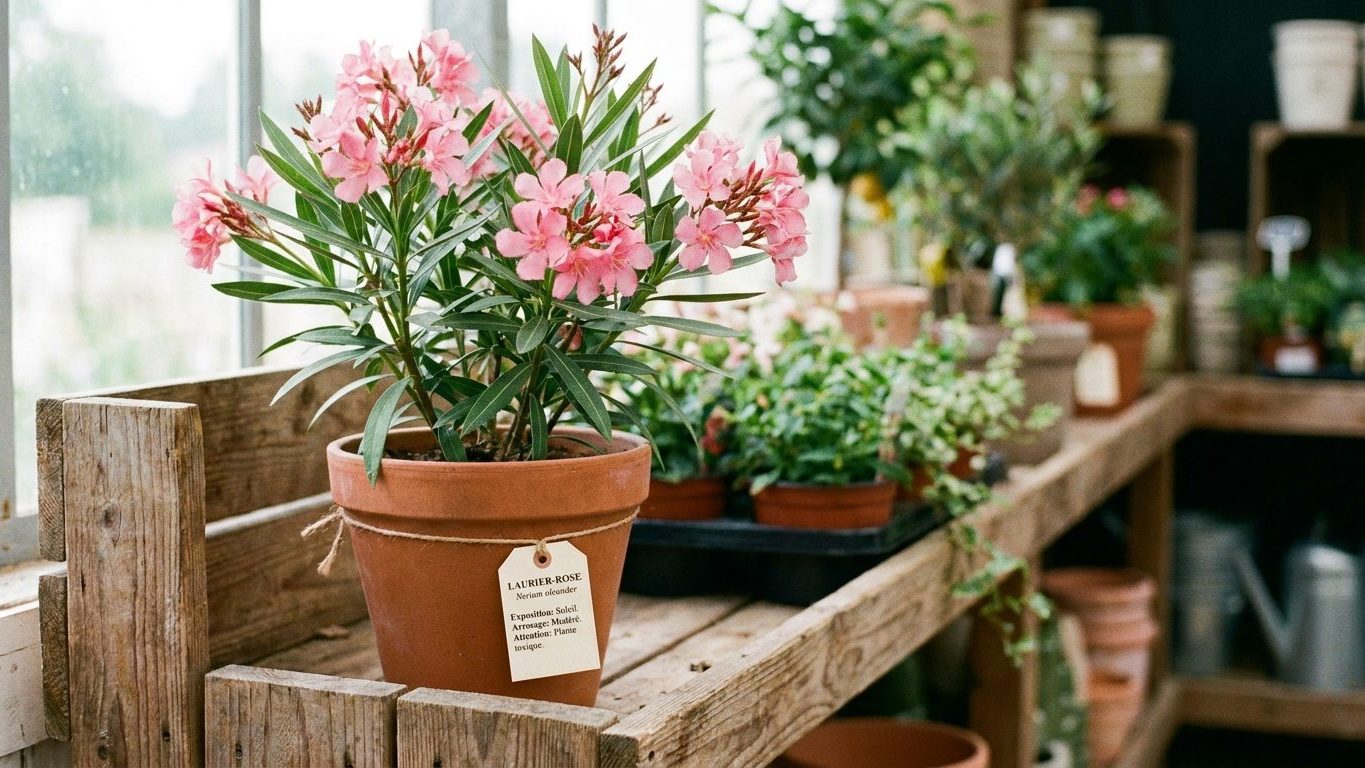
A pot of oleander tucked into the trunk, an label barely glanced at, and yet a legal obligation that the seller was required to respect even before checkout. Since July 1, 2021, this plant has been part of an official list of 58 species deemed capable of harming human health, and the seller was obliged to inform you about it before the sale.
Few buyers know this.
The rule behind this obligation is the decree of September 4, 2020, published in the Official Journal and relating to the prior information that must be provided to purchasers of plants likely to harm human health. It relies on Article L1338-3 of the Public Health Code, which stipulates that any distributor or seller of plants likely to harm human health must inform, before concluding the sale, the buyer of the health risks and, where applicable, the means to prevent them. Oleander is not an isolated case: it belongs to a specific regulatory category, with labeling obligations that also apply to online garden centers.
In practice, the rule is straightforward on paper. This information must be provided prior to the sale, whether it is a retail sale, a distance sale, a public procurement, or a service provision. In-store, this is conveyed by a label, sign, or descriptive material placed in the immediate vicinity of the plant; online, the information must appear on the same page as the product sheet.
- 58 toxic plants are officially listed since July 1, 2021 and are subject to a prior information obligation before sale.
- Oleander contains cardiotoxic glycosides capable of disturbing heart rhythm if ingested.
- Between 8,000 and 9,000 plant poisonings are reported each year in France, including about thirty severe cases.
A list of 58 plants distributed across four risk categories
The annex to the decree does not simply present a vague blacklist. It classifies each species according to the type of danger it represents. Fifty-eight toxic plants have thus been identified and divided among the following categories: 19 plants toxic upon ingestion, such as oleander, the common yew, or foxglove; 10 plants toxic by contact with skin, mouth, or eyes, like euphorbias or caladium; 6 plants toxic upon skin contact followed by sun exposure, such as angelica or white dictamnus; and 23 trees and herbaceous plants capable of causing a respiratory allergy through pollen inhalation. Four risk families, therefore: ingestion, mucocutaneous reaction, phytophotodermatosis, and respiratory allergy.
Among the ingestion-toxics are names that are more at home in botany handbooks, such as aconite, deadly nightshade, or ricin. In the annex are listed Datura stramonium, Oleander, and Yew as toxic upon ingestion. But the list also includes much more ordinary plants that one might find on a windowsill: among them are common houseplants such as philodendron or pothos. Dieffenbachia, renowned for its variegated leaves and ubiquitous presence in offices and living rooms, belongs to the same category of plants that irritate upon contact.
Up to 9,000 poisonings recorded each yearThis is not administrative precaution for show. Cases of plant intoxication per year are recorded by poison control centers, and according to the figures from ANSES relayed by the site plantes-risque.info, managed by the Fredon France network, this number rises to 8,000–9,000 reports annually. In the vast majority of cases, symptoms are mild: irritations, nausea, headaches. But a portion of these poisonings ends badly.
About thirty serious cases, potentially fatal, are recorded each year, according to ANSES’s expert report. Oleander, precisely, is among the most feared species: all its parts—from the leaves to the flowers and the sap—contain cardiotoxic glycosides capable of severely disrupting heart rhythm if ingested. This figure puts into perspective the anecdote of the pot bought without reading the label: tens of thousands of French households encounter one of these 58 plants each year, often unknowingly.
What the seller must display, and what they do not have to say
The law precisely frames the content of this information. Distributors or sellers must display, in a clearly visible and legible manner on the plant’s accompanying documentation, the information listed in the annex, and this accompanying document must remain easily accessible to the buyer before the sale. This includes the risk involved, possible symptoms, and the steps to take in case of exposure, whether a simple rinse with clear water or contacting a poison control center.
Not all transactions are equally affected. Excluded from this decree, for the plants concerned, are forest reproductive material, plants sold for consumption, cut flowers, leafy branches, trees cut with foliage, plant tissue cultures, and lawn seed mixtures. Similarly, agricultural sector professionals are not considered buyers under the decree, so intermediary sales between horticulture, floristry, or landscaping businesses escape the information obligation. This nuance explains why some landscape professionals handle these plants year-round without labels, while individuals must be warned at the counter.
Sources: legifrance.gouv.fr | politique.pappers.fr | jardinerie-animalerie-fleuriste.fr
