
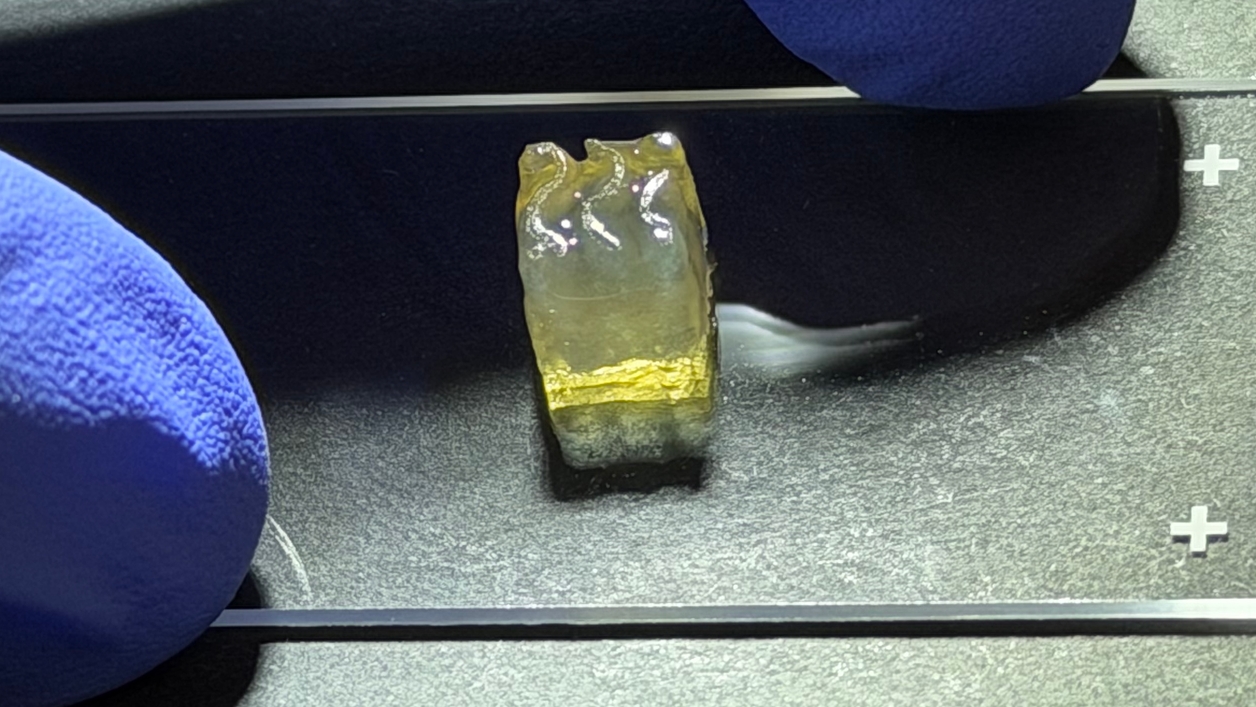
Researchers from a U.S.-based company recently achieved an unprecedented feat, namely bioprinting renal and hepatic tissues in space, among other advances. This historic mission aboard the International Space Station could well outline the contours of regenerative medicine within future private space stations. What are the concrete applications of this research project?
Real prospects for regenerative medicine in space
As revealed by an official press release dated July 9, 2026, the U.S. company Auxilium Biotechnologies successfully bioprinted renal and hepatic tissue in space for the first time. This experiment was conducted aboard the International Space Station (ISS), as part of the AXLM-3 research project. The objective? To advance toward the production of biomedical products in orbit.
« The successful bioprinting of living hepatic and renal tissues aboard the International Space Station marks a significant advance for regenerative medicine. The uniform cellular distribution achieved aboard the space station opens real prospects for the fabrication of medical devices and tissues in space. », said Anthony Atal, director of the Wake Forest Institute for Regenerative Medicine, a partner of Auxilium Biotechnologies.
For context, renal tissue is the ensemble of specialized cells that make up the kidneys. Their primary function is to act as the body’s filtration powerhouse. As for hepatic tissue, it refers to the ensemble of specialized cells composing the liver. This system is the body’s chemical factory and the most important detoxification center of the organism.
A revolutionary orbital bioprinter
Researchers carried out the printing of tissues with the help of the AMP-1 orbital bioprinter. This device is notable for its ability to manufacture simultaneously very different products. It can thus create soft tissues — such as renal and hepatic tissues — as well as structural tissues like cartilage. The machine can also produce solid synthetic biomedical devices such as nerve-repair implants.
It should be noted that the printer features a system of interchangeable cartridges. Thus, to switch, for example, from manufacturing a nerve implant to printing a piece of liver, one simply replaces the base-material cartridge — a PEG-based bio-ink — in the device. Moreover, these same cartridges are extremely lightweight, offering potentially a dramatic reduction in transport costs during space resupply missions. It should also be noted that each printing session requires less than a minute of human intervention. The machine is therefore highly cost-effective, given that the astronauts’ time in space is one of the most valuable resources in space research.
In the AXLM-3 project, the AMP-1 orbital printer demonstrated this versatility by producing the soft tissues mentioned earlier, cartilage tissue, as well as 28 implants intended for nerve repair. This marks the very first time a single autonomous device has manufactured so many different tissue types during a single spaceflight. It must be said that until now, space-borne bioprinting instruments had been highly specialized to the point of being limited to a single type of printing per mission.
The next steps of the project
In the short term, the objective is not to transplant whole organs just yet. The initial phase will involve fabricating functional organ miniatures (organoids). These will serve as models to study certain diseases and test new drugs, without depending on terrestrial supply chains.
In the long run, this work potentially paves the way for the emergence of commercial biomedical laboratories in space. Auxilium Biotechnologies is already collaborating with two private space station projects, Vast and Starlab. However, nothing is final at this stage, as these projects aim to replace the ISS during the 2030s.
