
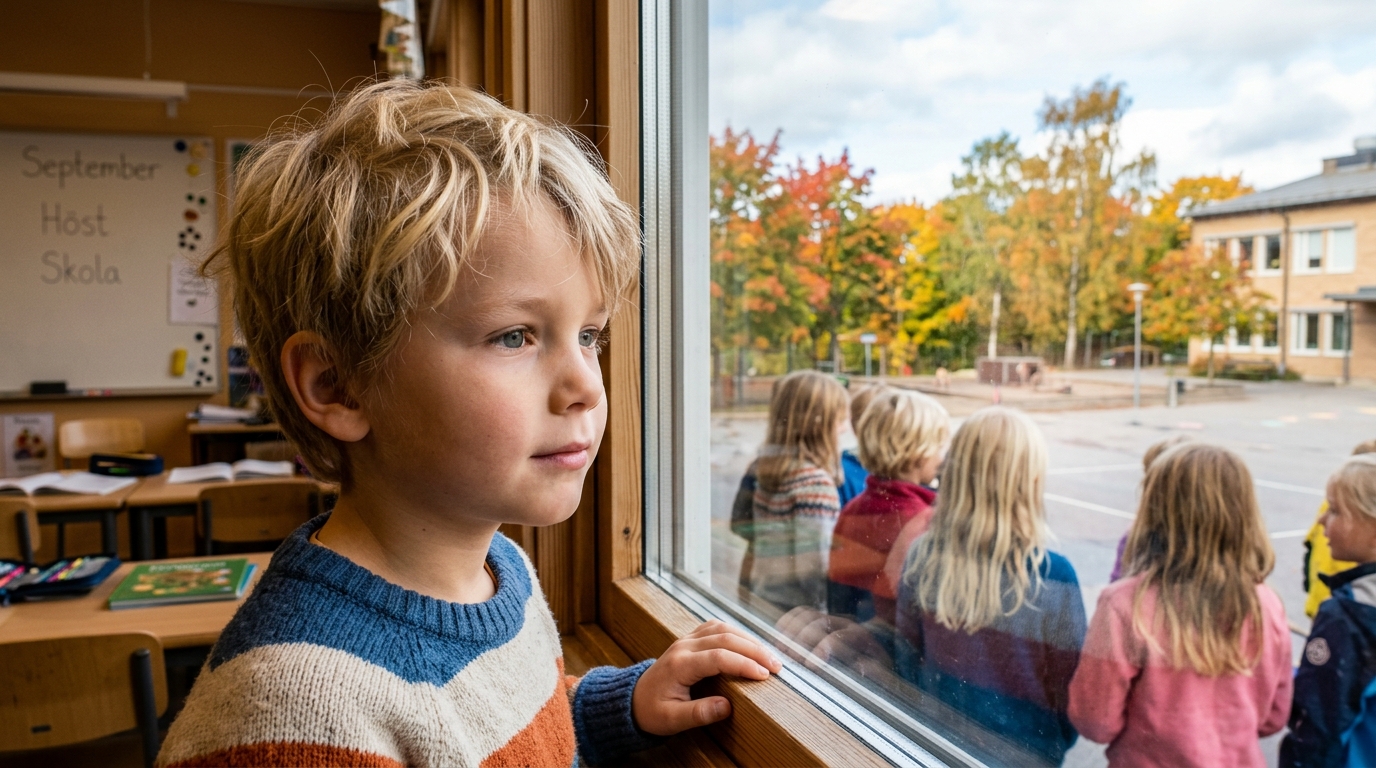
September marks the return of backpacks and the resurgence of playgrounds heated by the last waves of summer’s heat. Under a still-bright sun, the thermometer sometimes climbs above 40°C on the black asphalt of a schoolyard, turning recess into a test of survival rather than a moment of relaxation. Faced with the intensification of heat waves now sweeping across Europe, several Nordic cities have decided to radically rethink these mineral spaces inherited from another era. Gone is the all-asphalt layout designed for easy maintenance: the playgrounds are now built with comfort for children and climate resilience in mind. How do these schools manage to drop temperatures by several degrees in just a few months of work? The answer lies in a transformation that is as simple as it is effective, already underway in many municipalities.
Le bitume, cet ennemi silencieux qui plombe les cours d’école
Asphalt has long been seen as a practical and inexpensive solution for covering playgrounds. Easy to maintain, weather-resistant, and suitable for group games, it has won over almost all schools built in the 20th century. The problem is that this black and impermeable surface becomes a real heat plate as soon as the sun is beating down. Where grass stays cool, asphalt can reach temperatures 15 to 20 degrees higher than the surrounding air. Result: children move on a burning surface, sometimes too hot to walk barefoot, and the overheated air makes recesses more punishing than restorative. This phenomenon, known as the urban heat island, particularly affects schoolyards that are often fully mineralized and devoid of trees or vegetation able to provide shade and coolness.
La désimperméabilisation, une révolution qui redessine les cours de récréation
In response to this reality, a solution is gradually taking hold in several Nordic cities: the de-impermeabilization of soils. Concretely, it means removing the asphalt and replacing it with permeable, vegetated materials capable of absorbing rainwater and limiting heat buildup. By removing several thousands of square meters of asphalt around schools, some municipalities are transforming their playgrounds into true islands of coolness. On these new surfaces you will find topsoil, trees planted in the ground, drought-resistant lawns, but also light and permeable materials that reflect light rather than absorb it. The benefits go beyond thermal comfort: these installations also boost biodiversity, reduce runoff during heavy rains, and provide children with a more stimulating environment for play and learning. Temperature gaps measured between a paved court and a vegetated court can reach several degrees from the early hours of the morning, a figure that climbs even further during peak summer heat.
Des îlots de fraîcheur qui inspirent déjà d’autres villes européennes
What was once only a timid experiment a few years ago has now become a concrete and measurable response to the climatic challenge in schools. Feedback from the first transformed playgrounds is convincing enough to inspire other municipalities well beyond the Nordic borders. In France as well, several cities have launched programs of de-impermeabilization of schoolyards, with the stated aim of preparing schools for increasingly hot summers. These projects are often accompanied by a broader reflection on the use of public spaces, including:
- the planting of fast-growing trees to offer natural shade
- the installation of rainwater harvesting systems
- the creation of diverse play zones, mixing sand, grass and wood chips
- the opening of playgrounds to the public outside school hours, as neighborhood green spaces
As results accumulate and budgets adapt, other municipalities could quickly follow suit, gradually transforming the face of schoolyards across Europe. A development that seems all the more urgent as heat waves continue to intensify year after year.
Behind these de-impermeabilization works lies therefore much more than a simple aesthetic project: it is a genuine adaptation of educational spaces to the climate realities of tomorrow. As the new school year gets fully underway, this question deserves to be asked in every municipality: what if the next playground to be cooled was the one on the street corner?
