
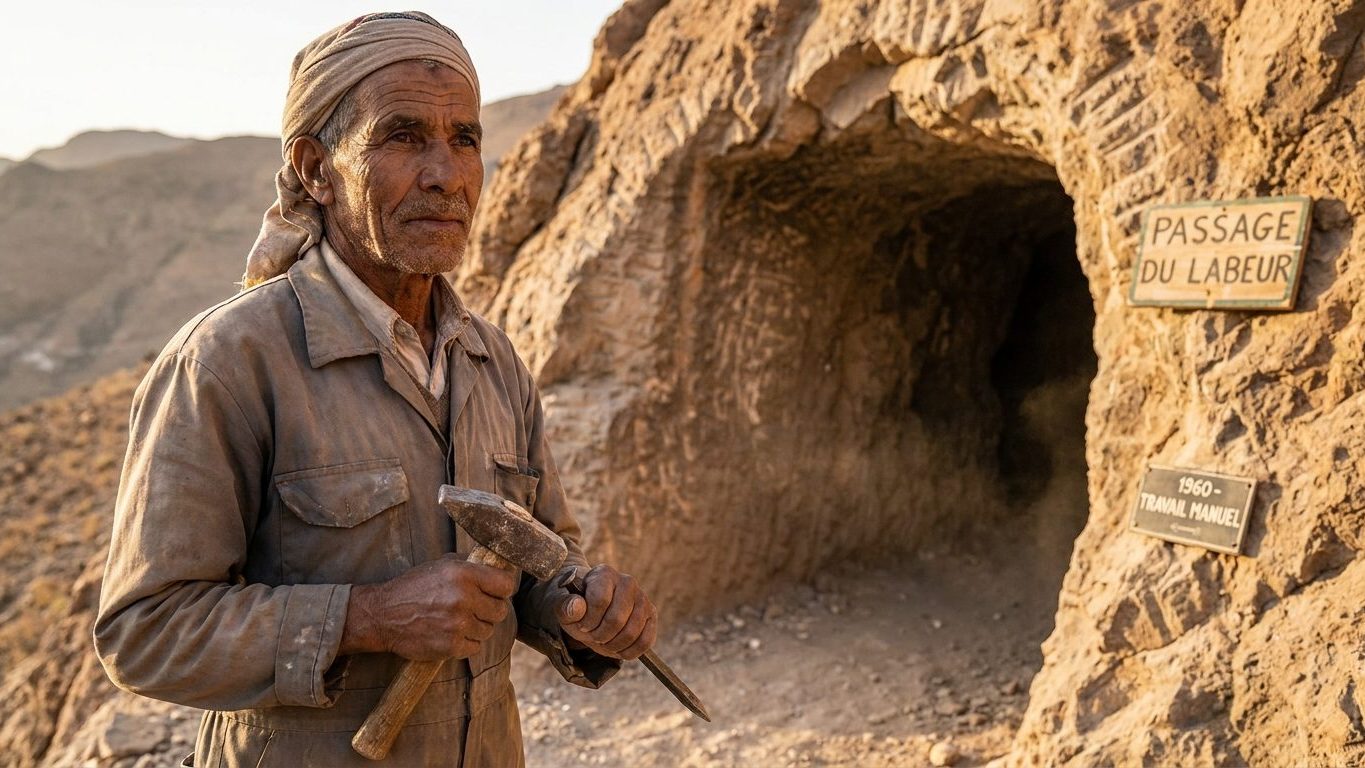
In the state of Bihar, in the district of Gaya, a day laborer made a solitary decision in the mid-1960s that would redraw the geography of his village. Armed with nothing more than a hammer and a chisel, he began to carve a passage through the rocky crest that isolated his community from the rest of the region. It would take him more than twenty years to complete the task.
The result stunned the entire district.
Before this undertaking, the inhabitants of Gehlaur had to skirt around the mountain to reach the most basic services. The nearest town capable of providing a doctor and essential care lay many kilometers away, winding around the hills. Schools, markets, clinics: everything demanded an interminable detour.
- Dashrath Manjhi gouged a mountain with only his arms and rudimentary tools for 22 years
- The opened passage shortened the journey to hospital and school from days to a few hours
- The Indian state granted him state funerals and issued a stamp in his honor after his death in 2007
Twenty years of hammer and chisel, lone against the rock
The man was named Dashrath Manjhi. Without machinery, without funding, and with no official support, he began to chip away at the rock at the end of the 1960s. Each day, under the sun or during the monsoon, he struck the same wall with his crude tools. He sold his goats to buy tools, endured injuries, hunger, and isolation. No engine, no technical aid—only his arms and his resolve.
In the beginning, villagers mocked him; some called him mad, others deemed his endeavor absurd. Yet he persisted.
No one imagined that he would see it through.
From ridicule to collective aid
After about a decade of relentless work, the villagers saw for the first time a fissure running right through the mountain. What had begun as a mere notch gradually transformed into a real passage. Some villagers, long skeptical, eventually lent a hand for the final stages of the project.
Once the rock was breached, access to doctors, to jobs, and to schools was shortened, and dozens of villages could in turn use this new route. The inhabitants began to call him “Baba,” a term of deep respect. The journey that once sent patients trudging on a draining detour was now counted in hours rather than days. What the crest had forbidden for generations, a single man had made possible with a hammer.
What the State ultimately recognized
But the passage opened by Dashrath Manjhi did not suffice for him. He demanded that the road be paved and connected to the main axis, even walking along the railway lines to New Delhi to deliver a petition demanding a road, a hospital, a school, and running water for his village. A barefoot journey, without official relay, carried solely by the conviction that his village deserved better.
In 2006, his request finally found a hearing.
Met by the Chief Minister of Bihar at the time, Nitish Kumar, during a public audience, he stood up, visibly moved, and offered him his own minister’s seat—a rare gesture toward a man of his social standing. The state granted him a plot of land, which Manjhi immediately donated back so that a hospital could be built there. His name was also proposed for the Padma Shri, one of India’s highest civilian honors, but officials from the Ministry of Forests challenged the nomination, deeming his work illegal. Official recognition, however belated, remained tinged with bureaucracy.
Dashrath Manjhi died in 2007 from illness, and the Bihar authorities paid him tribute by granting him state funeral. A posthumous recognition that contrasted with the decades of silence surrounding his project. His story later inspired a biographical film released in India, as well as a postage stamp issued in his honor by the Indian postal service. Yet the promised road took much longer to materialize: it took roughly thirty more years for the administration to asphalt the passage he had opened with his own hands.
Sources: theeasternroots.com | en.wikipedia.org
