
Joy Milne sensed a change in her husband’s smell long before a doctor uttered the word Parkinson’s. She discovered she could smell the disease after noticing that her husband emitted a new odor, musky, a stubborn note that neither showers nor clean clothes could wash away. The Milnes were diagnosed with Parkinson’s disease in 1986, at the age of 45.
Twelve years separated the two events, Joy having noticed something was off with her husband 12 years before the diagnosis.
She had, at the time Les was 33, begun to notice a scent that she described as subtle and musky. Joy Milne carries a hereditary hyperosmia, a condition that gives her heightened sensitivity to odors. This genetic trait enables her to detect olfactory variations that are invisible to most people.
- A Scottish nurse detected a musky odor on her husband 12 years before his Parkinson’s diagnosis
- Joy Milne correctly identified all 6 shirts belonging to Parkinson’s patients in a blind test, without error
- The disease alters the chemical composition of skin sebum long before the first motor symptoms appear
An odor that never went away
In 2012, she met neuroscientist Tilo Kunath, from the University of Edinburgh, at an event organized by the charity Parkinson’s UK. It was there, in the company of other patients gathered through the association, that she recognized the same musky odor on several of them, finally linking it to a specific cause rather than mere chance.
The blind test that stunned researchers
Kunath initially met this sensory claim with skepticism, then relented with colleagues and put Joy Milne’s assertions to the test. They asked a group of people with Parkinson’s and another group without the disease to wear plain white T‑shirts overnight, then return them to the researchers. Twelve shirts were collected—six from patients with Parkinson’s and six from unaffected individuals. Joy Milne had no information about the wearers’ identities or health status.
She did not misidentify anyone, and not by accident.
Joy Milne correctly identified all six shirts belonging to Parkinson’s patients, and marked a seventh, worn by a member of the control group, as coming from a patient as well. Eight months later, that person contacted the researchers to announce they had, in turn, been diagnosed with Parkinson’s disease. The Scottish nurse’s nose had detected the disease before the doctors themselves.
Sebum, a chemical signature of Parkinson
Initial tests with shirts and medical pads showed that the odor was concentrated on the upper back and the forehead—areas of high sebum production—and absent at the armpits. This precise localization immediately steered researchers toward the skin rather than sweat.
Sebum is a waxy, lipid-rich biofluid excreted by the skin’s sebaceous glands. Researchers from the University of Manchester collected sebum from the upper back of participants and analyzed it using gas chromatography–mass spectrometry. They isolated several compounds whose concentrations differed in patients, including eicosane, hippuric acid, and octadecanal, all appearing at higher levels than average. The disease thus alters the chemical makeup of the skin long before tremors and other visible motor symptoms appear.
Diagnosis, for now, remains clinical.
A swab rather than a long wait
Parkinson’s disease is still confirmed by observing motor symptoms—tremors, stiffness, and slowness of movement. To date, there is no standard chemical test to diagnose it, according to the researchers who led this work. The disease progresses slowly, taking years or even decades before tremors appear, which partly explains the frequent diagnostic delay.
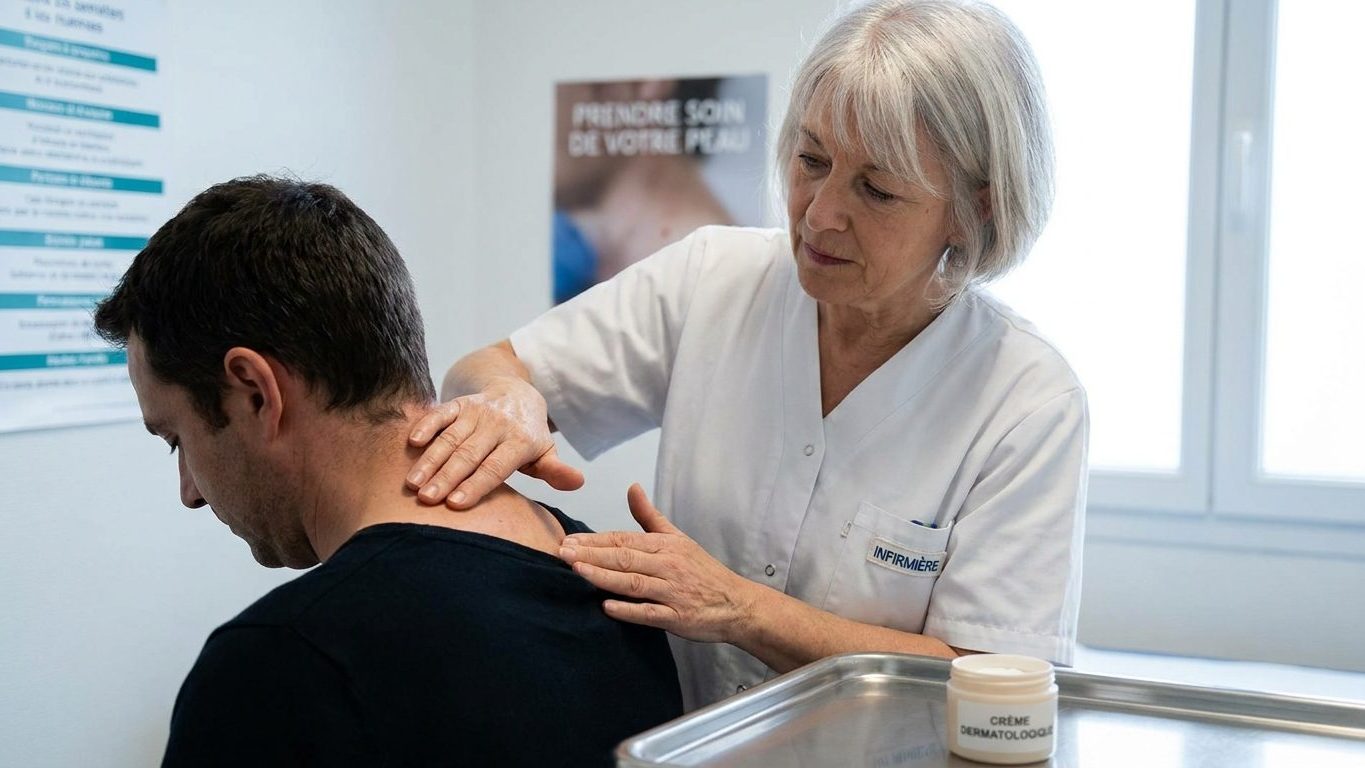
These discoveries opened the door to a simple sampling method, using a cotton swab on the skin of the back or neck where sebaceous glands are particularly active. The collected sebum is then analyzed in the lab to search for the chemical signature that Joy Milne first detected with her nose.
Research continues at the University of Manchester, where the team has recruited more than 2,000 participants to refine the sebum analysis. This approach is also being explored for other diseases, such as tuberculosis, for which researchers also seek an identifiable cutaneous olfactory signature. Joy Milne remains among the authors of scientific publications that extend, years later, what she was the first to sense about her husband.
Sources: pmc.ncbi.nlm.nih.gov | nature.com | brainly.com
