
Important clarification before anything else: no reputable home-care organization ever asks for your Ameli login details by phone, nor do they require an immediate transfer to validate a file. This sentence should be posted on every fridge in France, given how scams of this type are multiplying this back-to-school period when many households are looking to arrange home care for an elderly relative. The story we are about to share perfectly illustrates how a seemingly benevolent phone call can turn into a financial abyss of 900 euros. An amount enough to prompt reflection, especially when one realizes how well the trap was laid.
- No reputable home-care organization will ask for your Ameli login details by phone or demand an immediate transfer.
- The social security number, paired with other personal data, can enable fraudulent remote subscriptions.
- Warning signs include an unsolicited call, an imposed sense of urgency, an immediate request for sensitive information, and no prior written confirmation.
- A banal phone call, a 900-euro bill
- The social security number, a key more precious than you think
- These details that should have triggered alarm
- The rule that any reputable organization applies
A banal phone call, a 900-euro bill
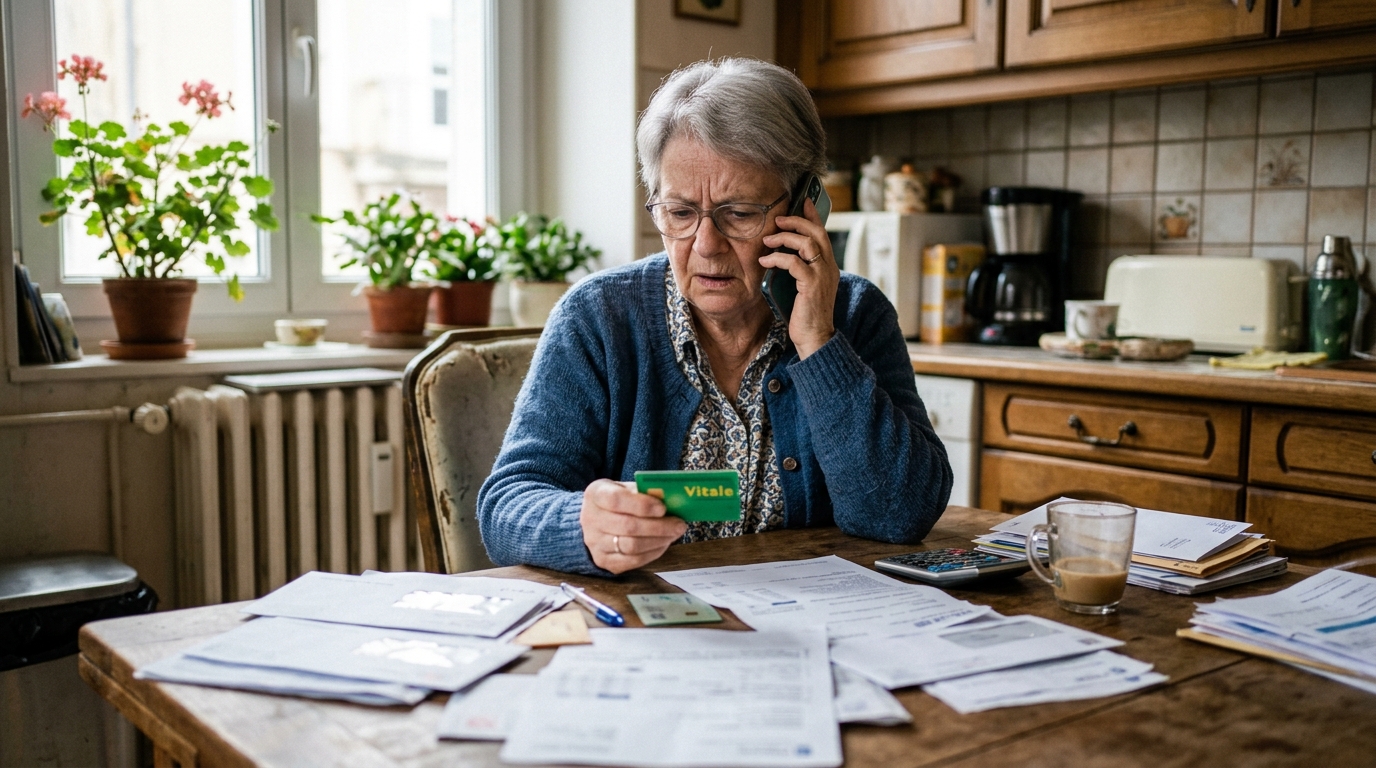
It all starts with an almost ordinary call. A reassuring voice, a practiced pitch, a request that seems legitimate: the Carte Vitale number, “to open the home-care file.” Nothing alarming at first glance, since this kind of step evokes the usual exchanges with Social Security or a mutual insurance company. The person on the line presents themselves as an advisor, mentions housekeeping services or meal delivery, and simply asks to confirm a few administrative details.
A few days later, the bank statement reveals the extent of the trap. Uncommon withdrawals appear, tied to mutual insurance contracts that were never signed, never requested, and above all never explained. This account is not isolated, and it could happen to you or a family member tomorrow, as scammers continually refine their techniques to appear credible. What stands out in these cases is the speed with which initial trust becomes concrete financial harm.
The social security number, a key more precious than you think
Many people regard their social security number as a simple administrative datum, almost trivial, recited without thinking whenever someone seems legitimate. Yet, this thirteen-digit number is a true access key to a portion of our digital identity. It can, in some cases, link a person to contracts, generate remote subscriptions, or access information that was believed to be protected.
When combined with other personal details gathered during the conversation, such as date of birth or address, this number becomes a formidable tool in the wrong hands. Scammers know that most people don’t imagine that a simple string of digits could unlock fraudulent subscriptions to mutuals or insurance. This very lack of awareness makes the scam so effective, and explains why so many victims find themselves defenseless against withdrawals they never authorized.
These details that should have triggered alarm
With hindsight, several signals could have raised alarms. First, the hurry imposed by the caller, who insists on an immediate response, without time to think or verify information with an official body. Then, the absence of any prior written document: no letter, no confirmation email, no tangible trace before the call itself.
Another revealing detail: the request for sensitive data during the first exchange, with no identity verification offered in return. A legitimate organization always begins by presenting itself clearly, providing a file number, a verifiable reference, or directing you to an official site. Here are the main warning signs to remember:
- An unsolicited call mentioning an administrative emergency
- An immediate request for sensitive personal information
- No preceding letter or confirmation email
- Pressure to act quickly, without time for reflection
- A vague explanation of the caller organization’s exact identity
Taken individually, these elements may seem trivial. But together they sketch the typical portrait of a well-orchestrated fraud attempt, which bets on the apparent ordinariness of each step to lull vigilance.
The rule that any reputable organization follows
There exists, however, a simple, almost universal rule that all reputable home-care organizations strictly observe: no serious organization will request Ameli login details by phone, nor an immediate payment by bank transfer. This rule, often unknown to the general public, provides the best protection against this type of scam. Administrative procedures related to home care always pass through official channels, with traceable paper or digital files, and never through a verbal confirmation over the phone.
Similarly, mutual-insurance bodies and public services tied to Social Security do not operate in a rush. They allow time for reflection, offer in-person appointments, and never require a bank transfer to “unlock” a file. As soon as a caller deviates from this standard operation, it becomes legitimate to hang up, verify the caller’s identity with the relevant organization, and share no sensitive information until that confirmation is obtained.
As families head into this school season, with many seeking to set up home care for an aging parent, vigilance remains the best defense. This testimony recalls how costly a simple number dictated by telephone can be, and how essential it is to know the basic rules that protect our personal data. So, next time an call asks for your Carte Vitale number, will you take the time to verify before answering?
