
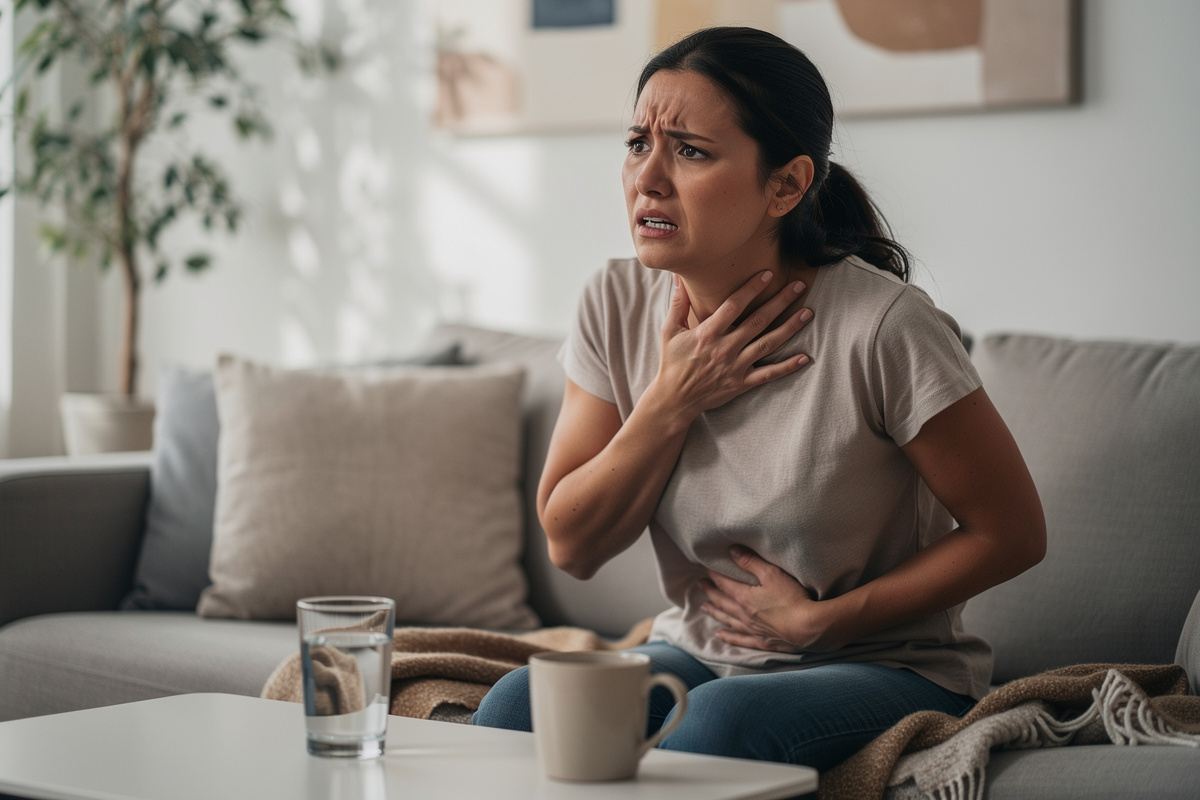
One hand resting on the chest, shortness of breath, a face etched with sudden and inexplicable fatigue: that is the image we keep in mind when we think of a heart attack. Yet, in a medical office or in the ER, this clinical picture rarely matches what many women experience during a cardiac event. As we return to routine this fall, when life speeds up again after the summer, it seems essential to revisit this little-known reality: in women, the heart does not always scream as we imagine. And this simple discrepancy between theory and practice can cost precious time, the time that separates rapid management from an avoidable tragedy.
- In women, a heart attack often presents without typical chest pain, with diffuse symptoms such as intense fatigue, nausea, shortness of breath, or pain in the back, jaw, or arm
- This confusion with benign pains delays calling for help, worsening cardiac damage compared to men
- Facing unusual and sudden symptoms, one should immediately contact emergency services at 15 without waiting for spontaneous improvement.
- When the heart cries out without the expected pain
- These deceptive symptoms that do not look like a heart attack
- Why do women call 15 too late
- Recognize the emergency before it’s too late
When the heart cries out without the expected pain
Myocardial infarction remains, in the collective imagination, linked to that intense chest pain, like a vise tightening around the chest. This pattern indeed matches what many men experience during a cardiac event. But in women, the reality is often quite different: the heart attack frequently occurs without this typical chest pain, which considerably complicates diagnosis, for both the patient herself and those around her.
This physiological peculiarity is partly explained by differences in how the female nervous system transmits pain signals, but also by the very location of the affected arteries. As a result: the heart attack can go almost unnoticed, hidden beneath symptoms that one would more naturally associate with simple fatigue or a temporary episode of stress.
These deceptive symptoms that do not look like a heart attack
Rather than a clear pain in the chest, women often describe more diffuse and puzzling sensations. Notably, an intense and sudden fatigue, nausea, pains located in the back, the jaw or even the left arm, as well as unusual shortness of breath with minimal effort. Some also mention cold sweats or dizziness, symptoms more readily associated with a drop in blood pressure or a simple bout of fatigue.
This variety of signs, often discreet and non-specific, makes the clinical picture particularly difficult to interpret. Pain in the stomach area can be mistaken for indigestion, discomfort in the upper back for a simple muscle tension tied to stress. This blurring of clues explains why so many women, and sometimes even some healthcare professionals not well trained in these specifics, do not immediately think of a cardiac problem in the face of these symptoms.
Why do women call 15 too late
This gap between the symptoms felt and the classic image of a heart attack has very concrete consequences on the speed of care. In the absence of obvious chest pain, many women minimize their condition, wait for the sensation to pass, or attribute their symptoms to a benign cause such as accumulated fatigue or a simple backache. This hesitation period, often spanning several hours, delays calling for help.
Yet, in the case of a heart attack, every minute counts. The longer the delay between symptom onset and medical treatment, the more likely the damage to the heart muscle will be significant and potentially irreversible. This delay, often unintentional, helps explain why women sometimes experience more severe aftereffects following a heart attack than men, even though their overall cardiovascular risk is not lower.
Recognize the emergency before it’s too late
In light of this, learning to spot the specific warning signals becomes a real public health concern. It is not about succumbing to worry at the slightest fatigue, but about staying attentive to certain combinations of symptoms, especially when they appear suddenly and without an obvious cause.
- An intense and unexplained fatigue, different from what is usually felt
- Abnormal shortness of breath, even for moderate effort
- Diffuse pains in the back, jaw, neck or arms
- Nausea accompanied by cold sweats
- A sense of pressure or unusual anxiety
In the presence of one of these signs, or even more so with several combined, the rule remains the same for everyone: contact 15 immediately rather than waiting for spontaneous improvement. A simple call allows medical dispatchers to assess the situation and, if necessary, trigger rapid management capable of limiting damage to the heart muscle.
This reflex, still too little embedded in everyday habits, deserves to be spread further, particularly among women themselves, who are often less aware of their own cardiovascular risk than their male partners or colleagues.
Behind this question of recognizing symptoms lies a much larger issue: medicine still too often calibrated to a male model, which struggles at times to integrate female-specific features. Better knowing these atypical signs gives each person the chance to respond in time, and perhaps, one day, to rebalance care between the sexes in the face of the same cardiac emergency.
