
Silence first. Then the darkness creeping across the cockpit screens, one by one. On this domestic Canadian flight, the second engine just shut down a few moments after the first. The cockpit darkens. The screens go dark. No more engine rumble. Only the hiss of air against the fuselage fills the soundless void, as the pilots realize their aircraft, one of the fleet’s most modern airliners, is now gliding over Canadian territory with no propulsion.
This Boeing 767, only recently put into service, had accumulated just a handful of commercial rotations. A brand-new aircraft, new technology for the airline, a crew still discovering the intricacies of the new electronic cockpit. No one that day could have imagined ending up gliding over Manitoba.
- A metric conversion error leaves the Boeing 767 with only about half the fuel it requires.
- The captain practices recreational sailplane flying, an essential skill for flying without engine power.
- The aircraft lands without engine power on a runway that is occupied by a car race, with no casualties.
A failed fueling conversion
Everything hinges on the ground, long before takeoff. The airline was undergoing a delicate transition: moving from imperial units, pounds, to metric units, kilograms, for calculating the onboard fuel load. A reform that makes sense on paper, yet proved perilous in execution. The amount loaded had been calculated in pounds rather than kilograms, leaving the 767 with roughly half the fuel it needed.
The error lies in a conversion factor. The 767 measured the fuel in kilograms, while other manuals and aircraft in Air Canada’s fleet used pounds. Reviewing their notes, investigators found they had used a conversion of 1.77 pounds per liter, whereas a kilogram-based aircraft would have used 0.8 kg per liter. One figure for another, an old habit applied to a new airplane. The onboard computer, fed by this erroneous data, displayed a quantity deemed sufficient for the trip. No one detected the anomaly, despite several successive checks.
The aircraft therefore took off convinced it had the necessary full load. It did not.
Piloting a passenger jet turned into a glider
A jet without engines is not a dead weight. It is a machine that loses thrust but retains the ability to glide, provided one knows how to exploit the best descent angle. The problem is that nothing in a standard pilot’s training for a passenger jet prepares for this exact scenario. Pilots search for a two-engine-failure checklist, without success, and for good reason: Air Canada did not have such a checklist at the time.
The loss of both engines also takes out the primary hydraulics and part of the instrumentation, turning a state-of-the-art cockpit into a cabin where improvisation with remaining backups becomes essential. Flying under these conditions relies less on procedures than on pure intuition: feeling the airspeed, anticipating the rate of descent, managing a flight path with no thrust to correct an error in judgment.
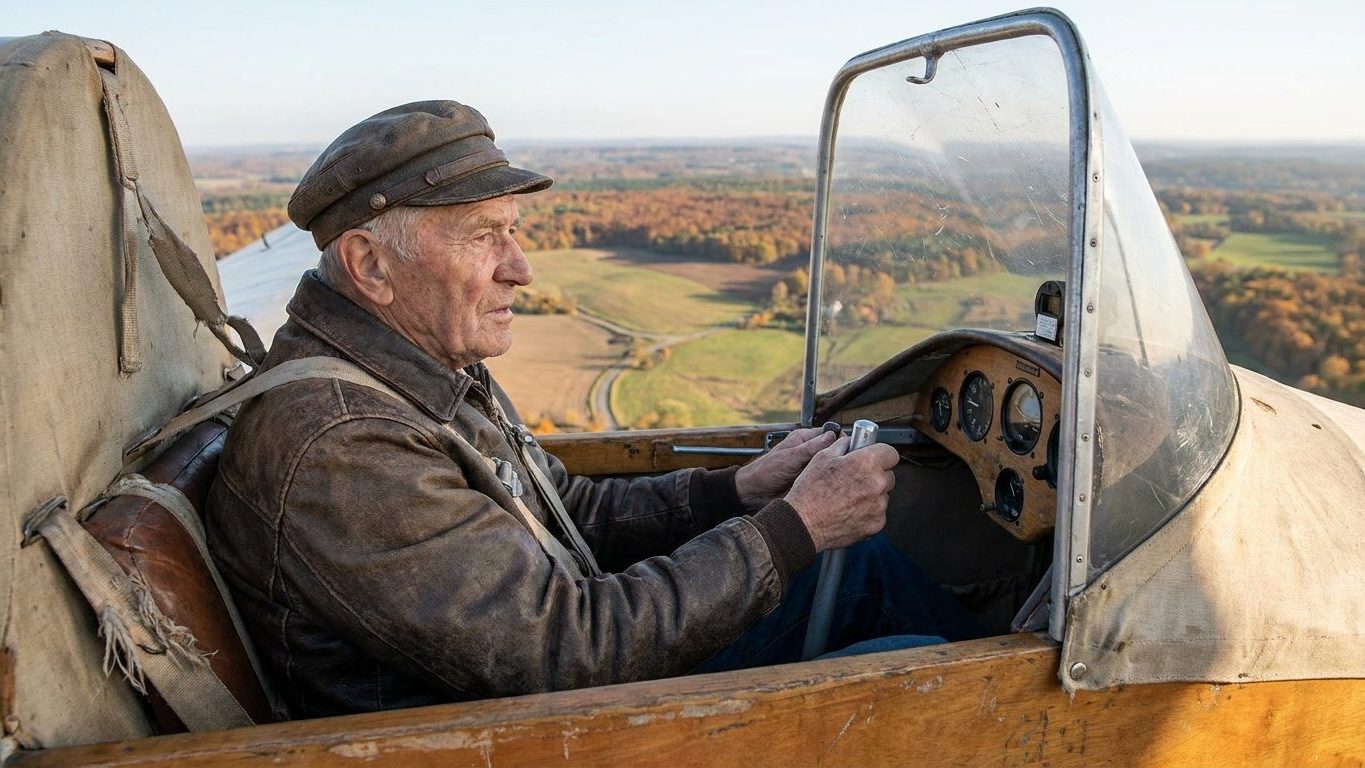
That is where a detail changes everything. The captain was a weekend sailplane pilot. A discipline where one learns to keep an aircraft aloft without an engine, to read the wind, to plan a landing in glide with no margin for engine recovery. That weekend skill—learned far from the company simulators—suddenly becomes the crew’s most valuable asset.
Landing on an occupied runway
What remained was to find a place to put down a propulsionless airliner. The team settled on an old decommissioned military airbase, now repurposed as a race track. A runway well known to the region, long and clear, yet no one aboard had any idea how it would be used that day.
For as the aircraft began its final approach, a car-racing event was in full swing on the same site. Vehicles, spectators, a section of the track closed off for the event. The crew had no choice but to adjust their glide path, with no possibility of applying power in case of misalignment, since there was no thrust left to add. The aircraft landed without injuries to its occupants or on the ground.
An engineless landing on an occupied runway, with no second chance. Few civil aviation scenarios bring together so many constraints at once.
What the incident changed
The episode left an enduring mark on the airline’s procedures and, more broadly, on industry practices. Authorities recommended the immediate conversion of all the airline’s aircraft from imperial units to international system units. No more ad hoc manual conversions between pounds and kilograms during fueling.
The airline also strengthened its list of minimum equipment required before any takeoff, especially regarding fuel-measurement systems. Air Canada expanded its minimum equipment list to ensure the aircraft would be deemed out of service if its fuel-management system was not operational. A checklist for the simultaneous loss of both engines was also created, where it had been missing on that day of flight.
The aircraft involved, repaired after the incident, continued to fly for nearly another twenty-five years for the same airline. A sign, perhaps, that commercial aviation learns from its worst fears as well.
Sources: poleposition.ca | migflug.com
