
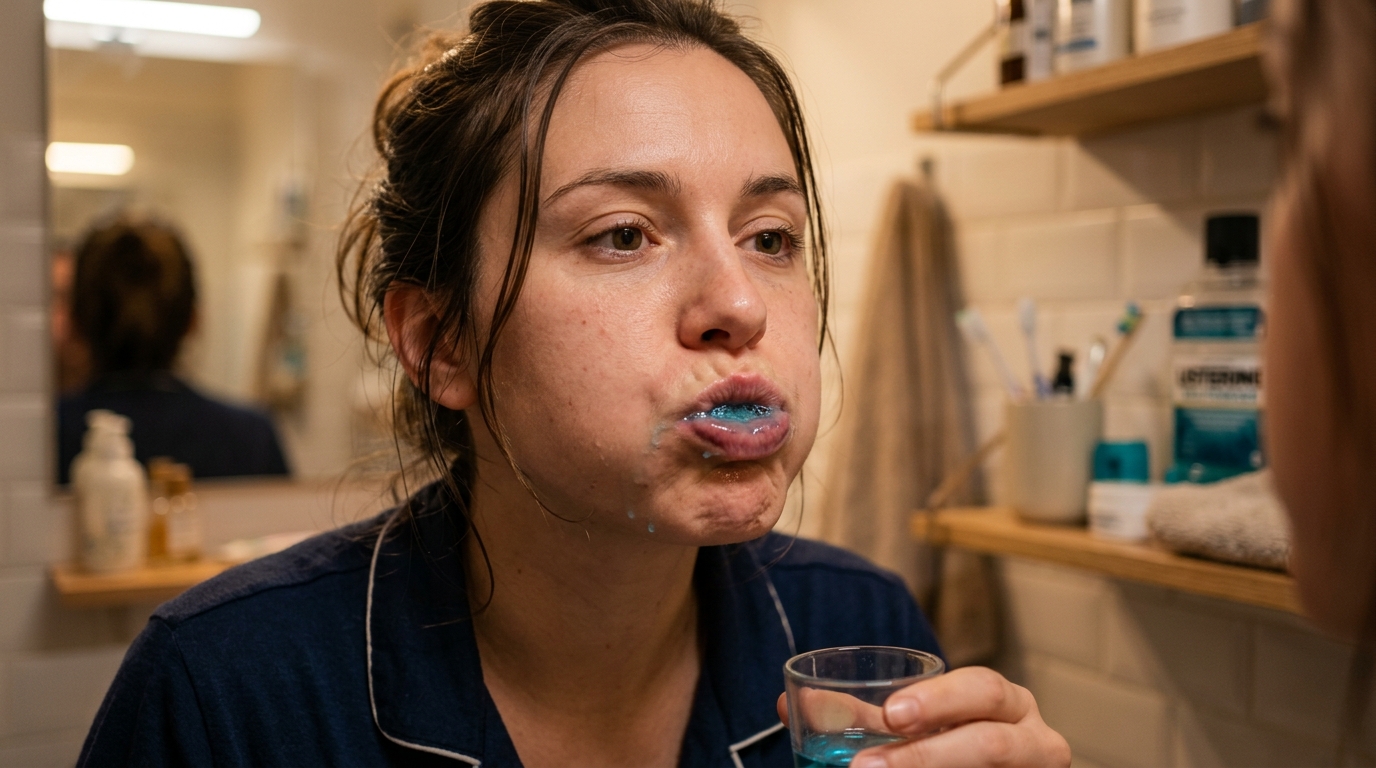
Every evening, the same ritual: a few seconds of mentholated mouthwash before bed, with the satisfaction of a job well done. An innocuous, almost mechanical gesture that millions of people repeat without ever questioning it, especially as the evenings grow cooler and hygiene habits resume their autumn rhythm. Yet what this antiseptic liquid sweeps away in its brief passage is not visible on the enamel of teeth or the color of the gums, and it could well concern an unsuspected mechanism in our body, far more discreet than the menthol freshness it leaves in the mouth.
- Antiseptic mouthwashes like chlorhexidine also destroy beneficial oral bacteria that convert dietary nitrates into nitric oxide, a molecule essential for regulating blood pressure.
- Bi-daily use over a week can kill more than 90% of these bacteria and reduce blood nitrite levels by 30 to 40%, leading to a measurable rise in systolic blood pressure.
- It is advisable to reserve these mouthwashes for occasional use, prefer gentle rinses without chlorhexidine for daily use, and consult a health professional if there is a cardiovascular risk.
- Mouthwash, this false ally of nightly hygiene
- The hidden side of the oral microbiota: when good bacteria pay the price
- Blood pressure and oral hygiene: a link to rethink
Mouthwash, This False Ally of Nighttime Hygiene
In the collective imagination, mouthwash is associated with cleanliness, fresh breath, and the prevention of cavities or gingivitis. A bottle on the bathroom shelf, a few swishes before going to sleep, and the reassuring impression of having taken a useful step for one’s oral health. This image, largely sustained by marketing, conceals a far more complex mechanism. Most of these products contain broad-spectrum antiseptic agents, such as chlorhexidine, whose action is not limited to the bacteria responsible for dental plaque or bad breath. These molecules act, in fact, like a real microbe bombardment carpet, indiscriminately eliminating both the beneficial and the harmful bacteria present in the oral cavity. Yet this bacterial diversity, far from being merely a biological detail, plays a physiologic role far more important than commonly thought.
The Hidden Side of the Oral Microbiota: When Good Bacteria Pay the Price
On the tongue, in particular, live bacterial colonies specialized in a little-known but essential task. They transform dietary nitrates, found notably in leafy greens such as spinach or beets, into nitrites, and then into nitric oxide. This molecule, though microscopic, has substantial power: it helps dilate blood vessels and actively participates in the regulation of blood pressure. That is where mouthwash enters in an unexpected way. By sterilizing the entire oral flora without discrimination, it also destroys these nitrate-reducing bacteria that contribute to the production of nitric oxide. Studies have shown that bi-daily use of chlorhexidine for as little as one week can lead to a drop of 30 to 40% in blood nitrite levels, accompanied by the destruction of more than 90% of the oral bacteria involved in this process. The biological chain is interrupted abruptly, with nothing visible to the naked eye.
Blood Pressure and Oral Hygiene: A Link to Rethink
This disruption of the oral microbiota does not come without consequences for blood pressure. A study involving 26 healthy individuals observed a significant increase in systolic blood pressure after a week of bi-daily use of an antiseptic mouthwash, an increase that disappeared when the product was stopped, with a gradual return of the bacteria producing nitric oxide. Another study, conducted with runners, found that those using a simple placebo saw their blood pressure fall twice as quickly after exertion as those who had used an antiseptic mouthwash, confirming the direct role of this vasodilatory molecule. This phenomenon would affect both people with hypertension and those with normal blood pressure, regardless of other cardiovascular risk factors. Should mouthwash be banished from the evening routine? Not necessarily, but a few simple adjustments can limit this unsuspected effect:
- Reserve antiseptic mouthwashes for occasional use rather than long-term daily use
- Favor gentle rinses without chlorhexidine for regular use
- Consult a health professional in case of a history of cardiovascular disease or risk factors
- Do not neglect traditional brushing, which remains the foundation of oral hygiene
Oral hygiene remains obviously essential, but this small evening gesture now deserves to be viewed with a bit more caution. Between immediate freshness and invisible biological balance, mouthwash reveals that a mouth that looks impeccably clean on the surface may hide far more fragile equilibria than one might imagine.
