
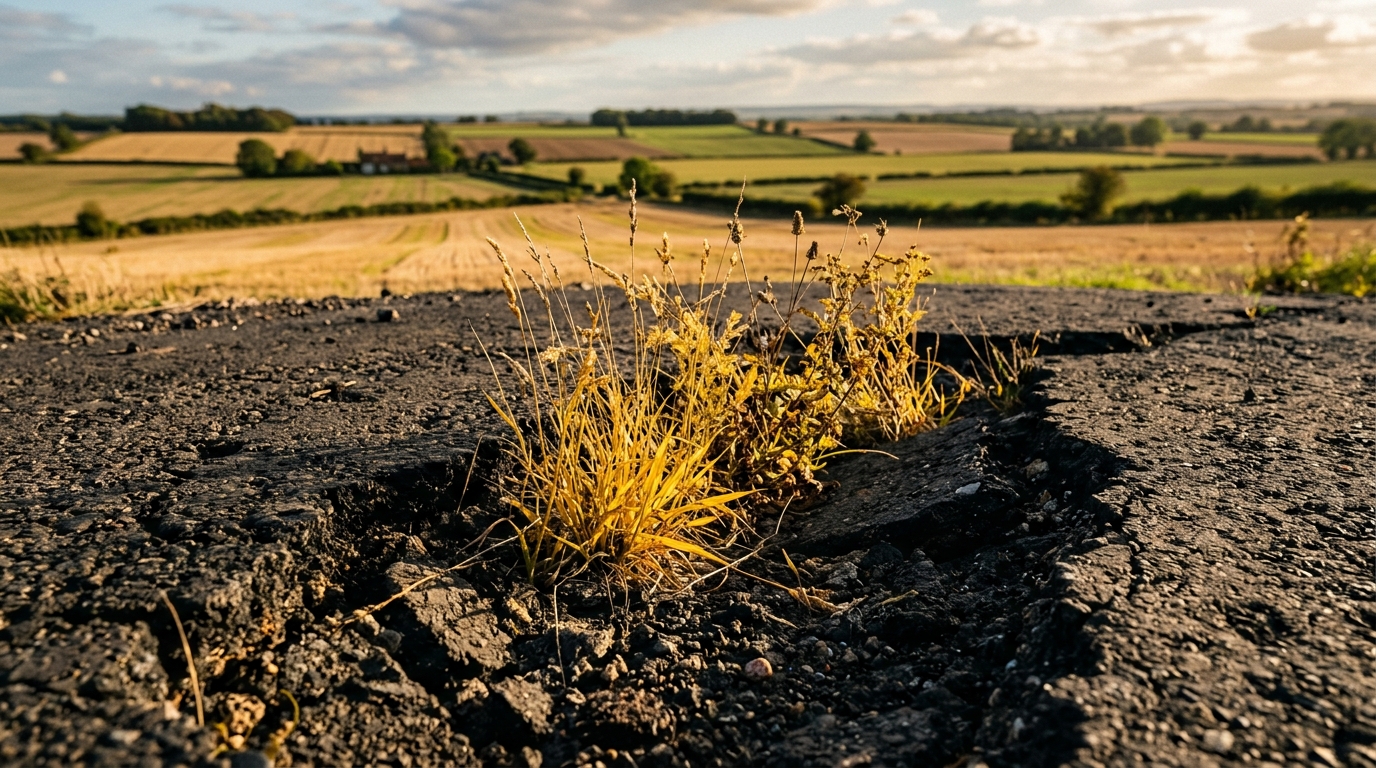
There are journeys on a road map that seem pulled from another era. Take the route from Nantes to the west, toward Notre-Dame-des-Landes, and you’ll come upon fields, hedgerows, a few isolated farms. Nothing to hint that, at that precise spot, bulldozers would one day carve out airstrips. And yet, it is exactly there that France spent an astronomical sum on a project that never came to be. A financial abyss long kept quiet, whose final outcome continues to fuel debates about how our country plans its major undertakings.
- The Notre-Dame-des-Landes airport project cost about 400 million euros in studies, procedures and safety measures before being abandoned in 2018
- The site became an emblematic ZAD, bringing together farmers, environmental associations and activists opposed to the project
- The 1,650 hectares involved were returned to farming operators, including former occupants of the ZAD, to reclaim an agricultural purpose
- The final bill: 400 million euros for an airport that will never exist
- Back to square one: how a beet field became the symbol of the anti-airport struggle
- From the ZAD to the tractors: the surprising metamorphosis of 1,650 hectares of disputed land
- The burdensome legacy of Notre-Dame-des-Landes: what this failure reveals about territorial planning in France
The final bill: 400 million euros for an airport that will never exist
It is hard to imagine a bill as steep as this for a project that never truly began. The Notre-Dame-des-Landes airport project cost nearly 400 million euros to the state and local authorities, a colossal sum spent on studies, legal proceedings, compensations and safety arrangements deployed over years on the site. And at the end of all that, no runway, no terminal, no airplane. Just fields, still fields.
This amount alone marks one of the most dramatic planning fiascos in France in recent decades. It is not simply a calendar delay or a standard budget overrun; it is the outright abandonment of a project that had been validated, debated and even declared of public usefulness. In 2018, after years of tensions, lawsuits and militant occupations, the government officially ended the venture. A decision that, overnight, closed the door on decades of public investments.
Back to square one: how a beet field became the symbol of the anti-airport struggle
To understand how this happened, one must go back in time. The idea of a new airport to relieve Nantes-Atlantique goes back several decades, but it is in the 2000s that the project really took shape. The stated objective on paper was simple: to build a modern infrastructure capable of absorbing the growth in air traffic in the western part of France, on a site judged more suitable than the existing airport, located too close to the Nantes metropolis.
But this agricultural land, made up of hedgerows, wetlands and smallholdings, quickly became the stage for an unexpected resistance. Farmers unwilling to leave their lands, environmental groups alarmed by the loss of valuable ecosystems, and militants from across France who settled on the spot: the site gradually transformed into a ZAD, the now-famous Zone to Defend. Cabins, communal gardens, treehouse shelters: this corner of countryside became, almost by force, one of the most powerful symbols of ecological protest in France, widely broadcast by national and international media.
From the ZAD to the tractors: the surprising metamorphosis of 1,650 hectares of disputed land
What strikes today is the transformation of a territory long stuck in uncertainty. After the official abandonment of the project, the 1,650 hectares of land tied to the airport’s domain gradually reclaimed their primary vocation: farming. The lands seized or purchased by the state over the years were returned, restored or reallocated to operators, often the same people who had fought to keep them.
The landscape that now unfolds is almost paradoxical. Where one would have expected concrete runways and terminal halls, there are market gardens, pastures, projects for collective farms, and sometimes even experiments in agroecology. Some former occupants of the ZAD stayed on site, exchanging militant tents for more enduring agricultural installations. This shift, from conflict zone to cultivated zone, illustrates how a territory can reinvent itself once the industrial project dictating its fate is decisively set aside.
The burdensome legacy of Notre-Dame-des-Landes: what this failure reveals about territorial planning in France
Beyond the local anecdote, the Notre-Dame-des-Landes affair raises broader questions about how France designs its large-scale infrastructure projects. How did a project manage to mobilize so many public funds before the first shovel ever struck the ground, without any real barrier against spiraling costs and legal challenges? The answer likely lies in the slow pace of French administrative procedures, but also in a glaring lack of upfront dialogue with the populations and local stakeholders concerned.
This case has also highlighted a shift in public perception of major developments. What twenty years ago seemed an economic and industrial given has encountered a growing demand for the preservation of agricultural land and natural areas. In this sense, Notre-Dame-des-Landes is not merely a fiscal failure: it is a barometer of the tensions now shaping France between economic development and ecological transition. Other infrastructure projects elsewhere in the country are now explicitly drawing lessons from this precedent to anticipate potential blockages, a sign that the affair continues to influence public decisions years later.
What remains is a question that transcends Notre-Dame-des-Landes: how many similar projects, elsewhere in France, are today swallowing substantial sums before they are definitively approved or abandoned? At a time when public finances are under close scrutiny and the preservation of agricultural land has become a central issue, the story of this beet field turned national symbol may deserve to be remembered, as much as a warning as an example.
