
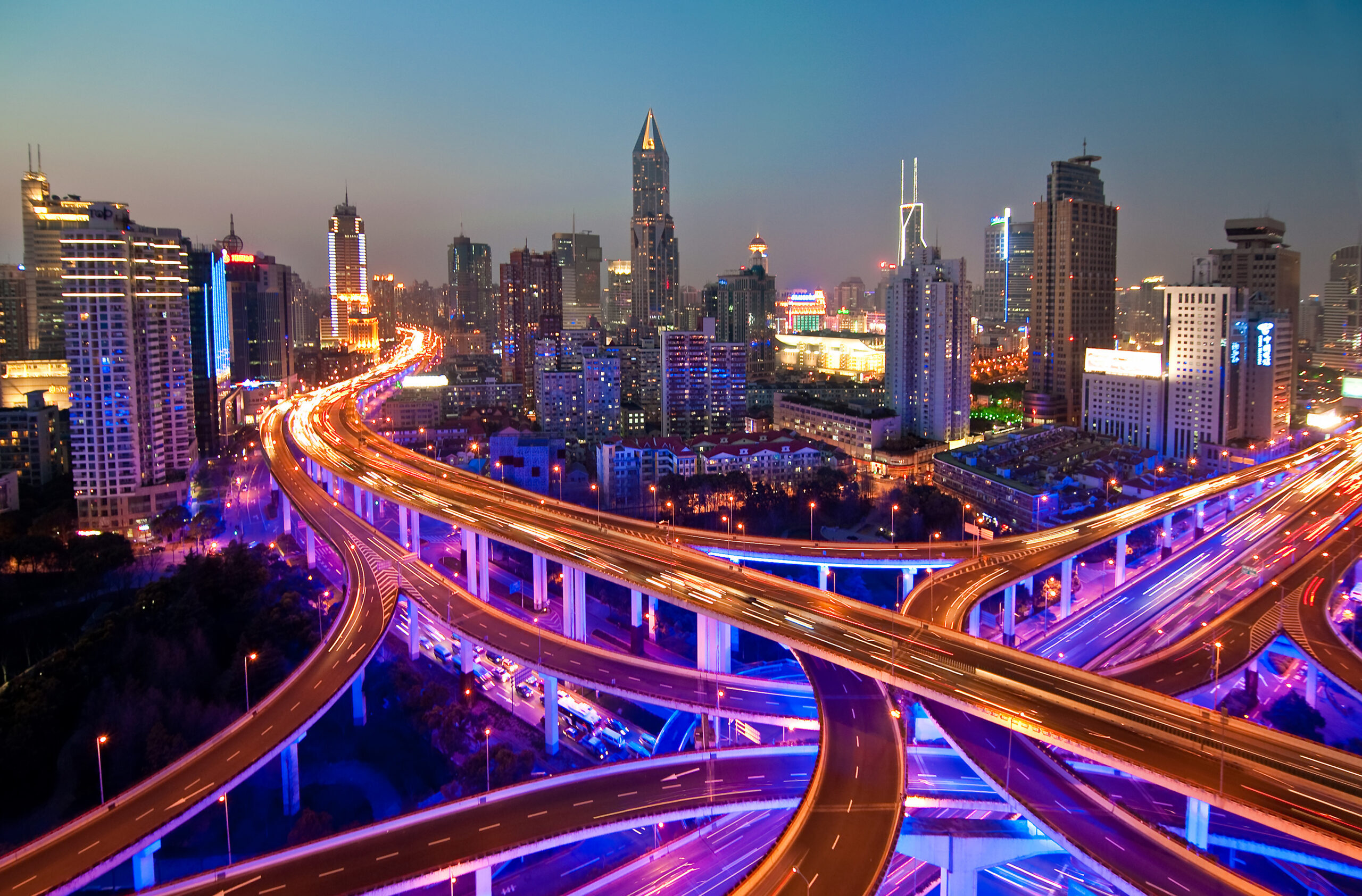
The ecological crises and the looming scarcity of resources should push us to rethink our cities. A French geographer has recently written a book about a very particular concept: “demetropolisation.” The aim? To carry out a demographic rebalancing between urban centers and rural areas.
Metropolises are ecological dead ends
Guillaume Faburel is a professor of urban studies and geography at Université Lumière Lyon 2. He is mainly known for his theories in favor of a post-urban society. On September 10, 2026, his latest work Where to Live? was released by Tana Editions, as highlighted notably by an article in Libération.
Concretely, the geographer bases his reflection on a critique of metropolization, i.e. the global process of concentrating population, wealth and governing functions – political, economic, cultural – in a small number of large cities – the metropolises. For the expert, these major cities are at once ecological dead ends, places of social exclusion and loss of political autonomy.
Ecologically, the critique concerns the enormous consumption of energy and raw materials by metropolises. These large cities depend entirely on resources produced elsewhere, while suffering climate crises, notably through urban heat islands.
Toward a Planned Urban Exodus?
For Guillaume Faburel, the best post-urban vision is certainly “demetropolisation.” This concept that he himself conceived naturally goes against traditional land-use planning policies. In his book, the author evokes notions such as the “territorial relocation” and the “bio-regions.” He notably promotes the bringing together of living spaces and production, as well as the establishment of an economy of subsistence and care.
Note that the term “territorial relocation” has existed since the 1970s. Rehabilitated, it is now related to the organization and planning of an urban exodus to better distribute human settlement in the face of the climate emergency. Regarding the notion of “bio-regions” (or geographic countries), it concerns human-scale life basins that favor self-organization, without tipping into complete autarky.
Guillaume Faburel also specifies that the current supply model – particularly in terms of food – is not viable in the long term. Demetropolisation therefore requires a strict relocation of agro-food activities. Moreover, the geographer asserts that it will be necessary to reallocate around ten million citizens into the trades of farming, craftsmanship, education and care. The author even illustrates his thinking with the following slogan: “learn to live better with less”.
Autonomous Refuge Territories
The researcher says he has identified seven major French geographic areas – refugee territories – capable of absorbing a portion of the urban population. These areas could, without breaking their ecological balance, double their current population by 2050. Here is the list: the Pyrenees, the Massif Central, the Alps and pre-Alps, Poitou, Normandy, the Morvan and certain hills of Central Brittany.
These zones were not designated at random but according to roughly thirty climatic and autonomy criteria. Among these notions, we find, for example, resistance to thermal extremes, notably thanks to altitude. Also cited is the absence of major immediate risks such as severe droughts and megafires. Another particularly essential notion is the designated space’s capacity to produce its own resources and energy from local materials.
