
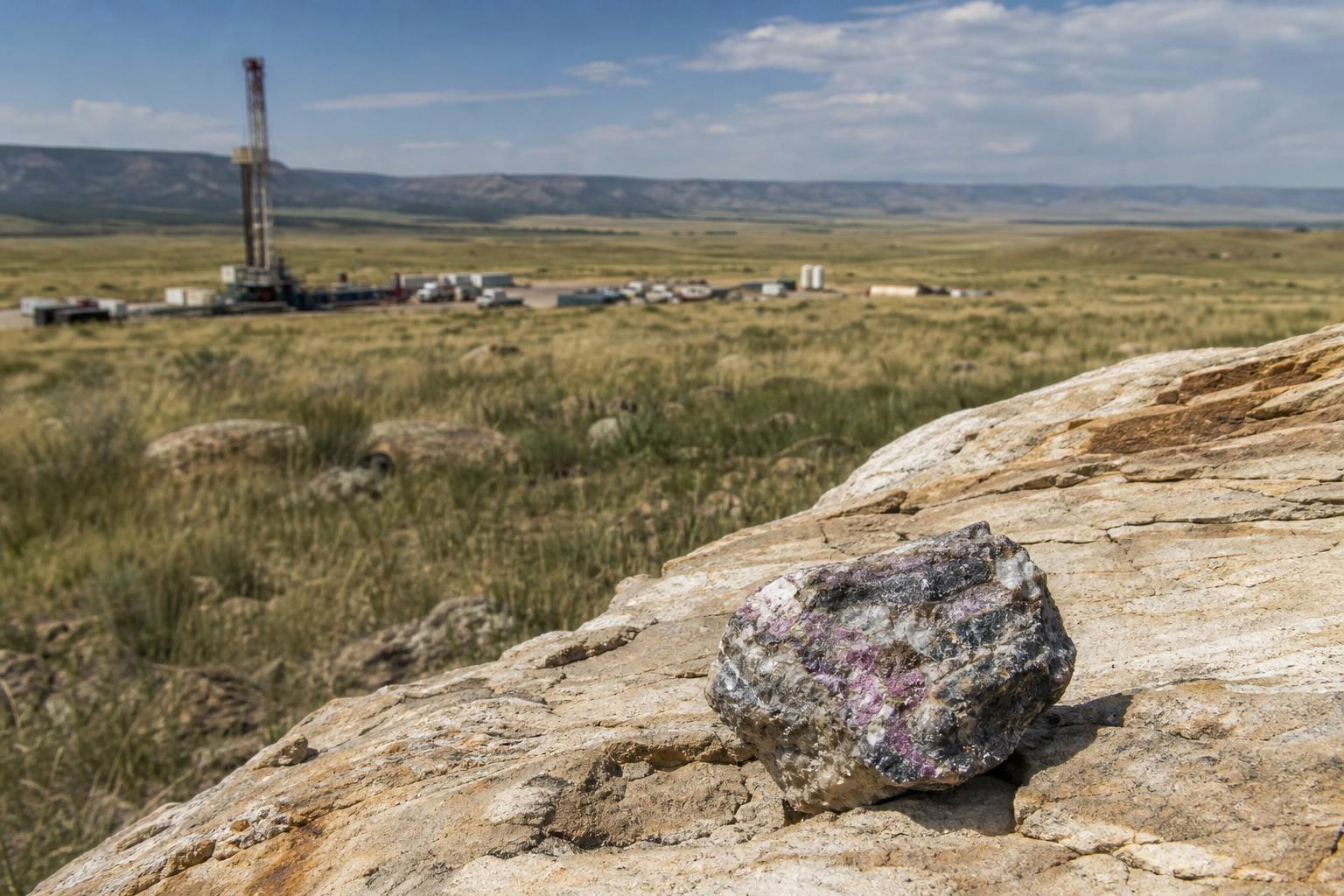
Wind scours the prairie, and below that quiet sweep of grass lies a surprise with global implications. Geologists say their new maps trace a vast system of rare earth minerals, the kind that power magnets, phones, wind turbines, and guided systems that modern life takes for granted. In a state better known for coal and cattle, the subsurface now whispers of future supply chains and strategic recalibration.
The scale is startling, but the tone among scientists remains measured. “This is the kind of inventory that can reframe a national strategy,” one field geologist said, “but rocks don’t become resources until engineering, policy, and people all line up together.”
What the maps reveal—and why it matters
The mapped body extends across multiple intrusions and altered zones, a footprint broad enough to attract serious attention from miners, technologists, and policy makers. These are the rare earth elements—lanthanides along with yttrium and scandium—that sit at the heart of high-performance motors and advanced sensors.
For decades, global supply has been concentrated, and processing capacity even more so. That imbalance has left manufacturers vulnerable, with price shocks and export controls rippling through industries. A major domestic source would not end interdependence, but it would add resilience and bargaining power.
“This deposit reads like a toolbox for an energy transition,” noted one mineral economist, “but only if we solve the processing bottleneck that has long defined the sector.”
How geologists stitched the picture together
The discovery is not a single eureka trench but a tapestry built from signals. Teams combined airborne magnetics, radiometric sweeps, gravity data, and targeted drilling to outline zones of enriched minerals. Each technique illuminated a layer of the subsurface, and the layers converged into a map.
The rocks point to alkaline and carbonatite intrusions—geologic settings known to host rare earths when fluids move, react, and concentrate. In core, geologists track minerals like bastnäsite and monazite, with trace assemblages that hint at the deposit’s history. Grain size, liberation, and weathering become a kind of forensic record engineers must later decode.
One scientist called the dataset a “geologic DNA,” a profile that guides where to sample, how to model, and which metallurgical paths might work. Every parameter shrinks the unknowns, but each answer produces new questions.
The promise—and the caveats
Economic potential is obvious, yet the path to a mine is rarely straight. Capital must meet chemistry, and community priorities must meet permits. The operating margin will live or die on separation technology, energy prices, and a long tail of regulatory approvals.
- The hardest step is not the mine but the processing: separating tightly bound elements without excessive waste, water, or reagents.
Investors see a window, policy makers see a lever, and locals see both opportunity and disruption that arrives with trucks, lights, and change. “We want jobs that last,” a nearby rancher said, “but we also want our water clear and the night sky dark.”
Processing: the real battlefield
A mine produces ore, but industries buy oxides, metals, and magnet-ready powders. Between those endpoints sits a maze of crushing, flotation, leaching, solvent extraction, and calcination steps that must be tuned to the ore’s quirks. Misread the mineralogy and you bake high costs into the flow sheet for a decade.
Newer routes—ion-exchange resins, membrane-based separation, and selective precipitants—offer pathways to lower footprints. Pilot plants are where ideas become yields, where grams turn to tons, and where a spreadsheet meets a pump that clogs at 3 a.m. with inconvenient truths.
Land, water, and trust
Open prairie looks empty, but it is a living network of sagebrush, migratory routes, aquifers, and heritage. Any development must prove its balance with groundwater, tailings stability, dust, and biodiversity. The standard is not just legal compliance, but a social license that can endure over a mine’s full life.
Indigenous and local voices carry weight, not as a checkbox but as guiding partners. Early engagement can shape haul roads, monitoring plans, reclamation design, and benefit-sharing so value stays rooted where it is extracted. “Respect is not a meeting,” one community advocate said, “it is a practice measured year after year.”
From headline to hardware
The next steps are predictable on paper: infill drilling, resource estimates, metallurgical test work, pilot circuits, and a march through state and federal permits. In practice, each milestone depends on funding, weather, staffing, and a thousand small decisions that cumulatively determine viability.
Policy will tilt the field—tax credits, offtake agreements, and public–private partnerships can smooth the first plant and the first shipment. But durable success will hinge on cost, consistency, and environmental proof that withstands scrutiny beyond a single cycle.
For now, the subsurface has spoken, and the message is both inviting and demanding. The elements the world craves may be closer than expected, but turning promise into supply will require rigor, patience, and uncommon clarity. As one mapper put it, “The rocks look good—now we must earn the rest above ground.”
