
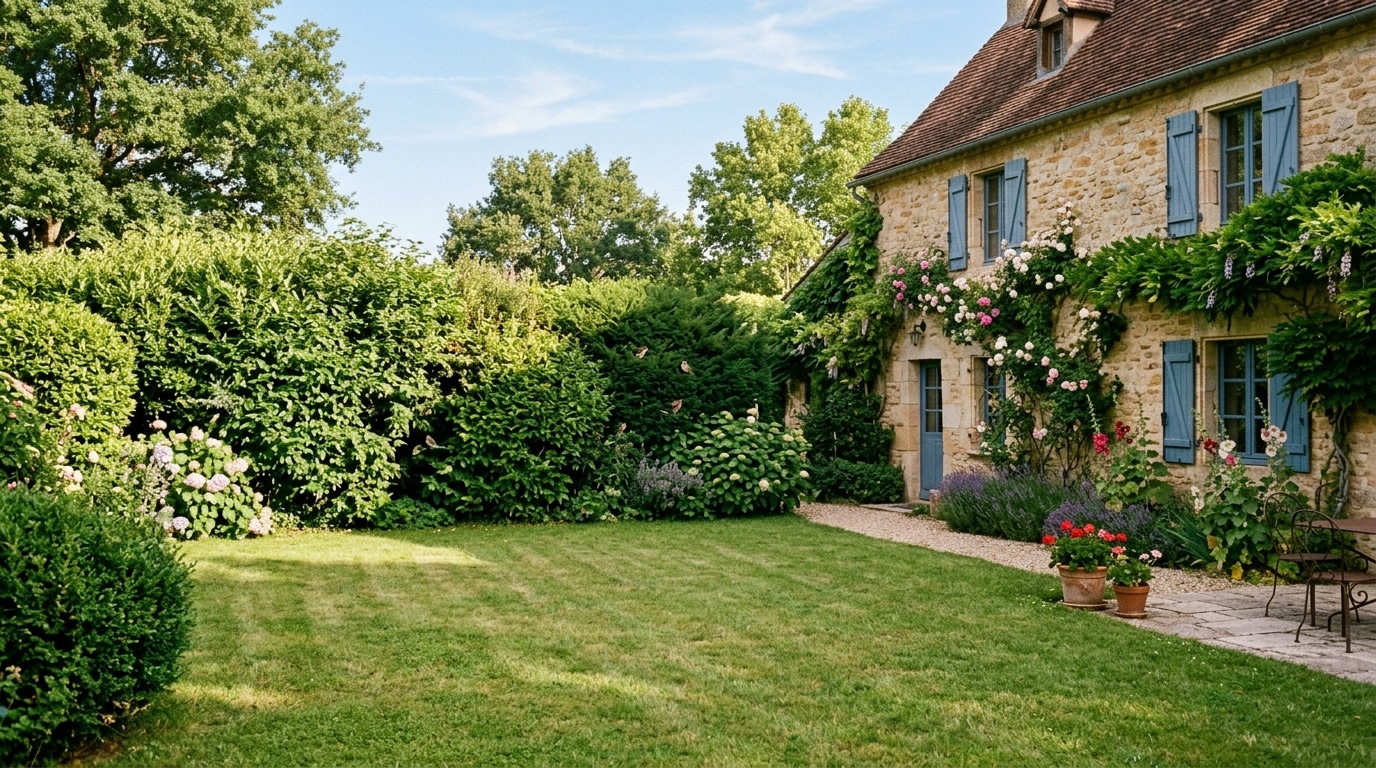
You thought your birds had headed to Africa as soon as the first August heat hit. In reality, most have not moved a wing. They have tucked themselves just a few meters from you, silent, discreet, invisible. The sudden stillness of the garden fools everyone, because it is not migration that empties our hedges at the end of summer: it is something else entirely, and it happens right near the house.
The Great Misunderstanding of the Silent August Garden
Every year, the same impression returns: as soon as August begins, the garden seems to drain. No more songs at dawn, no more titmice raiding the feeder, no more blackbirds scratching the lawn. The conclusion seems obvious: the birds have already left on migration. Yet, that is a misinterpretation. The great travelers, such as swallows or swifts, do not truly take flight until later in the season, and a good portion of our residents are sedentary species that, indeed, never leave the country.
What looks like a mass departure is in fact only a silent shift. The birds drastically reduce their activity and their presence in open spaces. They stop singing, because the mating season is over, and they go unnoticed. The real question, therefore, is not where they have gone, but why they hide so close to us.
When Drought Dries the Pantry Before the Birds
The answer largely lies in what’s on their plates. Insects form the backbone of many passerine diets, especially when feeding their young. Yet these little creatures are ectothermic organisms: their activity depends directly on temperature and humidity. When heat waves follow one another and soils dry out, their populations collapse. The pantry empties long before the birds even consider leaving.
The situation is worrying: more than four out of ten garden birds today are in decline. The spread of scorching summers does not help. The preceding year was one of the hottest ever recorded in our country, with an anomaly nearing two degrees and almost a month of heatwaves. Surface soils ended up drier than normal across a large portion of the territory, reducing both available water and the vegetation cover where insects typically swarm.
In the Shade and Cool: Where They Seek Refuge Without Leaving the Neighborhood
Facing the furnace, birds adopt a very simple survival strategy: they seek shade and coolness. They desert sun-baked lawns and sun-lit feeders to retreat to the most sheltered spots: the dense heart of a hedge, the thick foliage of an old tree, a dense shrub at the back of a bed. There, the temperature can be several degrees lower, and the humidity a bit better preserved.
That is the whole explanation of the mystery: the birds reduce their activity and their visible presence when heat and drought limit water, insects, and vegetal cover. They have not left, they are conserving their energy out of sight. The nesting period, in particular, is especially critical: nests become true furnaces, causing premature failures, cases of asphyxia and a severe lack of water for the youngest. The martins are among the most affected, arriving in numbers at care centers during heat peaks.
Making Your Garden Live Again: The Actions That Bring Them Back
The good news is that it is possible to reverse the trend on your own plot. The first move, perhaps the simplest, is to install a water source: a shallow dish, regularly refilled and placed away from direct sun, becomes an irresistible magnet for thirsty birds. One or two liters of clean water renewed each day can truly save lives during scorching spells.
Next, it is about restoring a welcoming environment. Leave rough patches and tall grasses, true reservoirs of insects. Plant hedges and trees that will provide shade, coolness, and refuges. Giving up the perfectly manicured lawn is to offer shelter and food again to a discreet fauna. In a few seasons, a diverse garden can become a haven where life reclaims its rights.
So August’s silence is not a inevitability, but a signal. Our birds haven’t fled south: they are hiding nearby, in search of some shade and a drop of water. By rethinking our gardens as oases rather than meticulously designed backdrops, we hold a share of the solution. And if, in the end, the best way to help nature begins just a few meters from our doorstep?
