
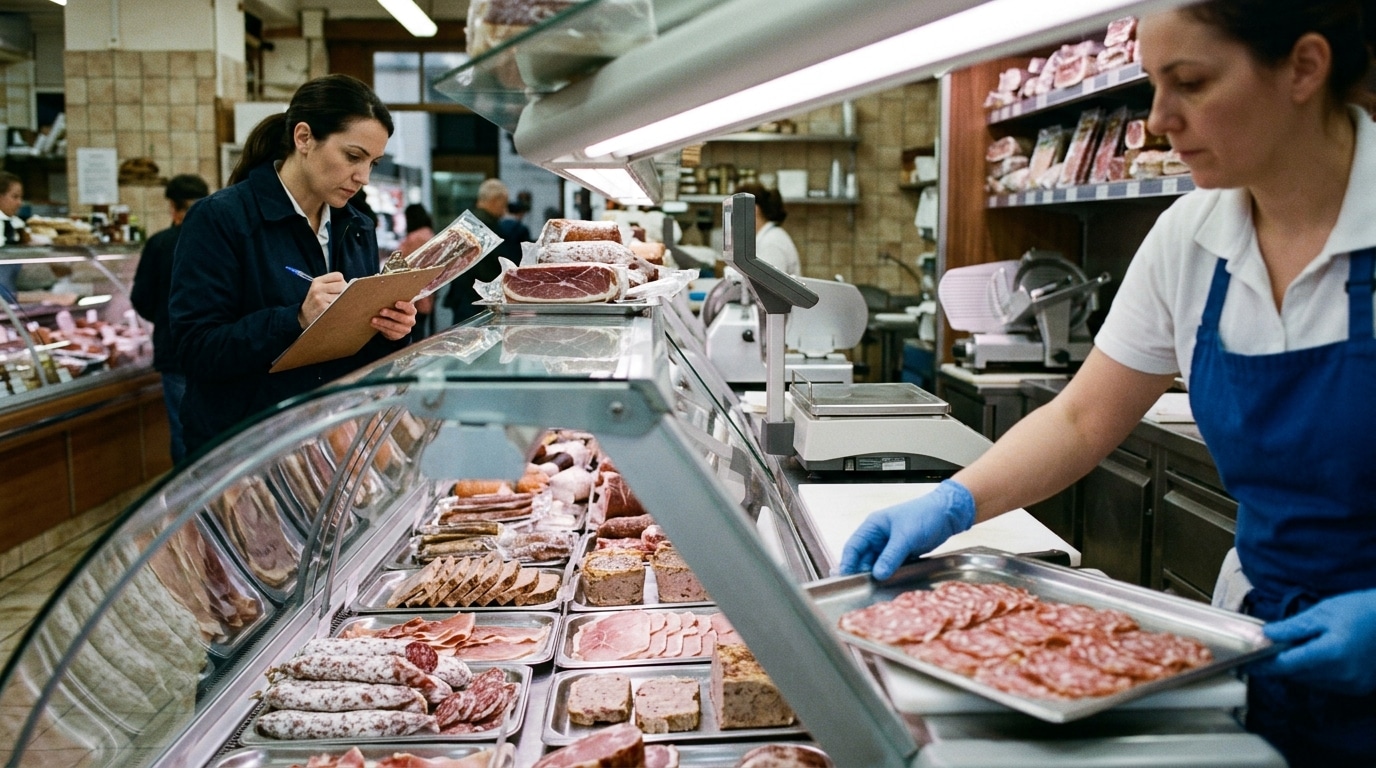
Important note before anything else: this new episode is not an isolated case. Twelve people were infected, two did not recover, and all shared a nontrivial common factor. But what concerns public health authorities most goes beyond this single incident of processed meats. Behind this cluster lies a underlying trend, observed and documented by Santé publique France for five years, which questions what is really at play in our plates. A simple statistical coincidence or a deeper phenomenon? The answer deserves attention, especially since this event occurs just a few months after a previous episode that had already captured public imagination.
- Twelve cases of listeriosis linked to charcuteries from Drôme Ardèche Tradition were recorded between September and January, including two deaths among individuals over 75.
- Cases of listeriosis have been rising steadily since 2021, reaching 619 cases in 2024, a trend tied to population aging rather than an increase in contaminated foods.
- Facing a risk that is invisible to the naked eye, older adults, pregnant women, and immunocompromised individuals should favor cooking sensitive foods and heed product recalls.
- A new listeriosis cluster linked to contaminated charcuterie
- A contamination curve monitored by authorities for five years
- Listeriosis: who is affected and how to mitigate the risks
A new cluster of listeriosis linked to contaminated charcuterie
The ministries of Agriculture and Health issued a statement that is hard to overlook: twelve cases of listeriosis were recorded between September and January, all linked to charcuterie products manufactured by the Bourg-de-Péage-based company Drôme Ardèche Tradition. Among these twelve patients, two people over 75 years old died. The median age of those affected is 81, and the details are telling: of the twelve infected individuals, all hospitalized, eleven were over 65. In response, a préfectoral order suspended the company’s activity, which in turn withdrew and recalled all products produced at its site. A swift reaction, appropriate to the risk this bacterium poses to the most vulnerable populations, but it also raises a broader question about how frequently such episodes occur.
A contamination curve monitored by authorities for five years
This cluster inevitably resonates with a prior episode still fresh in memory. In August, authorities identified at least 21 cases of listeriosis, including two deaths, linked this time to pasteurized milk cheeses from the Chavegrand dairy. The case took a serious legal turn: the Paris prosecutor’s office opened an investigation for involuntary manslaughter, involuntary injuries, and deception, as the bacterium had been detected as early as 2024 in the establishment without adequate measures or prompt information to authorities and consumers following. But beyond these two high-profile cases, it is indeed a long-term trend that Santé publique France has been monitoring for five years. Between 1999 and 2020, the annual number of cases ranged from 188 to 414. Since 2021, the curve has risen steadily, reaching 619 cases notified in 2024, i.e., an incidence of 9 cases per million inhabitants compared with 3.1 to 6.2 previously. A figure that rises even more sharply with age, since the incidence reaches 87 cases per million among those over 90, versus only 2.3 among those under 60. The median age of cases stood at 76 in 2024, and almost nine out of ten patients had at least one comorbidity. Asked on France Inter, Marc Lecuit, an infectious disease specialist at the Pasteur Institute who runs the national reference center for Listeria, sought to nuance things: this rise is not explained by foods being more contaminated, nor by a relaxation of surveillance, but by the increasing number of susceptible individuals, directly linked to demographic aging and the progression of chronic age-related diseases. A trend that, according to the health agency, is also observed in many other European countries.
Listeriosis: who is affected and how to limit the risks
Listeriosis remains a rare foodborne infection, accounting for less than 0.1% of food-origin infections, but it remains a cause for concern: it is the second leading cause of death from food poisoning in France, after salmonella, with several dozen deaths each year. A 2017 report from Santé publique France already cited about 65 deaths annually for 400 to 500 cases recorded by the Pasteur Institute, figures that illustrate the long-term magnitude of the phenomenon. Certain populations are particularly exposed: the elderly, pregnant women, newborns, and immunocompromised individuals. In adults, symptoms include fever, muscle aches, digestive disturbances, sometimes septicemia or meningitis and brain involvement in the most severe forms. In pregnant women, the infection can go completely unnoticed, limited to contractions or a simple flu-like syndrome, while still endangering the life of the fetus. Another peculiarity of this bacterium: its incubation can extend up to eight weeks, which seriously complicates identifying the responsible food retroactively. According to EFSA, some foods carry a higher risk, starting with fermented sausages, but also:
- Soft cheeses made from raw milk
- Charcuterie
- Smoked fish
- Sprouted seeds
- Refrigerated ready-to-eat dishes
Perhaps the most puzzling aspect: a food contaminated with Listeria is invisible to the naked eye, as the Agriculture Ministry reminds us. A contaminated product looks exactly like a healthy product, which makes individual vigilance difficult without official information. The good news is that cooking destroys the bacterium, a simple act that remains one of the best protections in daily life, especially for the most vulnerable groups.
Between population aging and increasingly vigilant public health measures, this rise in listeriosis cases invites us to adopt the right habits without giving way to undue anxiety. Thoroughly cooking sensitive foods and following product recalls remain simple yet valuable actions, especially for the people we are closest to who are most at risk.
