
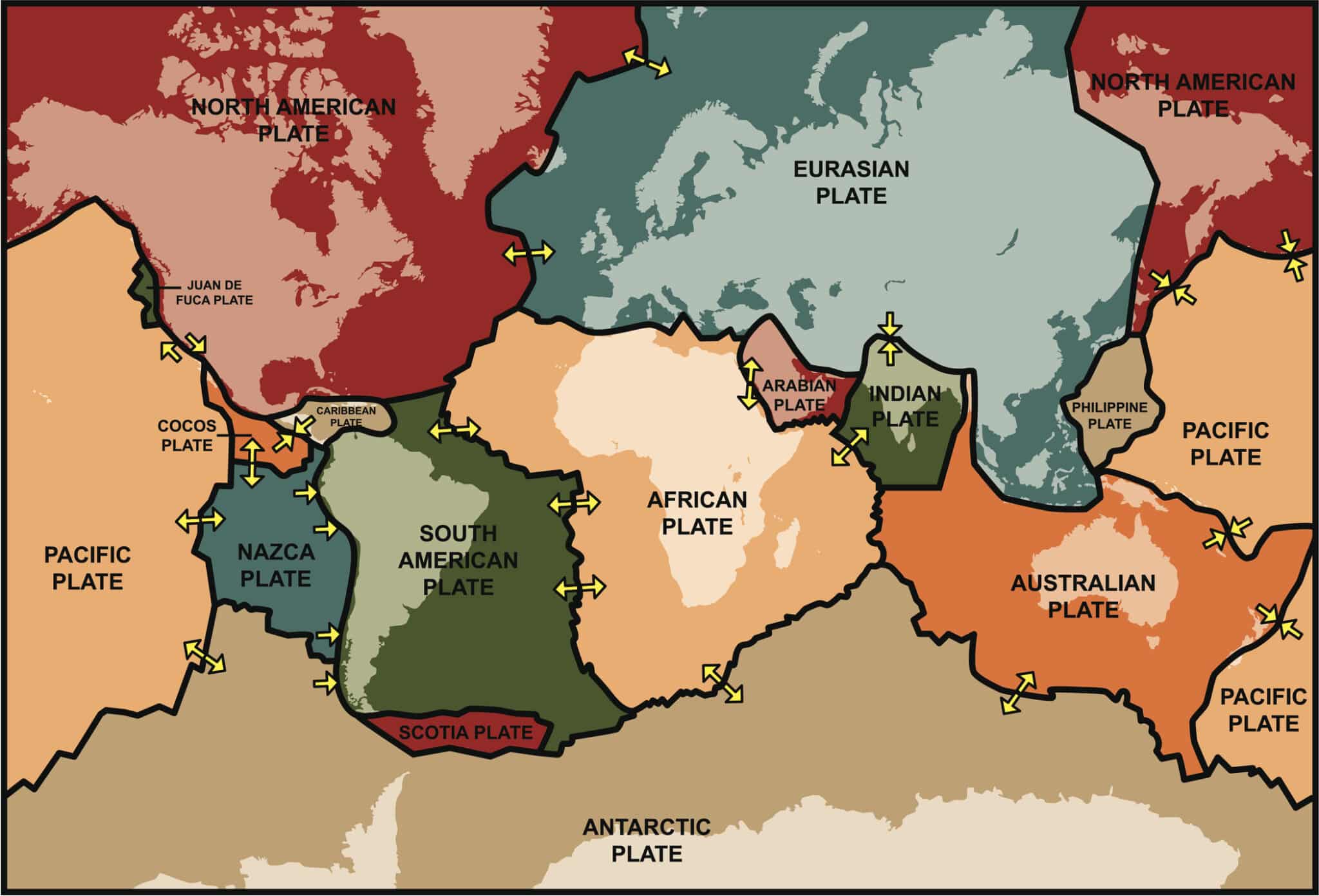
You thought the Earth was a block of rock frozen in time? Think again. Our planet is actually a true kaleidoscope of tectonic plates constantly evolving. Researchers have just unveiled a stunning video that traces 1.8 billion years of these continental movements in under a minute.
A Journey Through Geological Time
Using new geophysical data and sophisticated computer models, scientists have reconstructed the history of our planet with unprecedented precision. The video starts in the twenty-first century, with the continents we know today, and then goes back in time to 1.8 billion years ago.
Over millions of years, we thus witness geological spectacles: the formation and breakup of supercontinents, the opening and closing of oceans, the birth of mountain ranges… Pangaea, the famous supercontinent that combined all landmasses about 200 million years ago, appears and disappears before our eyes.
The Boring Billion: A Period of Major Activity
Contrary to what was previously thought, the period between 1.8 and 0.8 billion years ago, often nicknamed the Boring Billion because of apparent tectonic stability, turns out to be far more dynamic than believed. New geological data and more precise simulation models reveal indeed intense tectonic activity during this period. Numerous plate movements occurred, such as subductions and continental collisions that gave rise to new mountain ranges.
These discoveries challenge earlier models and emphasize the importance of re-evaluating our understanding of Earth’s evolution. This era, far from a calm phase, now emerges as a crucial period in our planet’s history, marked by major geological events that shaped the continents and the oceans.
And the future? It still holds many surprises. Scientists predict that the continents will continue to move and transform. In a few million years, Africa could in fact split into two, giving birth to a new ocean. In the longer term, all the continents could reunite to form a new supercontinent, perhaps called Amasia or Aurica.
Why are these studies important?
This information is important for several reasons. First, by studying the movements of tectonic plates over time, scientists can identify the zones most at risk of earthquakes, volcanic eruptions, and landslides. This knowledge enables the development of early warning systems and the construction of safer infrastructure, thereby reducing risks for populations.
Rocks and fossils are also archives that tell us about past environments. By deciphering these records, scientists can reconstruct the history of life on Earth, understand the mechanisms behind mass extinctions, and study past climate variations. This information is therefore essential for understanding the impacts of human activities on the current climate and anticipating future changes.
Finally, understanding the geological history of our planet helps us better grasp the processes that shape our environment. By knowing natural cycles and the factors that influence climate, we are better equipped to face current and future environmental challenges. The study of geology is thus an investment in the future that enables us to make informed decisions to protect our planet and future generations.
A Fascinating View of the Connections Between Tectonics and Biodiversity
The movements of tectonic plates not only shape terrestrial and marine landscapes, they also play a key role in the evolution of biodiversity. By altering the arrangement of continents and oceans, these shifts influence regional climates, ocean currents, and thus habitats. For example, continental drift has isolated certain species, promoting their evolution into new life forms, while the creation of mountain ranges has allowed the emergence of unique ecological niches. This interconnection between geology and biology illustrates how the history of our planet is intimately linked to the history of life.
The study is published in the journal Geoscience Frontiers.
