
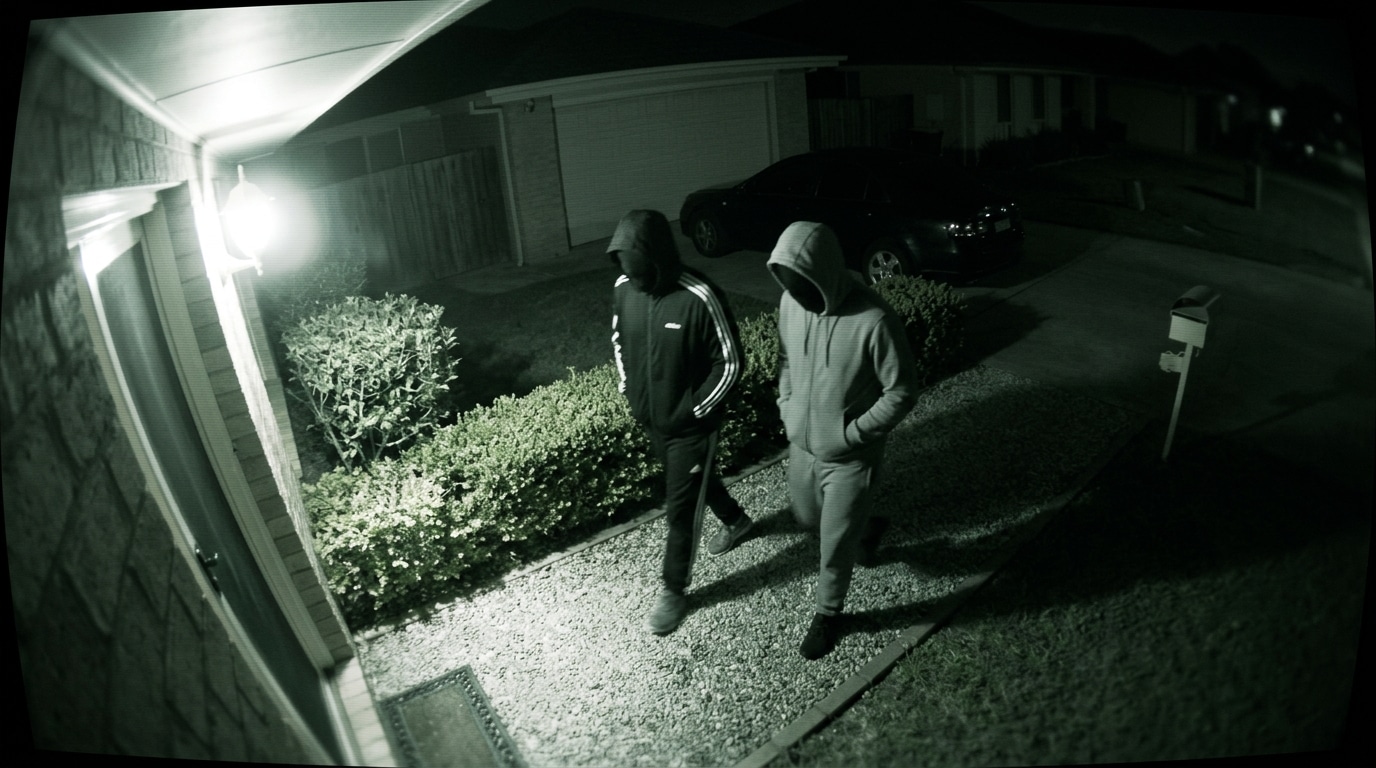
Many people think that stopping a burglar at home is enough to guarantee self-defense, regardless of the time. That is false, and it is precisely this misunderstanding that led a burglary victim to face a battery of unexpected questions from the police. Two days after the events, the reason became clear: everything hinges on the clock.
- The Penal Code Article 122-6 presumes self-defense only in two specific situations: nighttime intrusion by break-in, violence or deceit into a dwelling, unlike a daytime intrusion.
- During the day, Article 122-5 applies and requires demonstrating a necessary and proportionate response, with no automatic presumption.
- In 2025, 211,600 burglaries or attempts were recorded in France, with a twelve-month clearance rate of only 7%.
- 3 PM, not midnight: the detail that changed everything in my case
- Automatic self-defense or not: the law article no one reads before acting
- Why the same actions can protect you at night and incriminate you by day
3 PM, Not Midnight: The Detail That Changed Everything in My Case
An intruder enters a house, the children are present, the protective reflex kicks in. The scene resembles hundreds of others reported each year in France. Except that here, one detail changes everything: the clock shows 3 PM, not midnight.
That seemingly innocuous figure became the heart of the police questioning. For in French criminal law, night is not merely a dramatic backdrop; it is a legal condition in its own right, written in black and white in the Penal Code.
The gendarmes do not ask these questions out of morbid curiosity. They seek to determine under which legal regime to classify the case. And that regime depends entirely on when the intrusion occurred, far more than the victim’s perceived severity at the moment.
Automatic Self-Defense or Not: The Law Article No One Reads Before Acting
Article 122-6 of the Penal Code, in force since March 1, 1994, provides a presumption of self-defense, but only in two precise situations. The first concerns someone who repels at night the entry by break-in, violence or deceit into a dwelling. The second concerns defense against perpetrators of thefts or looting carried out with violence.
In other words, Article 122-6 presumes self-defense only to repel a nighttime intrusion into a dwelling; by day, it must be demonstrated according to the criteria of Article 122-5. This nuance radically shifts the position of the person who defended themselves in court.
Article 122-5 applies in all other cases, including in broad daylight. It requires a necessary and proportionate response to the severity of the harm suffered. No automatic presumption remains: each action must be justified, point by point, before a judge.
It is also worth noting that the presumption under Article 122-6 remains a simple presumption. It shifts the burden of proof to the public prosecutor, who can overturn it if they demonstrate that the response was obviously disproportionate, even at night. The law therefore never offers a total blank check.
Why the Same Gestures Can Protect You at Night and Incriminate You by Day
Two recent cases illustrate this fracture line between day and night perfectly. On September 24, 2026, the Assize Court of the Marne, in Reims, sentenced a farmer from Ambrières, aged 53, to five years in prison, four of which were suspended, with one year of house arrest under electronic monitoring.
The facts date back to the night of January 31 to February 1, 2020. Three men came to siphon diesel from his farm, and one of them, aged 19, was severely injured. The court rejected the attempted murder charge but found violence with a weapon that resulted in mutilation, with confiscation of weapons and two years of ineligibility.
The three diesel thieves were also found guilty, receiving sentences ranging from two to ten months of imprisonment with suspension. This verdict clearly shows that even at night, the presumption of self-defense does not shield someone from a response that leads to disproportionate harm, especially when it results in mutilation.
In June 2026, the Haute-Vienne Assize Court handled a different case: a homeowner had struck a burglar, and a suggested 15-year sentence for attempted murder had been pronounced, before the facts were reclassified as voluntary violence resulting in permanent injury. Two stories, two times of day, two distinct legal readings.
These decisions gain meaning when seen against the figures of SSMSI, the Interior Ministry’s statistical service. In 2025, 211,600 burglaries or attempts to burgle dwellings were recorded, a 3% drop from the previous year. But the twelve-month clearance rate remains at a mere 7%, leaving victims often alone with uncertainty about the intruder’s identity at the moment of the incident.
Facing a door yielding at 3 PM, the reflex to protect does not pause for debate in the moment. Yet once the adrenaline subsides, it is the clock, not the intent, that dictates the applicable legal framework. Knowing this day-versus-night distinction does not alter the instinct to protect loved ones, but it helps explain, in hindsight, why police questions focus not on the act itself first, but on the time at which it was carried out.
