
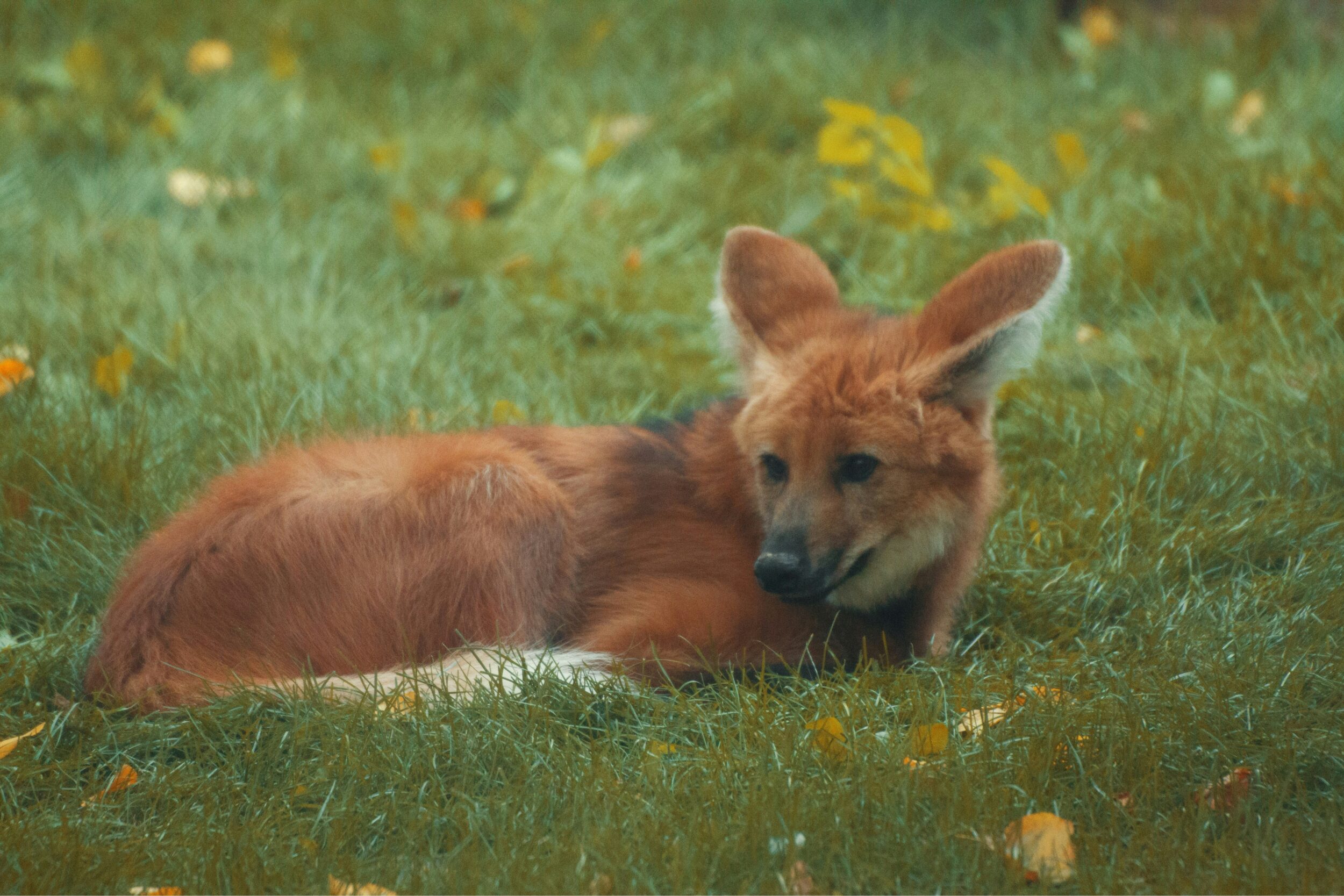
A trip to the zoo is usually accompanied by the scents of popcorn, hay, and sunscreen. Yet many visitors report a far more surprising aroma as they walk down certain aisles: cannabis. Far from the actions of clandestine visitors, this heady scent actually comes from a very specific enclosure. The culprit? The maned wolf, the largest canine in South America, which uses its highly odorous urine as a genuine social network.
What you will learn
The unique anatomy of the maned wolf, a cross between a fox and a deer.
Why its urine serves as a long-distance communication tool for this solitary animal.
The exact chemical molecule that prompted police to inspect a zoo, thinking they were dismantling a trafficking operation.
A Canid with Slender Man Proportions
The maned wolf (Chrysocyon brachyurus), sometimes nicknamed “the stinky wolf,” is a creature of almost unreal appearance. With its slender silhouette, its silky reddish coat, its large ears, and its never-ending black legs, it resembles a hybrid cross between a fox and a deer. According to the Smithsonian Conservation Biology Institute, it is in fact the sole representative of the genus Chrysocyon (which means “golden dog”) and is thus neither a true wolf nor a fox. Its mane, a band of spiky black fur around its neck, helps it look more imposing when facing threats.
By nature shy and secretive, this large canid mostly leads a solitary life on the South American plains. Living away from its peers is an excellent lifestyle choice, except when the mating season arrives. That is when the animal unveils its mass-seduction weapon: a urinary mark of phenomenal power.
When Urine Replaces Dating Apps
For an animal that spends the year alone, marking its territory is the sole way to convey essential messages to its kin over very long distances. By urinating at the base of trees, the maned wolf leaves an olfactory business card. It can signal rivals to back off, or, conversely, send an official invitation to females for reproduction. In this species, the scent of urine is so powerful that it acts as a direct hormonal trigger to induce the female’s ovulation.
The scent of this urine is so characteristic of cannabis smoke that it has led to memorable misunderstandings. In 2006, the Dutch police were urgently called to Rotterdam Zoo by a citizen convinced that a giant drug-trafficking operation was underway at the facility. After inspection, the authorities found only a hefty sample of the animal’s urine.
The Secret of Sulfur-Containing Hemiterpenoids
Science eventually solved the mystery of this prehistoric weed smell. A study published in the reference volume Chemical Signals In Vertebrates 12 dissected the biochemical makeup of the maned wolf’s urine.
Analyses reveal a high concentration of molecules called sulfur-containing hemiterpenoids:
-
Hemiterpenes: These are small volatile organic molecules also found in certain plants. Very light, they evaporate with the slightest air movement and travel far.
-
Sulfur: When combined with the hemiterpenes, sulfur adds that aggressive, heavy, and pungent note.
It is this precise chemical combination that gives the maned wolf’s urine its aromatic notes of hops, tropical fruits, skunk, and, unmistakably, cannabis. The next time you smell this suspicious odor during a zoo visit, don’t look for the smoker: instead, take a glance at the enclosure of the most strange and fascinating of all golden dogs.
