
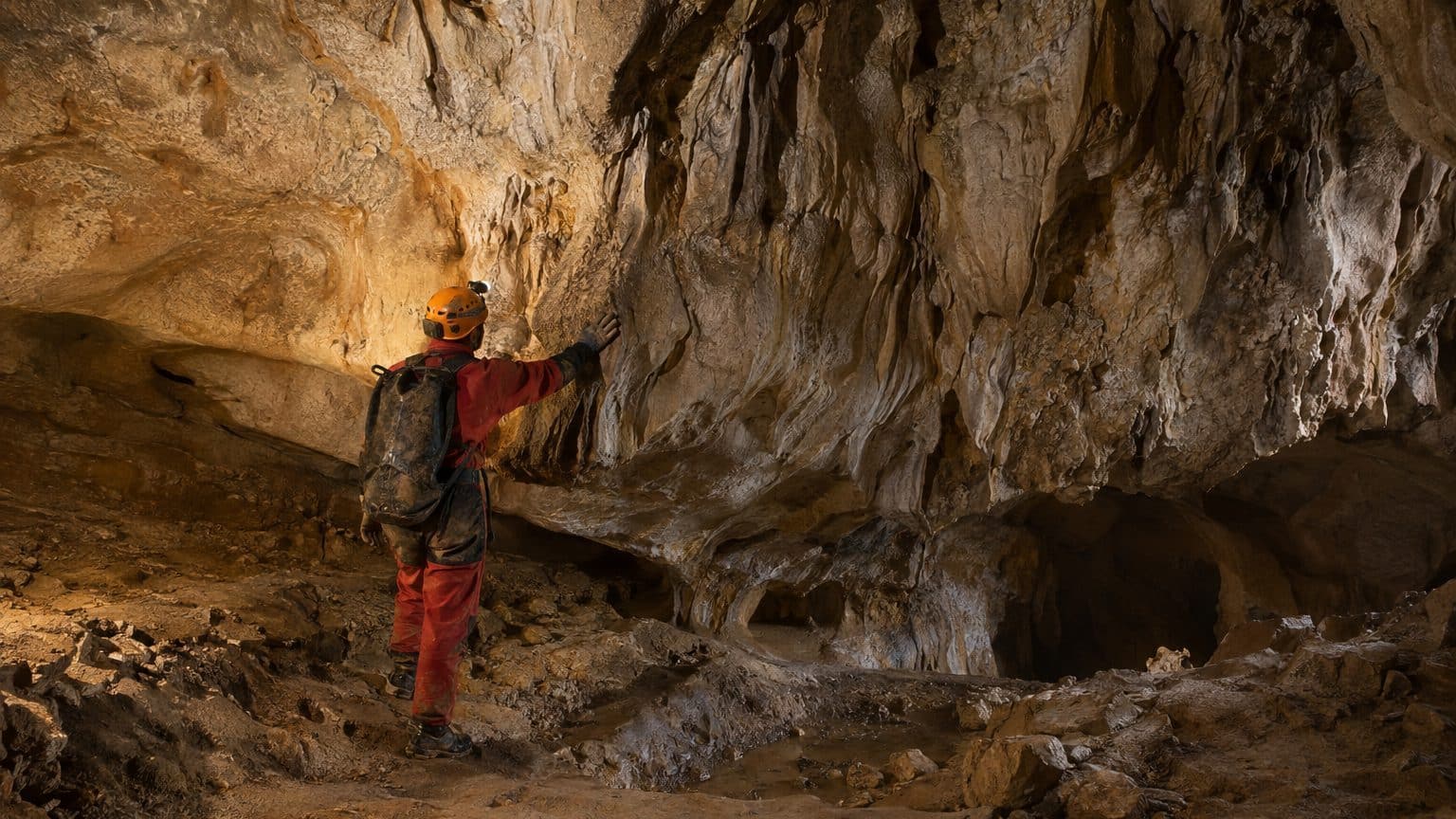
- Human remains were deposited in bear dens over 28,000 years ago.
- The Cussac gallery stretches 1.6 km and contains more than 150 Gravettian engravings.
- The cave was discovered in 2000 by Marc Delluc, an amateur cook at the Ministry of Defense.
Human bones, not bear bones
In Cussac, in the commune of Le Buisson-de-Cadouin, between Bergerac and Sarlat, depressions carved into the clay by bears concealed something more than their former inhabitants. According to the Ministry of Culture, engravings and human remains were laid in bear dens more than 28,000 years ago. The gallery runs for 1.6 km and bears more than 150 engravings attributed to the Gravettian culture.
The figure of 28,000 years is more than six times the age of the pyramids of Giza.
The most surprising aspect lies in the way the cave was found. It was discovered by an amateur, a cook, and not by a commissioned research team.
An entry that seemed to lead nowhere
In 1950, a paleoarchaeologist had explored the entrance of the cavity for about ten meters, without uncovering anything. The cave remained in that state for half a century. On September 16, 2000, Marc Delluc and another caver returned there.
Marc Delluc was a cook at the Ministry of Defense and an amateur spelunker. On weekends, he returned alone to the site on Saturdays, September 23 and 30. On October 7, he brought two colleagues to force a passage threatened by a collapse. He took only a narrow route to preserve the floor, and he immediately reported his discovery.
Fifty years separate the 1950 exploration from the 2000 discovery.
In this kind of chamber, one misstep can erase traces that no one will ever see. The clay floor preserves the imprint of anything that touched it, whether the bear’s paw or a human or a caver. Choosing a single passage meant treating the cave as an archaeological site even before knowing what it contained.
What the gallery contains
Over 1.6 km, equivalent to 16 football fields laid end to end, the walls bear more than 150 Gravettian engravings. The Grand Panel is located 310 meters from the entrance and contains about 130 figures. By itself, it accounts for the vast majority of the known assemblage.
The bear dens are hollows dug into the ground by bears, which they used to spend the winter. The specialists who described the cave in the journal Paléo note that the bear bones have almost entirely disappeared. What remains are mainly claw marks on the walls and several series of dens in the clay.
Bears thus passed long before humans, and only their marks remained.
The Gravettian humans later deposited remains in these hollows. These vestiges are spread across the different engraved panels. It is hard not to see a deliberate choice of place, even if the sources consulted do not quantify the number of individuals and caution is required regarding interpretations.
An adorned cavity where human remains are also found remains rare. Normally, decorated Upper Paleolithic caves are read through their walls, and their human occupants are absent or invisible. At Cussac, the engravings and the bodies apparently belong to the same episode.
Protect rather than display
The state reacted quickly. The cave was placed under protection consideration on November 23, 2000, just over two months after its discovery. It was subsequently classified as a historic monument on July 3, 2002.
Scientific studies have continued since 2009. They take place in an environment where carbon dioxide is present intermittently, which complicates visits and limits the time spent underground. The cave will probably never be opened to the public.
A paleontologist described it as an “anti-Lascaux”.
The essence of the statement is this. Lascaux stands as a symbol of a cave known to everyone, whereas Cussac is designed as a site to study without allowing many people to enter. For those who wish to see it, they must rely on what researchers publish.
A discreet inventor, who died too soon
Marc Delluc died suddenly on December 3, 2017, at the age of 60, only months after his retirement. He was born in 1957. The Ministry of Culture paid tribute to him as the inventor of the Cussac decorated cave, which is the official term for the person who discovers it.
Delluc’s career was not aimed at archaeology, yet his act was that of a professional: not trampling, reporting immediately, letting the specialists take over. He knew his cave for 17 years, including eight years of scientific study beginning in 2009.
In the cave, one can still follow the path he chose to trace, rather than letting curiosity decide for him. The ground, for its part, has kept what the bears started and what humans deposited there over 28,000 years ago.
Sources: journals.openedition.org | pacea.u-bordeaux.fr
