
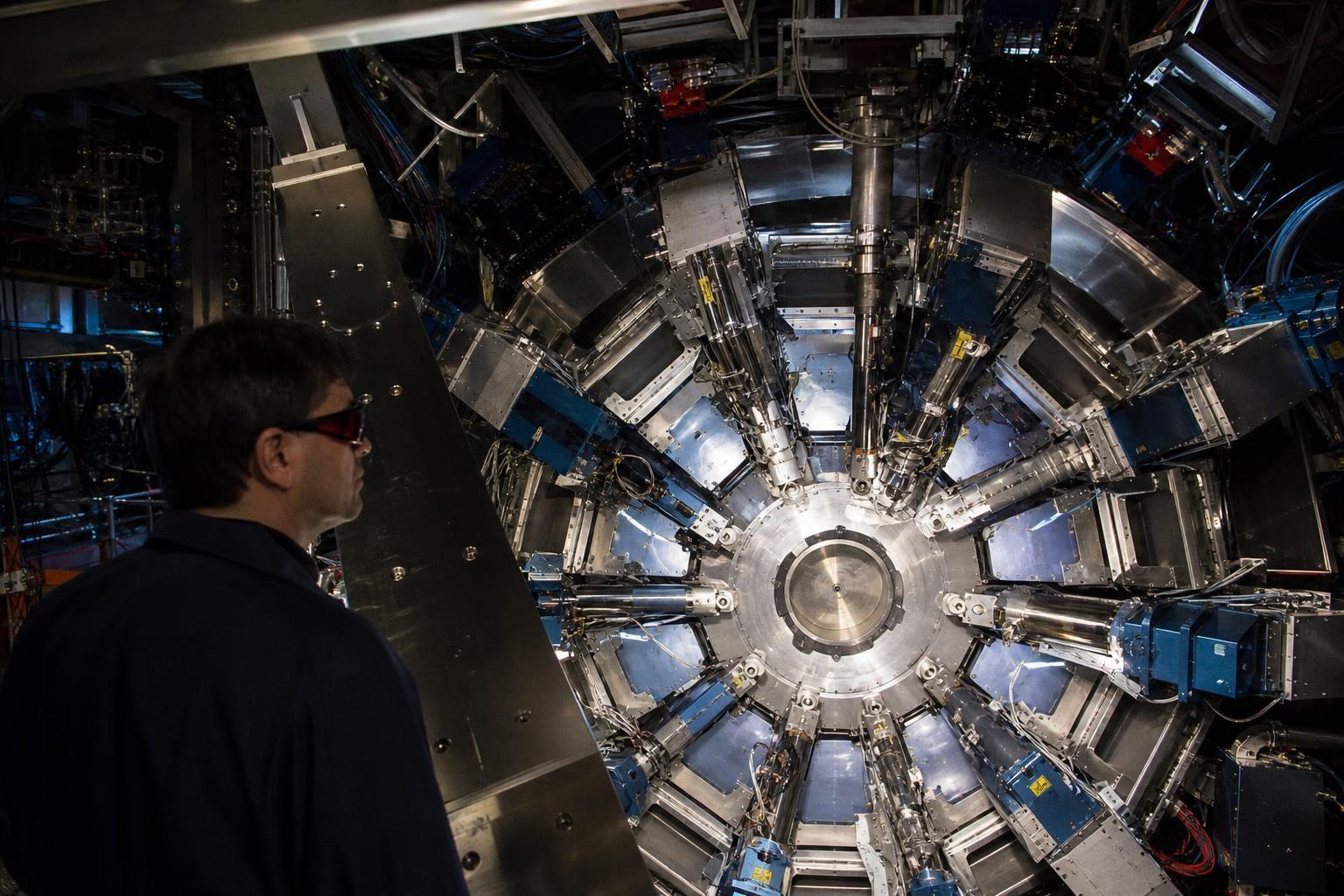
The news hit with a quiet, electric jolt: a team in California coaxed a tiny sun to life and, for a blink, drew more energy from it than the lasers pushed in. It was a crisp, laboratory-scale moment, but its ripple felt planetary. “You can feel the floor under science shift,” one researcher said, half in awe, half in relief.
A Spark Crosses a Threshold
For years, the dream hovered just out of reach: make atomic nuclei fuse and get a net kick of usable power. At Lawrence Livermore’s National Ignition Facility, 192 lasers converged on a tiny fuel capsule and lit a path to what physicists call ignition. The fusion burn returned more energy than the light they beamed in, a razor-thin but game-changing margin.
“It’s not a light switch, it’s a threshold,” a senior physicist said. Crossing it turns speculation into evidence, and evidence into a to-do list large enough to fill a generation of work.
How the Experiment Worked
The setup sounds like science fiction, yet every piece is stubbornly real. Lasers slam into a gold can the size of a pencil eraser, creating X-rays that uniformly crush a frozen pellet of deuterium-tritium fuel. For a split second, heat and pressure soar past those at the center of the sun.
In that fierce pinch, hydrogen isotopes merge, releasing energy as fast neutrons and a burst of searing light. If the burn feeds on itself before the capsule blows apart, you get more out than you put in—at least compared to the laser light hitting the target.
What “Net Energy” Really Means
Words matter here, and so do definitions. The experiment beat the energy of the laser pulse that struck the target, not the total wall-plug electricity used to power the lasers. Today’s lasers are impressive but not ruthlessly efficient.
So, is it grid-ready power? Not yet. But it is the first proof that the fuel can be driven past the break-even ridge in a real, reproducible shot. “We moved from ‘if’ to ‘how often’ and ‘how much’,” one scientist said.
Why This Moment Matters
In plain terms, the breakthrough means:
– A self-heating fusion burn is now a demonstrated, controllable phenomenon, not a perpetual mirage.
– The physics of ignition can guide engineering toward higher yields and better efficiency.
– Confidence—and investment—will likely accelerate competing fusion approaches.
From Shot to Power Plant
Turning a single star-hot flash into steady, affordable electricity is a marathon of stubborn details. Lasers must fire many times per second, not a few shots per day. Targets need to be mass-produced, cheap, and precisely uniform.
Every part must climb a brutal curve: higher repetition, higher efficiency, longer component lifetimes, and airtight fuel supply chains, including tritium breeding. None of that is easy; all of it is possible. “Engineering turns miracles into maintenance,” an engineer quipped.
Magnetic or Inertial? The New Landscape
Fusion is a broad front. While inertial confinement squeezes tiny pellets with brief pulses, magnetic confinement—tokamaks and stellarators—cages a continuous, ultra-hot plasma with magnetic fields. Each path trades different physics for different engineering headaches.
The new milestone doesn’t end the debate; it enriches it. Success in one track sharpens tools, models, and confidence across the field. Private startups smell opportunity, and public labs gain fresh political capital.
Why the Hype Is Earned—and Tempered
It’s fair to feel hope. Fusion promises dense, carbon-free energy with no long-lived waste and fuel derived from water and lithium. It is not a silver bullet for climate, but it could be an anchor for a resilient, post-carbon grid.
Still, timelines have a habit of slipping. Economics will rule as coldly as physics, and alternatives—renewables, storage, fission—are advancing in parallel. The win here widens the playbook; it doesn’t wave a magic wand.
The Human Arc Behind the Shot
What lingers is the collective effort. Decades of incremental upgrades, failed capsules, scorched optics, and quiet, predawn runs. “Progress looked like a flat line—until it didn’t,” a team member reflected. The moment read as sudden only to those who missed the prelude.
Science is often a study in patience: build the instrument, build the model, let the data embarrass your favorite assumption. Then, sometimes, the world moves a fraction of a millimeter and everything else must run to keep up.
What Happens Next
Expect a drumbeat of incremental gains: better target designs, sharper laser timing, reduced instabilities, and improved energy coupling. Expect, too, more net-gain shots, higher yields, and relentless scrutiny of every claim.
The bigger picture is momentum. Policymakers, investors, and engineers just got a real, bright datapoint to organize around. It doesn’t end the story of fusion; it starts a more practical, more urgent chapter. As one physicist said, “We’ve proved the door can open. Now we need to build the hinges.”
