
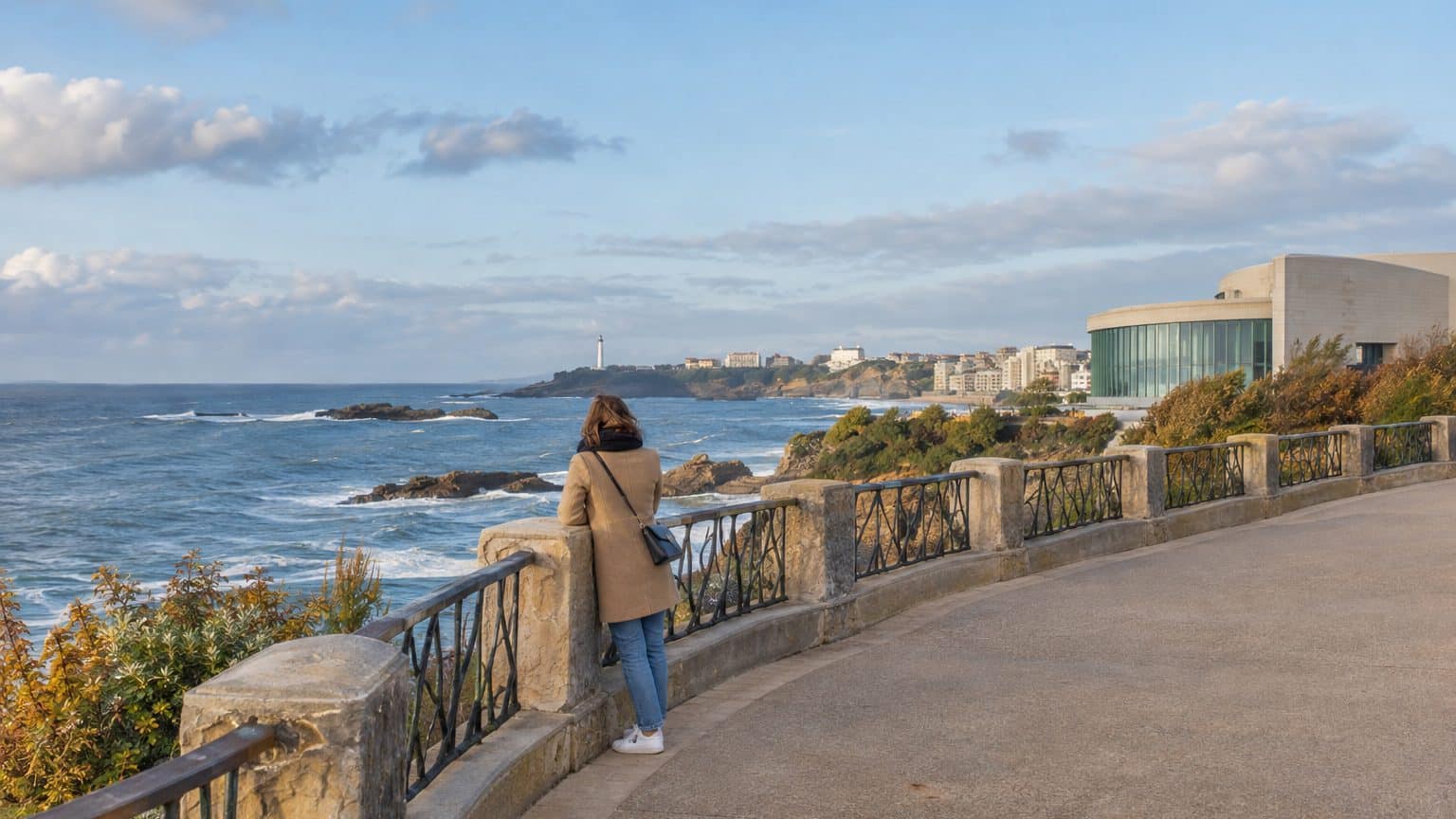
The City of the Ocean in Biarritz was funded on the basis of an assumption of 450,000 visitors per year. This target was never reached, but repayments, nonetheless, progressed. In a report published in March 2018, the Nouvelle-Aquitaine regional chamber of accounts estimates the net burden on the municipality at €39.2 million.
The project will not be settled until 2040.
- The City of the Ocean was financed on the basis of 450,000 entries per year.
- The site never reached this target: 390,000 entries in 2017.
- The net burden for the municipality is estimated between €23.8 million and €39.2 million.
- The project will only be settled in 2040, 29 years after the facilities were made available.
A 30-year contract for two facilities
The Biarritz Océan project encompassed a new City of the Ocean and an expanded Sea Museum. Both structures were constructed under a 30-year public-private partnership. They were made available to the town on April 1, 2011, and opened to the public at the end of June 2011. The investments to be financed by borrowing amounted to €24.3 million, after €16.5 million in public subsidies coming notably from the European Union, the State, and the Aquitaine region.
T together, these sums yield a project of €40.8 million. In this type of contract, the community settles rents spread over the duration of the agreement, instead of paying for the construction upfront. Here, these rents were ceded to a bank, and it is them that the city still repays today.
450,000 visitors: the figure that powered the entire edifice
The operation’s economic model hinged on 450,000 entries per year. This attendance was meant to fund the operation and balance accounts stretched over three decades. Yet it fell short by an average of 120,000 visitors per year, the equivalent of two 60,000-seat stadiums filled each year and left empty.
The year 2017 provides a precise measure. The two sites together recorded 390,000 entries, i.e., 60,000 fewer than the target, six years after opening.
The operating company had to be recapitalized in 2015.
This recapitalization shows that the shortfall of visitors weighed on the operator’s accounts, not just on a theoretical projection. The regional press even relayed the chamber’s report, describing it as an “unrealistic economic model.” A visitation assumption set at the outset, and then never confirmed in the ensuing years, thus served as the basis for a commitment that runs until 2040.
Terminate in 2015, repay until 2040
The partnership contract was terminated in 2015. However, the city chose to continue repaying the rents ceded to the bank according to the original schedule. The termination did not erase the debt: the project will be settled in 2040, i.e., 29 years after the facilities were made available.
The chamber’s report tallies the net cost. It lists €62.7 million in expenditures against €23.5 million in resources, leaving a burden of €39.2 million for the municipality.
The municipality does not accept that figure. It estimates the net burden at €23.8 million, i.e., €15.4 million less than the chamber. The two assessments likely include different expense and revenue items, and the discrepancy stems from the report’s details. The disagreement is not about the existence of a burden, but its magnitude.
Even the lowest estimate exceeds €23 million.
Read the accounts before applauding the inauguration
The chamber’s report is publicly accessible on the site of the financial jurisdictions. A resident curious about a municipal facility can look up three figures there: the initial attendance assumption, the actual duration of the commitments, and the share of subsidies in the financing. For Biarritz, these three lines read: 450,000 entries expected, 2040 as the year of full settlement, €16.5 million in public subsidies.
The file does not describe a deserted facility. With 390,000 entries in 2017, attendance reached about 87% of the goal. The problem is that the financing plan left no room for the remaining 13%, while repayments extend over nearly thirty years.
Sources: assemblee-nationale.fr | lemoniteur.fr | france3-regions.franceinfo.fr
