
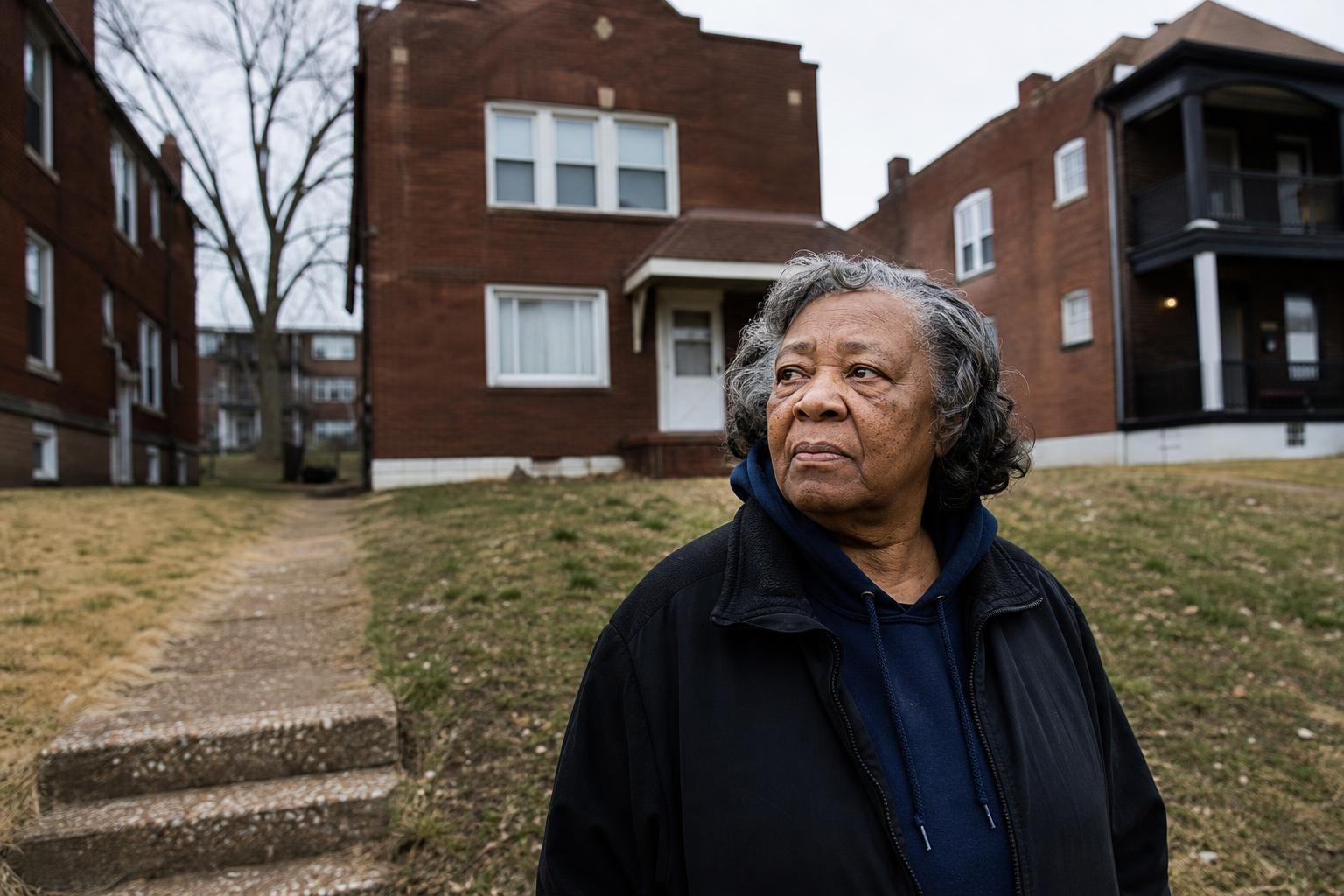
A gray, glittering mist drifted across brick alleys and tenement roofs, and no one was told why. Decades later, people learned the clouds were intentional, released to map how particles traveled through a living city.
Families remember ordinary mornings, laundry flapping on lines, and a dust that stuck to windowsills. “We were just kids,” some would later say, “and the air wasn’t ours to question.”
Cold War logic, city streets
The testing grew from Cold War anxieties and a push to understand airborne threats. Army scientists sought a tracer that could mimic dangerous agents without the agent itself.
They chose a compound called zinc cadmium sulfide, a fluorescent powder that could be tracked under special light. In practice, that meant blowers on rooftops, sprayers on towers, and drifting plumes across ordinary blocks.
Officials called the material “harmless,” a technical solution to a geopolitical problem. The neighborhoods were a laboratory, but the people were kept blind to the design.
Where the plumes went, and why
Maps of wind, street canyons, and building height favored dense districts with tall towers. Convenience met calculation, and the poorest areas became ideal testbeds.
Much of the spraying focused near public housing, including the vast Pruitt-Igoe complex. Residents there were largely Black and low-income, the same communities most exposed to industrial smoke and freeway dust.
Ethics were treated as a postscript, deferred to a future that arrived without warning. In the calculus of security, consent never made it into the equation.
What was in the powder
Zinc cadmium sulfide is not a nerve agent, but cadmium is a toxic metal. At the tested scales, government reviews later called risk “unlikely,” yet even “unlikely” has a way of lingering in people’s minds.
The National Research Council would conclude exposure levels were probably low, but critics asked about cumulative burden in already stressed communities. Children breathe faster, play closer to the ground, and carry home what the wind drops.
Rumors swirled about added radioactivity, claims that remain unproven in the public record. What is proven is the secrecy, the trajectory, and the neighborhoods where the particles settled.
The silence, then the reveal
No door-to-door notice, no town-hall briefing, just years of ordinary life under an unordinary sky. Mothers scrubbed sills, workers coughed on buses, and the city kept moving.
Only in the 1990s did declassified documents surface, sketching the outlines of operations once buried in file drawers. “We should have been told,” residents said, “because the bodies involved were our own.”
In the 2010s, new scholarship and local reporting reignited public anger. The past felt less like a chapter and more like a presence still breathing through the blocks.
What we know, and what we still don’t
- The Army used a fluorescent tracer to study aerosol spread over dense city neighborhoods.
- Poor and predominantly Black areas received disproportionate exposure, raising enduring justice concerns.
- Official panels deemed health risks unlikely, while residents and advocates called the process unethical and unsafe.
- Comprehensive, long-term health tracking specific to the exposed residents remains limited, leaving key questions open.
Health, accountability, and trust
“Unlikely” is not the same as impossible, and it is never the same as consent. People asked for medical screenings, for funding to study long-term outcomes, and for a federal apology that names what was done.
Some point to a broader pattern, a tapestry of experiments that skirted oversight where power was thinnest and voices least heard. Environmental justice is not only about toxins, but about who gets to decide which risks become “acceptable.”
Officials defended the science, saying the project addressed real threats of the era. Residents defended their lives, saying the right to know is not a luxury, but the first public safety measure.
How a city remembers
Memory, like aerosol, moves with currents, catching on corners where people gather and talk. Murals, church meetings, and classroom projects keep the story present, especially for those who still live along the tested routes.
Teachers ask students to follow a map, to trace where a hypothetical plume might go, and to circle who gets hit first. The lessons are about physics, but they are also about power.
“Never again” can sound like a slogan, but here it’s a planning tool. It means transparent protocols, community veto points, and archived records easy to find before the next decision is made.
What responsibility looks like now
True repair starts with naming, then moves to listening, then to actions that shift control. That might mean funding neighborhood monitors, medically informed registries, and independent review boards with real authority.
It also means admitting that “acceptable risk” depends on who is asked and who is ignored. The measure of public security is not just national defense, but the street-by-street right to breathe without being tested on.
