
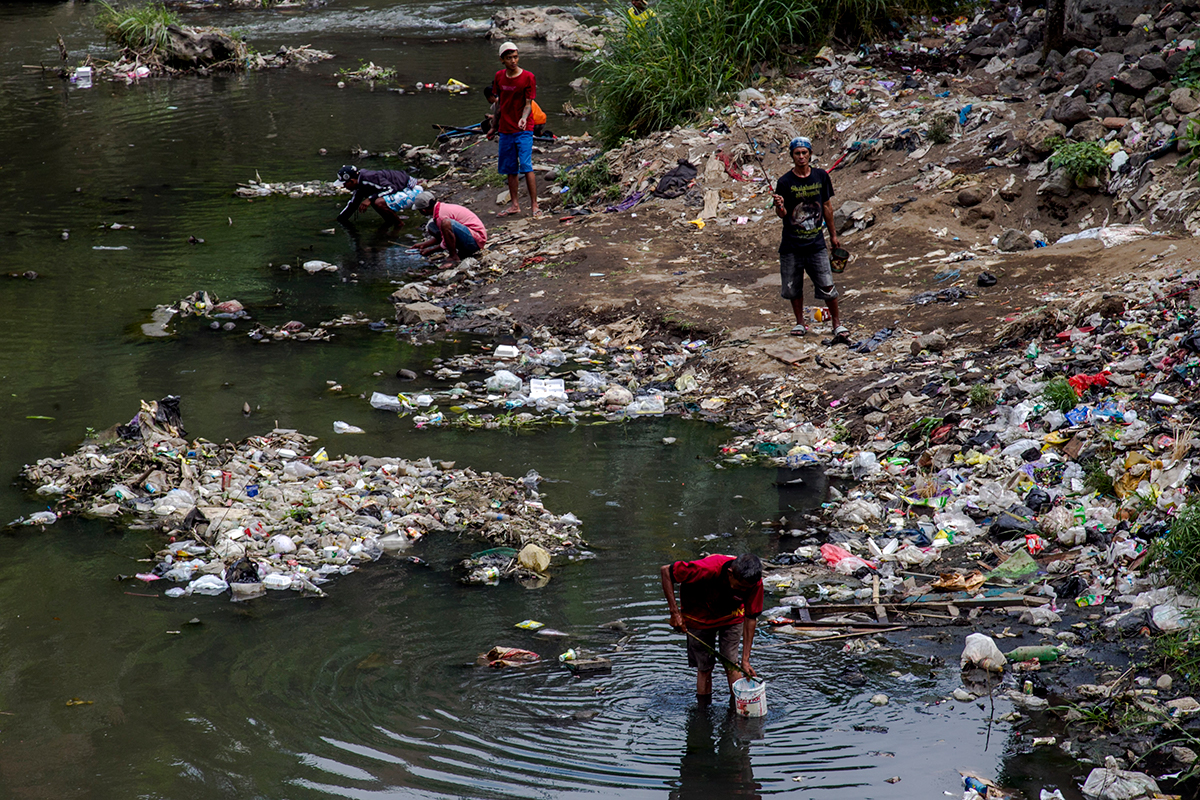
A true scourge, microplastics are found in water, air, food, and ultimately end up in living beings. In Indonesia, the phenomenon is dire. Indeed, this country is the one where the population is most affected by these fine particles. In fact, Indonesians ingest and breathe an average of 15 grams of microplastics each month.
Indonesia Tops a Grim Ranking
The largest country in Southeast Asia with a population exceeding 285 million, Indonesia—currently in the process of relocating its capital—is not exactly known for its ecological record. Indeed, deforestation runs rampant and the mining industry is destructive. Unsurprisingly, plastic pollution is also a scourge in Indonesia, which ranks among the biggest polluters of the oceans. In this country, microplastics have become one of the most significant public health problems.
On September 7, 2026, The New York Times published an alarming investigation into Indonesia, drawing on the results of a 2024 study by Cornell University. According to these findings, Indonesians ingest and breathe an average of 15 grams of microplastics per month, equivalent to three credit cards. The study aimed to map human plastic exposure and rank 109 countries. Indonesia clearly surged to the top of this grim ranking.
“Southeast Asian countries such as Indonesia, Malaysia and the Philippines are at the top of the global per-capita microplastic ingestion ranking,” reads the statement accompanying the study.
Why is the country’s situation so grave?
How did Indonesia end up like this? The answer largely lies in waste management. A particularly alarming figure: no less than 57% of households burn their garbage and this is done illegally. By comparison, 14% of households do so worldwide. Moreover, this process releases immense quantities of microparticles into the air. Additionally, waste collection services are fairly scarce outside major cities, and recycling is not widespread.
Consumption habits are also to blame. Cheap plastic sachets, bottles, and other plastic bags are part of daily life for residents. Given these elements, the presence of numerous mountains of waste—open-air landfills—is not really surprising.
If this massive pollution greatly affects soils, the waters are, of course, not left out. Indeed, modern sanitation systems capable of capturing fine particles are rare in Indonesia, so much wastewater—primarily from washing machines—ends up in gutters, streams, and rivers. On a daily basis, fishermen catch fish—including rays and snappers—that contain microplastics. Thus, these particles are abundantly present in the food chain and contribute to the high exposure of residents.
The Government’s Timid Response
Facing this alarming situation, Indonesian authorities are attempting to respond, but the measures taken are rather cautious. The most notable decision is to ban open-air landfills by 2027. After this deadline, local authorities will be required to end the uncontrolled dumping of waste. The objective? To limit landfill fires that massively pollute the air with microparticles.
Finally, it should be noted that the national action plan designed to cut marine plastic waste by 70% and reduce total waste production by 30% has yielded a more than lukewarm result. Another plan is in preparation and is expected to be launched by the end of 2026.
