
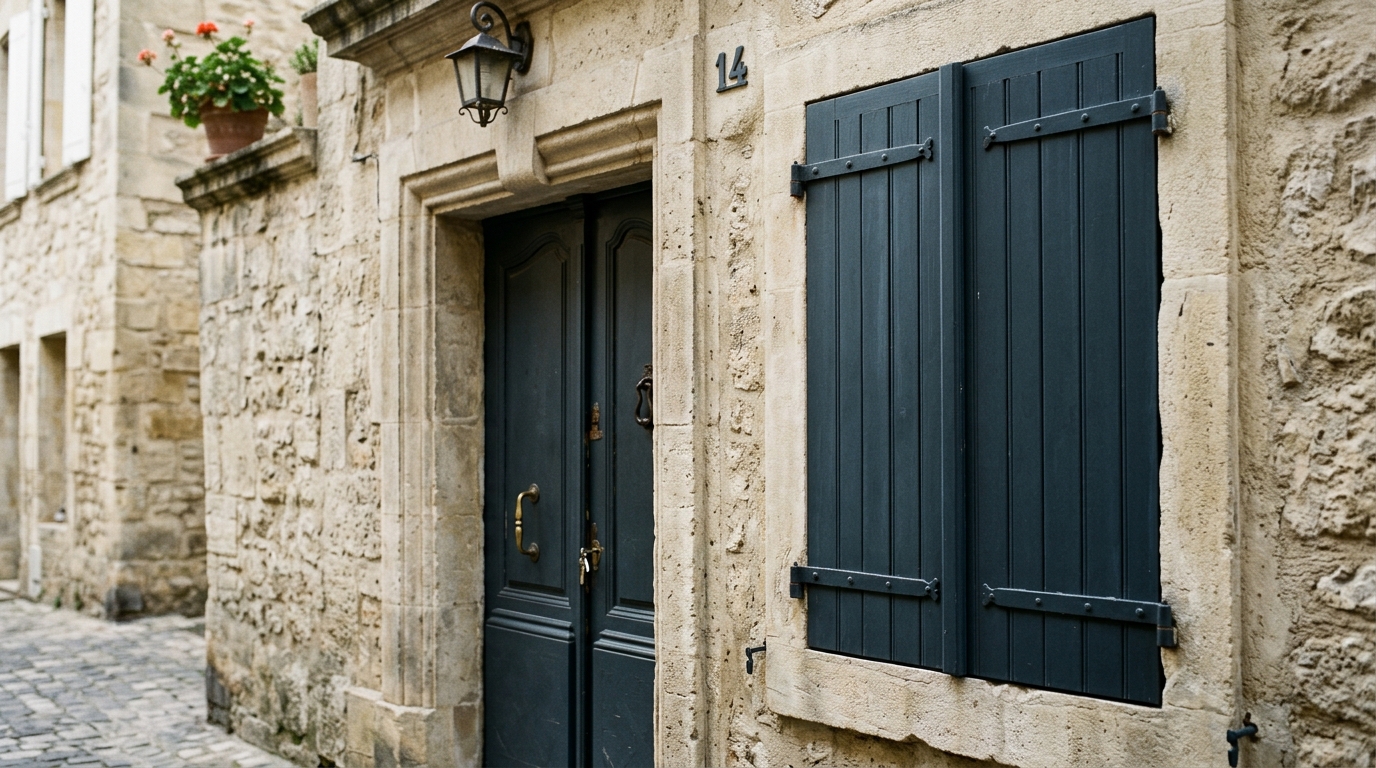
Push open the door of an old provincial neighborhood on a quiet Sunday afternoon: shutters closed, a mailbox overflowing with unclaimed flyers, a “for sale” sign that has long since faded. Not unusual, one might think, just a house waiting for a new owner. Except that this kind of scene repeats millions of times across the country, and it tells a story far more complex than mere abandonment. For behind these closed doors there is rarely ruin or oblivion: it is often a choice, sometimes forced, sometimes calculated, that leaves these dwellings off the market while others search desperately for a roof.
- France currently counts 3.1 million vacant homes, of which 1.1 million fall into structural vacancy of more than two years
- Inherited joint ownership, estate valuations, and renovation costs explain a large part of these dwellings kept closed
- The fear of rent defaults and tenancy disputes pushes some owners to prefer paying the Vacant Homes Tax rather than renting
- A figure that clashes with the image of ruin
- Inherited joint ownership, the family trap that locks thousands of doors
- Waiting rather than selling: the discreet calculus of owners
- Why fear of the tenant weighs more than vacancy itself
- What these closed homes reveal about the French housing market
A figure that clashes with the image of ruin
France today counts 3.1 million vacant homes, a figure that has risen again after the 3.0 million recorded on January 1, 2025, representing 7.7% of a total stock of 38.4 million dwellings, consisting of 31.7 million primary residences and 3.8 million secondary residences. This contrast between a stock of closed homes and a population increasingly struggling to find housing inevitably raises questions. Since 1990, the phenomenon has grown steadily: the number of vacant homes has surged by nearly 1.2 million, a rise of 60%, a trend that has spared almost no French department.
Even more troubling, between 2005 and 2023 vacancy grew 2.3 times faster than the overall housing stock. But this striking figure should be nuanced: much of these homes simply change hands or await renovation work. If we consider only the so-called structural vacancy, i.e., vacancy lasting more than two years, we arrive at 1.1 million homes. That figure is already enormous, but it mainly means that the majority of these properties are not frozen forever: they are simply on hold, for reasons that often have little to do with the building’s decay.
Inherited joint ownership, the family trap that locks thousands of doors
Among the most common causes of these frozen homes, inherited joint ownership occupies a leading position. When an owner dies and leaves several heirs, the property automatically falls under this regime: no one can sell or rent without the agreement of all the others. Yet it only takes one heir to be unreachable, in disagreement about the price, or simply in dispute with the rest of the family, for the house or apartment to stay closed for years, sometimes decades.
This administrative and family deadlock is far from exceptional: it affects homes in all regions, from large cities to the most remote villages. Notary fees, lengthy procedures, tensions between siblings or distant cousins often end up discouraging any initiative. The result: the property remains empty, neither sold nor rented, simply because no one has taken the final decision, or because that decision is structurally impossible to make quickly.
Waiting rather than selling: the discreet calculus of owners
Beyond blocked inheritances, another logic, more economic, explains part of these closed homes: some owners prefer to wait rather than cede their property in a hurry. In a market where prices had risen for a long time, keeping a vacant dwelling in hopes of future appreciation may seem more profitable than selling quickly at a price deemed insufficient. Others simply wait to find the right buyer, the one who will not negotiate too aggressively.
Renovation costs also play a decisive role. Bringing an old dwelling up to current standards, sometimes energy-intensive, represents an investment that many owners cannot or do not want to undertake immediately. Rather than renting a property that would require costly work, or selling at a loss, some prefer to leave it closed, postponing the decision year after year.
Why the fear of the tenant weighs more than vacancy itself
There is a very real fear that pushes many owners to prefer an empty home over a occupied one: rental risk. Between unpaid rents, lengthy and uncertain eviction procedures, and the difficulty of recovering one’s property in case of a dispute, some consider it better not to rent at all than to expose themselves to these complications. This purely defensive calculation helps explain why the Vacant Homes Tax, introduced in 1999 to encourage bringing these properties back onto the market, has not produced the expected effects, as noted by an amendment recently filed with the National Assembly.
This tax, intended to deter prolonged vacancy, runs up against a simple reality: for some owners, paying this penalty remains less risky than renting to a potentially delinquent tenant. The fear of litigation weighs more heavily in the balance than the tax itself.
What these closed homes reveal about the French housing market
This phenomenon takes on particular resonance when viewed against the housing crisis. According to the Abbé Pierre Foundation, more than 4 million people are currently inadequately housed in France, a striking mismatch with these millions of closed doors. Paris epitomizes this paradox: the capital concentrates the largest number of vacant homes in the country, with 105,785 units recorded and a vacancy rate of 9.4%, in a city where the price per square meter remains out of reach for a large part of its residents.
To better map this phenomenon, the state now relies on the Lovac database, updated in 2026, which precisely lists the number of vacant private-sector homes as of January 1 of each year, with a confidentiality threshold set at 11 dwellings per commune. These data confirm what the previous explanations suggested: housing vacancy is not an isolated accident, but the symptom of a tight market, where inherited joint ownership, estate valuations, and cautious renting intertwine to lock away a non-negligible portion of France’s built heritage.
Ultimately, these 3.1 million closed homes tell neither a tale of abandonment nor merely a problem of decay: they outline the contours of a real estate market stalled by human, legal, and financial blockages. Between lingering inheritances, owners waiting for the right moment, and those who dread the rental relationship, each closed door tells a decision, rarely easy, often slow to bear. A question remains worth asking: at a time when so many households are seeking housing, might it not be time to rethink, more profoundly, the schemes that could finally reconcile these empty properties with those who truly need them?
