
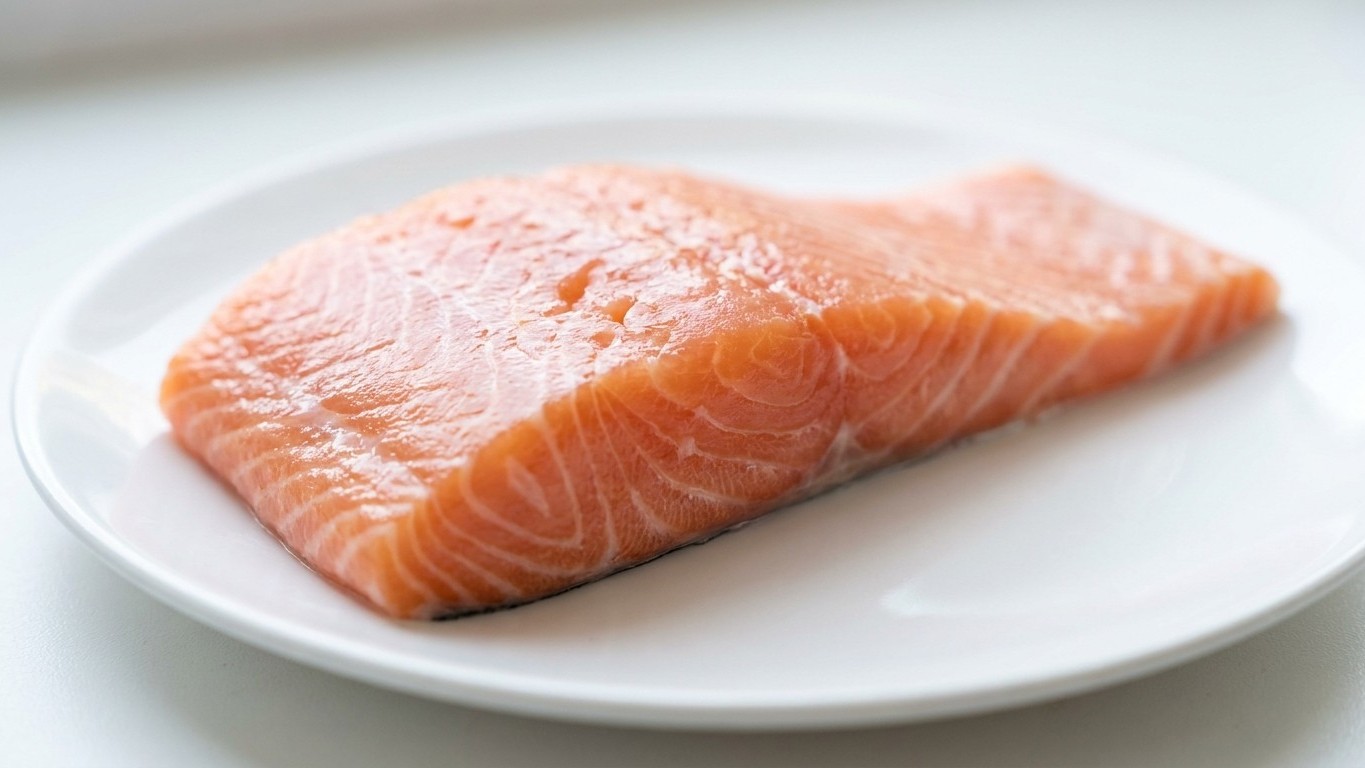
A wild-salmon fisherman holds in his hands a vivid pink flesh, sometimes almost red. A farmed producer, by contrast, starts from a gray flesh and chooses its final shade from a professional color chart named SalmoFan, marketed by the DSM group (now dsm-firmenich). The difference hinges on one word: astaxanthin, the pigment that wild fish obtain from their natural diet and that aquaculture must recreate artificially, dose by dose.
Key takeaways
- Why wild salmon is never gray: a precise food chain
- SalmoFan, the industry secret that shapes your shelf perception
- Color-related information deliberately absent from the packaging you buy
The pink of wild salmon comes from its diet
Salmon is a predator; it eats smaller fish, krill, and other tiny crustaceans. These crustaceans, in turn, feed on algae. This is where the color originates. Microalgae naturally produce astaxanthin to protect themselves from stress, such as bright sunlight or nutrient shortages. Climbing up the chain, the pigment ends up in the flesh of the fish.
The mechanism is not exclusive to salmon. It’s thanks to astaxanthin that crustaceans, but also salmon and flamingos, naturally exhibit that pink-orange hue, flamingos being pink for the same reason as salmon. The difference in concentration between the two worlds is clear: in wild salmon, astaxanthin concentrations reach up to 40 mg/kg, while farmed salmon have a much more modest content. Moreover, the pigment isn’t merely a dye: astaxanthin acts as an antioxidant, contributing to growth and to the proper functioning of the fish’s immune system.
SalmoFan, the tool that guides the color of farmed salmon
No salmon, whether wild or farmed, can produce this pigment on its own. Whether wild or kept in captivity, salmon can only acquire this carotenoid pigment through its diet. In captivity, there is no wild krill or wild microalgae on the menu: industrial pellets alone are not enough to color the flesh, which would stay gray. Astaxanthin is the standard additive in feed for trout and salmon, with this carotenoid responsible for the pink to red tint, and farmed fish must receive it in their rations since they do not have access to a natural marine food chain in captivity.
The task is to choose the intensity. This is where SalmoFan steps in, recognized as the industrial standard worldwide for measuring the color of salmon fillets, offering a simple, precise, and consistent way to evaluate the tint of salmonids. Concretely, the tool takes the form of a fan: SalmoFan comprises a set of 15 bands, each numbered from 20 to 34, with the lower numbers corresponding to lighter shades and the higher numbers to darker, almost red shades. A professional places the fan against the flesh and notes the number that best matches, just as one would pick a paint shade from a hardware store swatch. The decision is made upstream, at the feed formulation stage, long before the fish reaches the counter.
The choice is not purely aesthetic: the more intense the shade aimed for, the higher the pigment dose added to the feed, and the heavier the bill for the farmer. A vivid hue does not change the fish’s taste, but it influences the consumer’s perception at the moment of purchase.
A mention buried in the feed-additive list
Here is the point that most buyers overlook: this coloration never appears on the label of the sold fish. The labeling of fresh or smoked salmon does not require indicating the presence of a coloring agent in the flesh. Synthetic astaxanthin does appear somewhere, but in the list of additives incorporated into the fish’s feed upstream in the supply chain, a document that the final consumer never consults at the supermarket.
From a health perspective, there is nothing alarming: the added astaxanthin, even if produced synthetically, presents no identified health risk at the doses used in aquaculture. The issue is not a concealed danger but information that stops at the farm gate. Analytically, however, the distinction remains measurable: the analysis of astaxanthin, natural or synthetic, can determine whether a fish is wild or farmed. The laboratory can tell the difference. The label, on the other hand, remains silent.
Elsewhere, regulations have made different choices. In the United States, federal regulation requires the label to display “colorant added,” a requirement achieved in particular under pressure from Alaska fishermen defending their wild salmon. Nothing comparable exists on packaging sold in France, where the word astaxanthine remains confined to industry technical sheets rather than to the tray on the shelf.
Sources: mowi-saumon.fr | sigma-aquaculture.com
