
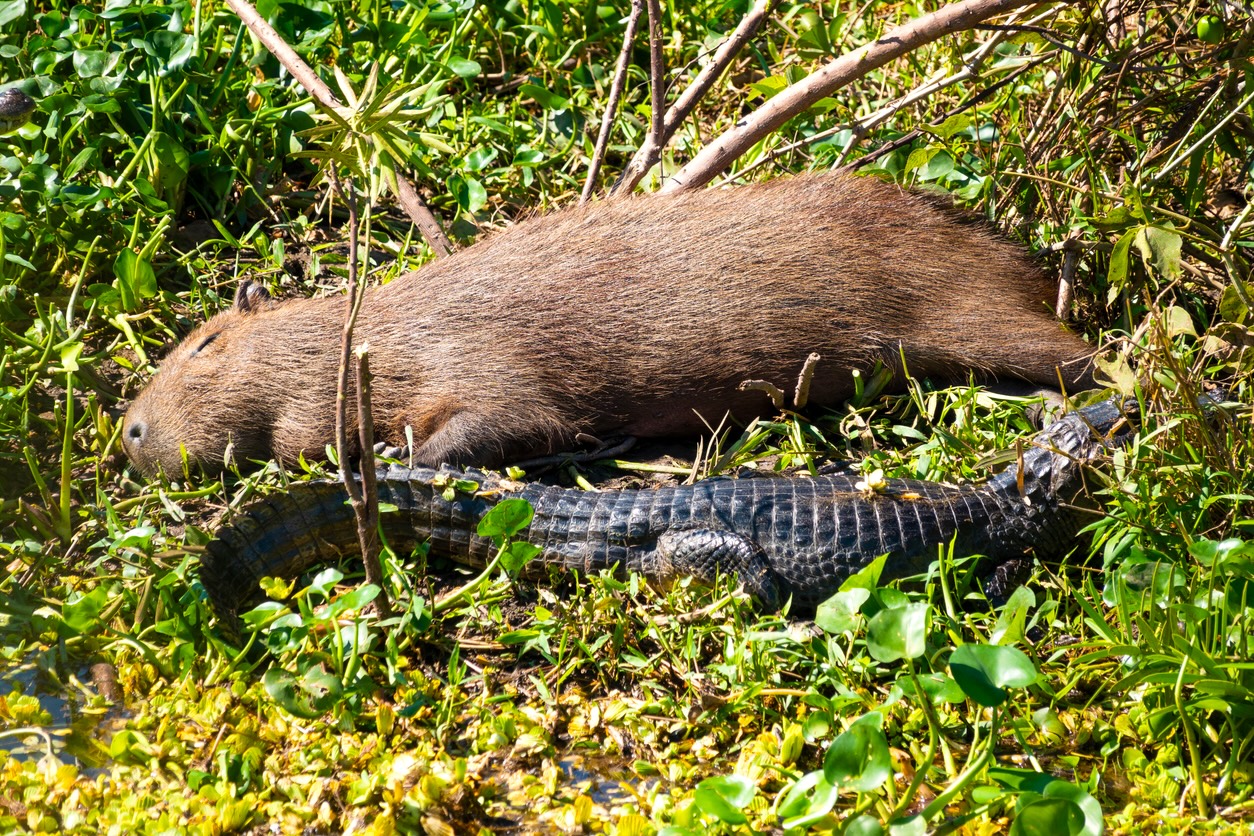
Imagine a rodent the size of a large dog, lounging peacefully along a South American riverbank, only a few meters from a hungry caiman. The scene would seem destined for carnage. Yet the predator pays it no mind. Sometimes the two even sleep side by side. This improbable truce between capybaras and their reptilian neighbors puzzles scientists, and the answer is more surprising than you might expect.
The world’s largest rodent lives dangerously
Capybaras occupy an ecological niche that is anything but safe. These massive herbivores, weighing up to 65 kg, spend their days grazing on grass and aquatic plants along the shores of South American lakes, rivers, and wetlands. In other words, they live exactly where caimans—a crocodilian relative that inhabits the jungle’s wetlands—lurk.
Their semi-aquatic lifestyle keeps them perpetually in the hunting grounds of these opportunistic predators. They slip into the water to cool off, swim from bank to bank, and often settle in for a nap within bite reach of a hungry reptile. Everything about this setup would seem to make capybaras an easy meal for the crocodilian neighbors.
And yet, the menu remains stubbornly closed.
A peaceful coexistence that defies logic
Dr. Elizabeth Congdon, a certified capybara specialist and professor at Bethune-Cookman University in Florida, has spent years observing these interactions in their natural habitat. Her findings are unequivocal: it is extraordinarily rare to see a caiman hunt and eat an adult capybara in the wild.
That said, it doesn’t imply such events never occur. In times of scarcity—when fish are scarce and typical prey vanish—a sufficiently hungry caiman may take a chance. But under normal conditions, when food is plentiful, the two species appear to have forged a tacit nonaggression pact.
The researcher even recounts watching capybaras and caimans sleeping peacefully side by side along the banks. An image that seems straight out of a cartoon, yet it reflects the reality of South American wetlands.
Teeth that command respect
The key to this peaceful coexistence lies in the capybaras’ formidable defensive toolkit. Behind their folksy appearance and their zen rodent reputation lie incisors that are incredibly long and sharp. These teeth, kept razor‑sharp by constant wear, can inflict serious injuries on anyone who dares to attack them.
For a caiman, the cost-benefit calculation clearly weighs against attacking. Indeed, a capybara would be a substantial meal. But the danger of ending up nicked on the snout or jaw by those sharp incisors makes this prey far from attractive. Moreover, there are safer alternatives: fish, aquatic birds, small mammals.
As Dr. Congdon explains, given their size and their ability to defend themselves, capybaras simply aren’t worth the risk.
The exception that proves the rule
However, this natural shield has a notable weak point: capybara babies. Too small to intimidate a predator with their teeth, these vulnerable juveniles frequently appear on the menus not only for caimans but also for harpy eagles, anacondas, and even jaguars.
Nature offsets this vulnerability with a system of collective protection. Capybaras live in social groups where adults keep watch over the young and can intervene swiftly when danger looms. This communal vigilance dramatically increases the youngsters’ chances of surviving until they reach a respectable size.
Surprisingly sociable neighbors
This mutual tolerance extends beyond crocodilians. Capybaras maintain unusually peaceful relationships with a wide range of species. Dr. Congdon has photographs showing birds perched on capybaras’ backs, or turtles basking in the sun using these giant rodents as living sun loungers.
This apparent sociability is likely explained by their herbivorous diet and relatively placid temperament. As long as they have a patch of grass to graze and a water source to refresh themselves, capybaras seem content with life.
Beware of deceptive appearances
However, this reputation for gentleness should not obscure an important reality: capybaras are still wild animals armed with effective natural defenses. When they feel threatened or provoked, they do not hesitate to bite, and the consequences can be serious.
Videos circulating on social media attest to capybaras attacking domestic animals and even careless humans. Ironically, the greatest threat to these giant rodents does not come from caimans or jaguars, but from humans. Across South America, many communities hunt capybaras for meat, a pressure that has driven the development of commercial farming to protect wild populations.
In the South American wetlands, the lesson is clear: respect the capybara, and the capybara will respect you. Even the caimans seem to have understood this.
