
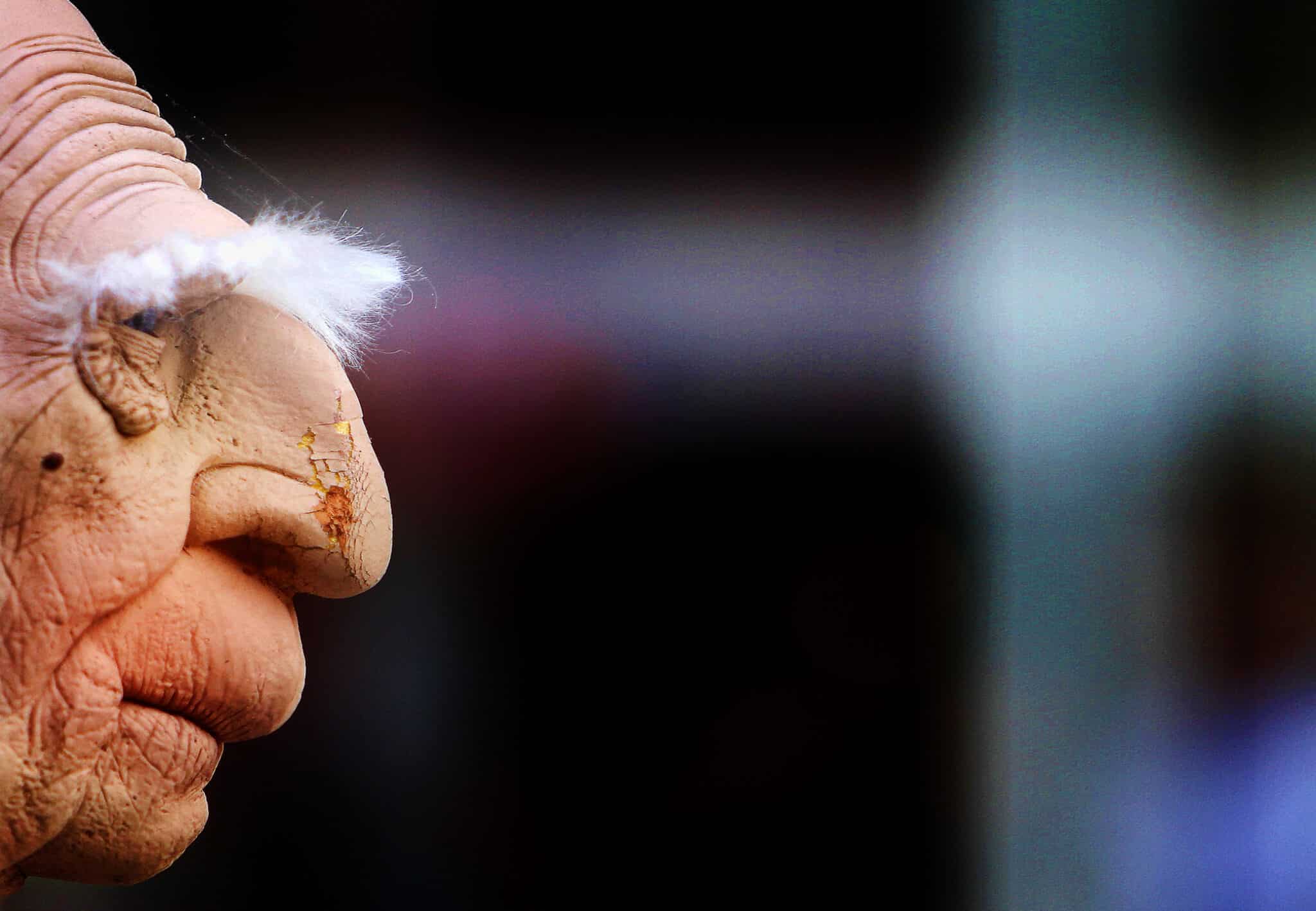
Androgens, these male hormones, stimulate beard growth but trigger hair loss in androgenetic alopecia. The same hormone, dihydrotestosterone (DHT), thus acts in two opposite directions depending on where in the body. Nose and ear hairs, for their part, belong to the family of androgen-sensitive hairs: they grow and become more visible with age, while the crown of the head sheds.
A hormone, two opposing directives.
The same signal, but follicles programmed differently
After puberty, androgens transform vellus follicles, which produce tiny non-pigmented hairs, into terminal follicles that form thick, pigmented hairs. On the scalp, they can provoke the opposite transformation: terminal hairs are replaced by vellus hairs, hence the progressive onset of androgenetic alopecia. The biologist Valerie Randall, who has dedicated a large portion of her work to the question, regards this paradox as unique among hormonal effects.
The mechanism runs through an enzyme, 5α-reductase, which converts testosterone into DHT. The follicles bear androgen receptors onto which DHT binds. When they become overly sensitive, the hair cycle shortens and the follicle miniaturizes, producing hair that is finer, shorter, and sometimes depigmented, which falls out prematurely. In beard follicles, by contrast, the androgen lengthens the growth phase (anagen).
Experiments on cultured cells have confirmed this divergence. Androgens boost the growth capacity induced by beard cells, but inhibit that produced by scalp cells. Researchers see a different gene expression depending on the follicles, probably fixed since embryogenesis.
A full beard and baldness can coexist in the same man.
Not all hair types are affected. Androgen receptors are present in beard follicles, in underarm and frontal scalp follicles, but not in those of the occipital area, which are independent of androgens. This is why a crown of hair remains at the nape and the sides. Hair transplantation actually takes advantage of this principle, by harvesting follicles from a dense area to reimplant them in the affected regions.
Nose and ears: hairs sensitive to androgens
Dermatology classifies hairs into broad categories. The “testoid” hairs are terminal, hard, thick, and pigmented, and require high concentrations of androgens. Among their domains are the mustache, beard, sideburns, the nose, and the ears. In women, their presence in masculine distribution is called hirsutism.
The nose and ears therefore sit in the same camp as the beard, and opposite the crown of the head. As you approach the fifties or sixties, these hairs become more visible and coarser. Areas previously spared, such as the upper nose or the earlobe, can begin to fill in as well.
Why aren’t all men affected in the same way? Genetics plays a role. According to a specialist cited by the scientific press, there are genetic differences in how different areas respond to testosterone, which explains why some men have a thick beard and others do not. Hormone levels alone are not enough: the intrinsic sensitivity of each follicle counts as much.
A caveat is in order. The strongest evidence concerns the beard and the scalp, far more studied than the nostrils or the auricular lobes. The details of the mechanism that makes the hairs in these two zones more visible with age remain less well documented than the beard/baldness paradox.
What purpose do these hairs serve, and how to care for them
The hairs inside the nostrils, the vibrissae, are not merely a cosmetic nuisance. They are located in the nasal vestibule, lined with the same epithelium as the skin, and they filter dust and other inhaled particles. The coarsest particles are trapped by these vibrissae and by the hairs of the nasal vestibule. The mucus film that covers the mucosa, about 20 to 40 ml per day, then intercepts around 80% of particles larger than 10 μm.
So it’s better to trim than to remove. Hairs protruding from the nostril can be shortened with rounded-tip scissors or a dedicated trimmer. Waxing plucks several hairs at once, including the useful vibrissae.
In the ears, the situation differs. Hairs that are too abundant can complicate cleaning and promote cerumen buildup. In the absence of pain, irritation, or unusual symptoms, there is no particular cause for concern. A consultation is more warranted in a woman with rapid hair growth across several areas of the face: the physician can then investigate a hormonal basis.
One detail sheds light on the puzzle. Type 2 5α-reductase, which makes DHT, is only necessary in male-specific follicles, such as the beard and the receding scalp. In people who lack it, underarm and pubic hairs grow normally. This is the enzyme that finasteride targets, the reference treatment for male pattern baldness.
Sources: Transcriptome Analysis Reveals an Inhibitory Effect of Dihydrotestosterone-Treated 2D- and 3D-Cultured Dermal Papilla Cells on Hair Follicle Growth (ncbi.nlm.nih.gov) | pubmed.ncbi.nlm.nih.gov | ScienceDirect (sciencedirect.com)
Article prepared with the help of AI · Our method
