
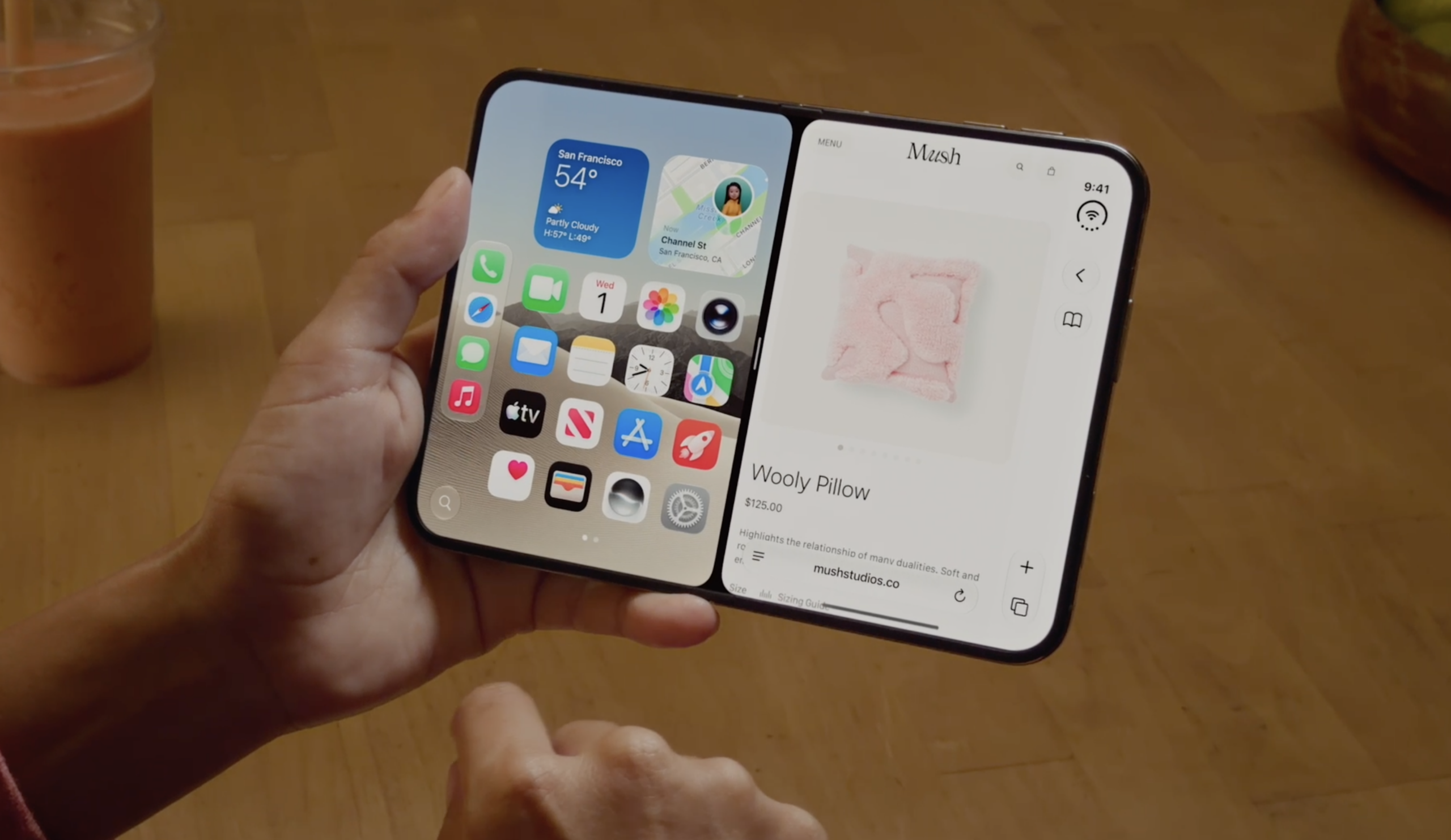
Glass does not like to be bent. Under flexural stress, its outer surface stretches while the inner surface compresses, and the smallest microcrack becomes a rupture point. This is the problem every folding screen must solve even before it powers on, and it cannot be fixed with a hinge.
The iPhone Duo unveiled on September 9 in Cupertino unfolds to 7.6 inches after a stack of ten ultrathin layers, tied together by a mechanism comprising more than a hundred parts. Apple devoted an unusually large portion of its presentation to this mechanism, whereas the company typically emphasizes use cases.
The reason probably lies in the nature of the promise. A camera is judged by a photo, a screen by an image. The durability of a foldable, however, cannot be demonstrated on stage.
Ten Layers That Slide Like Pages in a Book
Stacking bonded layers and bending them imposes the same bend radius on all of them, even though they are not at the same distance from the axis of flexion. The layers toward the top must travel a longer path than those beneath. If the adhesive locks them in place, the gap becomes a source of internal stress, and the panel ends up deformed.
Hence the chosen solution: let the layers slide past one another. Apple uses adhesives designed to permit this sliding during folding, echoing the image of a book being closed, which releases the stress rather than transmitting it. A high-strength glass frames the flexible panel above and below, and a titanium plate reinforces the bottom of the assembly.
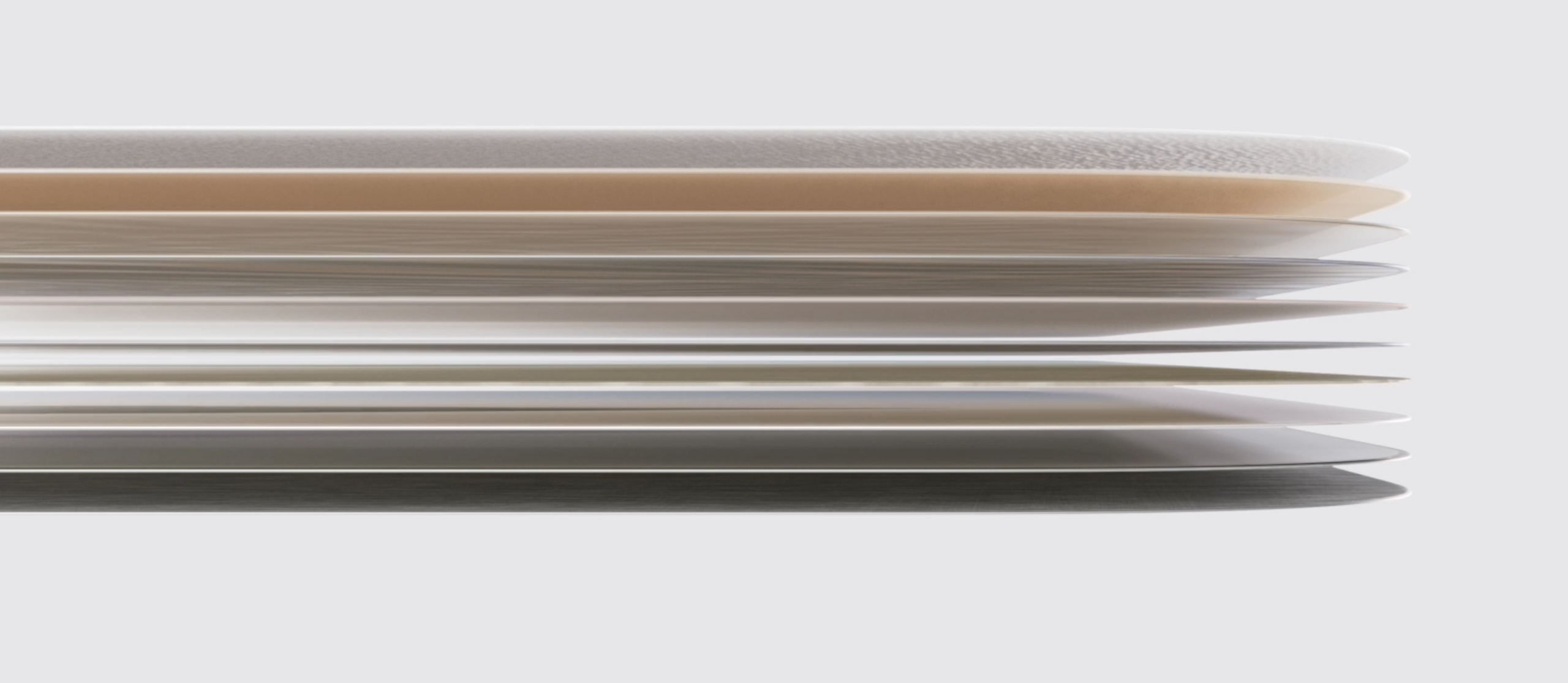
The surface layer plays a secondary role. It combines a scratch-resistant coating with a matte nano-textured finish, achieved from a polymer developed specifically for the occasion, which the brand claims is up to 40% stiffer than materials used elsewhere in the industry. This texture reduces reflections, softens the tactile feel of plastic under the finger, and makes the crease less perceptible to the eye.
Less perceptible, not absent. The press release speaks of minimizing the visibility of the crease, the product page repeats the same caution, and no figures for opening cycles appear in the published documents.
Hundred Pieces for a Single Move
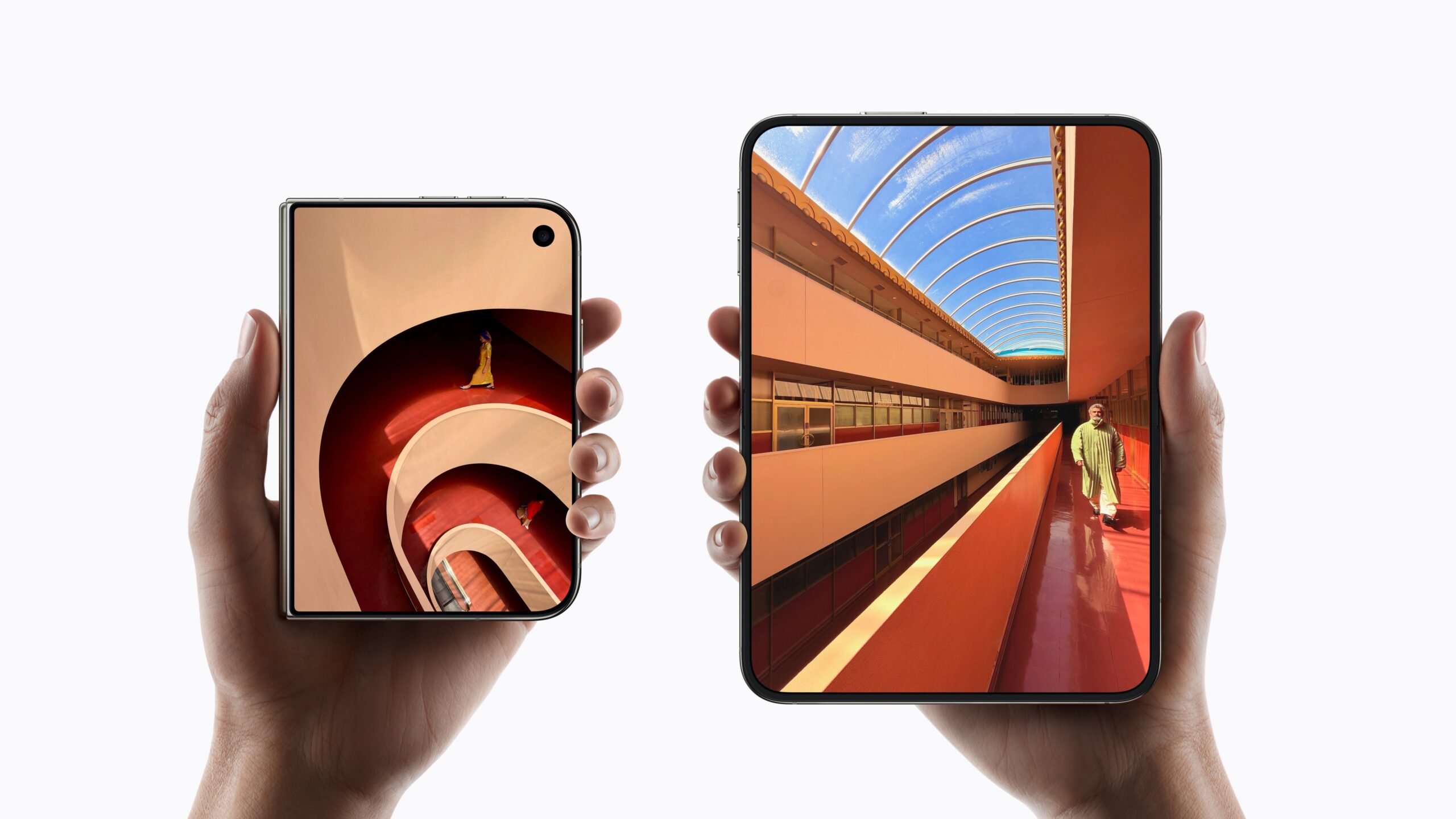
The hinge is not a mere joint between two halves. It mobilizes more than a hundred components to precisely control the opening and closing, and it supports the center of the panel to keep it flat once the device is unfolded, a condition the brand presents as crucial to the screen’s appearance. An array of embedded magnets ensures a clean, decisive closure, and the mechanism operates with a variable torque, enabling intermediate positions rather than a binary snap from one extreme to the other.
The rest of the structure follows the same rigidity logic. The chassis is Grade 5 titanium polished to a mirror finish, the hinge cover is 3D-printed in recycled titanium with a contrasting micro-sand finish. Inside, ribs reinforce the shell, while the antenna separations receive ceramic-fiber inserts to stiffen the frame. Ceramic Shield protects the back, with its second generation protecting the external display, boasting a scratch resistance claimed to be three times higher than the previous generation.
Everything is IP68 certified, a note that bears reading to the end: the technical sheet clarifies that the test was conducted in a lab, at depths of up to six meters for thirty minutes, and that this resistance is not permanent, as it diminishes with normal wear. On a device that opens and closes dozens of times per day, this nuance matters. As for thickness, Apple claims the open device is the thinnest in its history, without providing millimeter figures.
Cooling a Phone Split in Two
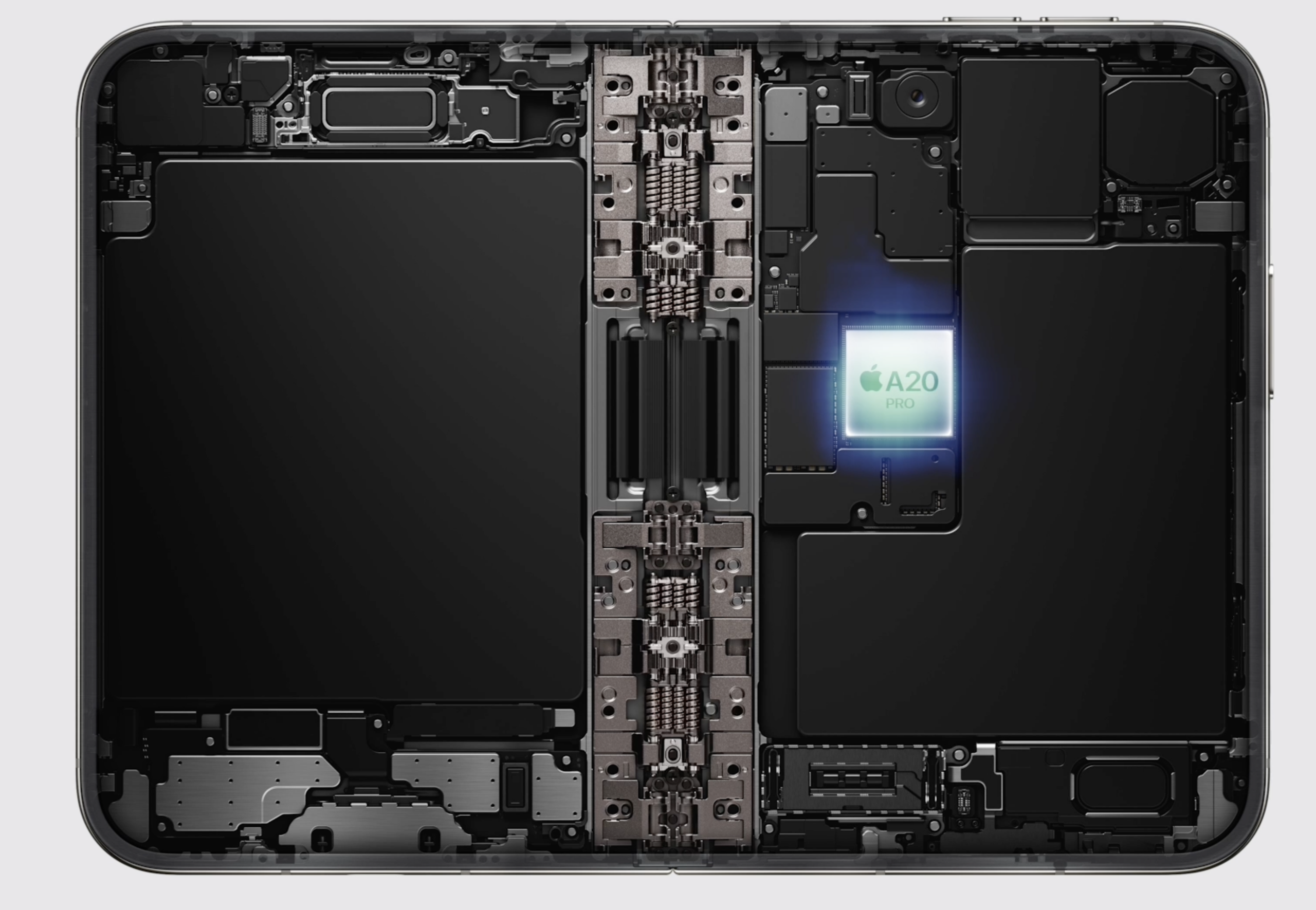
The third constraint is thermal. Apple designed a new package for the chip, inspired by its M-series processors, which directly connects the A20 Pro to a dedicated vapor chamber. The metric highlighted is not peak power but sustained performance, advertised as 35% higher than the iPhone 17 Pro. The choice of this indicator says something about the real challenge of a slim device, where the difficulty lies less in hitting a peak than in maintaining it.
The same space-conscious logic guides the rest. A new display engine drives the two panels in tandem to smooth the transition from one to the other. Two batteries, one per half, operate as a single unit thanks to energy-balancing algorithms. And the complete removal of the physical SIM card worldwide frees up internal space for capacity.
This fall’s lineup, by the way, is full of similarly space-saving solutions in the nearby tier. The iPhone 18 Pro gains a vapor chamber whose surface triples, filled with deionized water, composed of 80% recycled stainless steel, and paired with a copper nicknamed nano-twin that Apple presents as an industrial first. Its variable opening is based on six laser-cut blades, made from a polymer composite, each thinner than a hair, driven by a rotor mechanism to offer four values between f/1.48 and f/4.
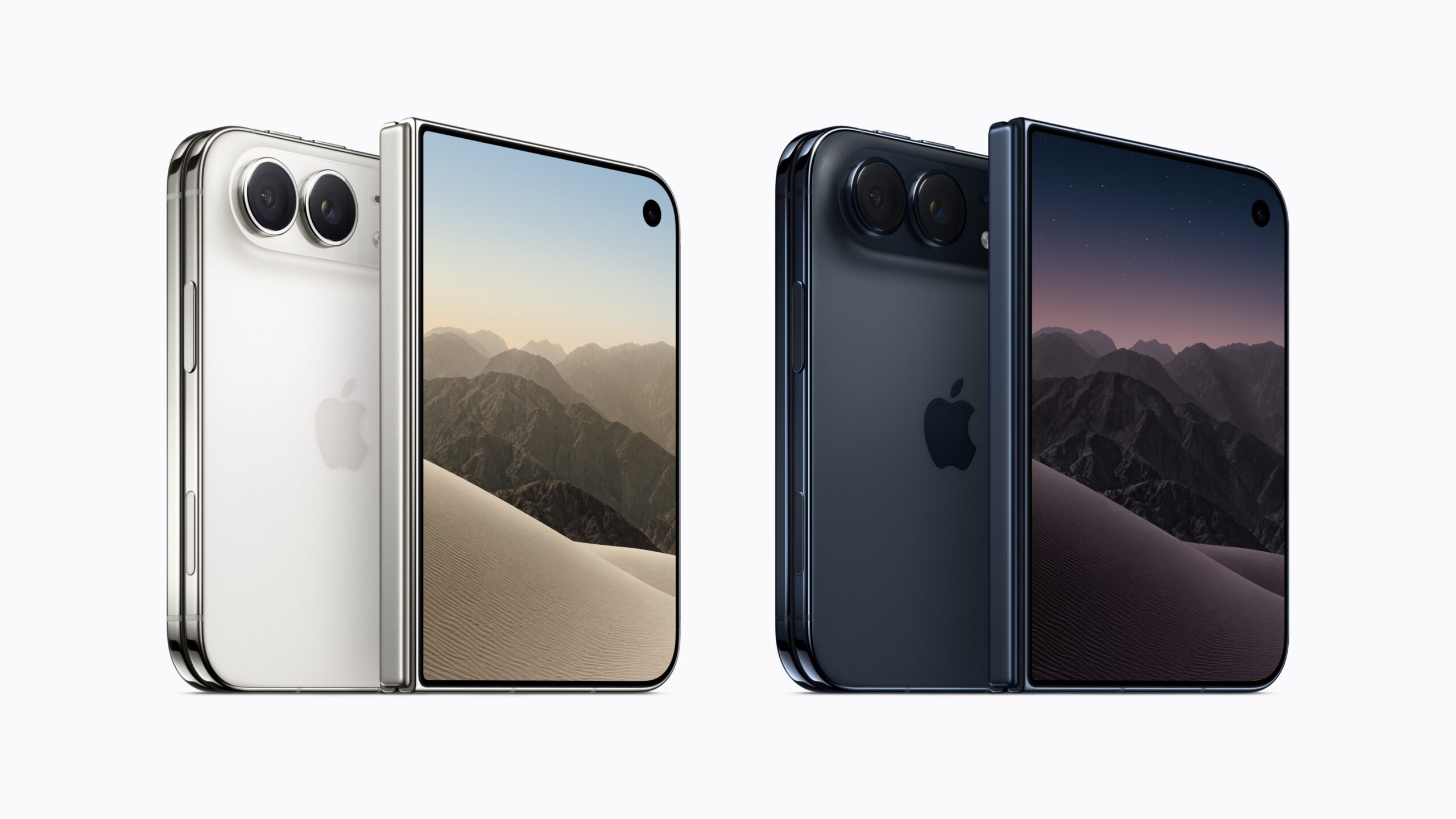
All of these figures come from in-house tests conducted on preproduction units, as the footnotes straightforwardly indicate. That is the limit of the exercise. The engineering of a folding device is a story well told in a conference, photographs poorly, and only verified with time. The question is not whether the iPhone Duo will hold up folded on launch day, but in what state the crease in the middle of its screen will be after a year of pockets and commutes. Apple has evidently spent countless hours on this very point. It publishes no figures.
iPhone Duo, starting at 2,349 euros for 256 GB. Preorders on October 16, availability on October 23, France included.
