
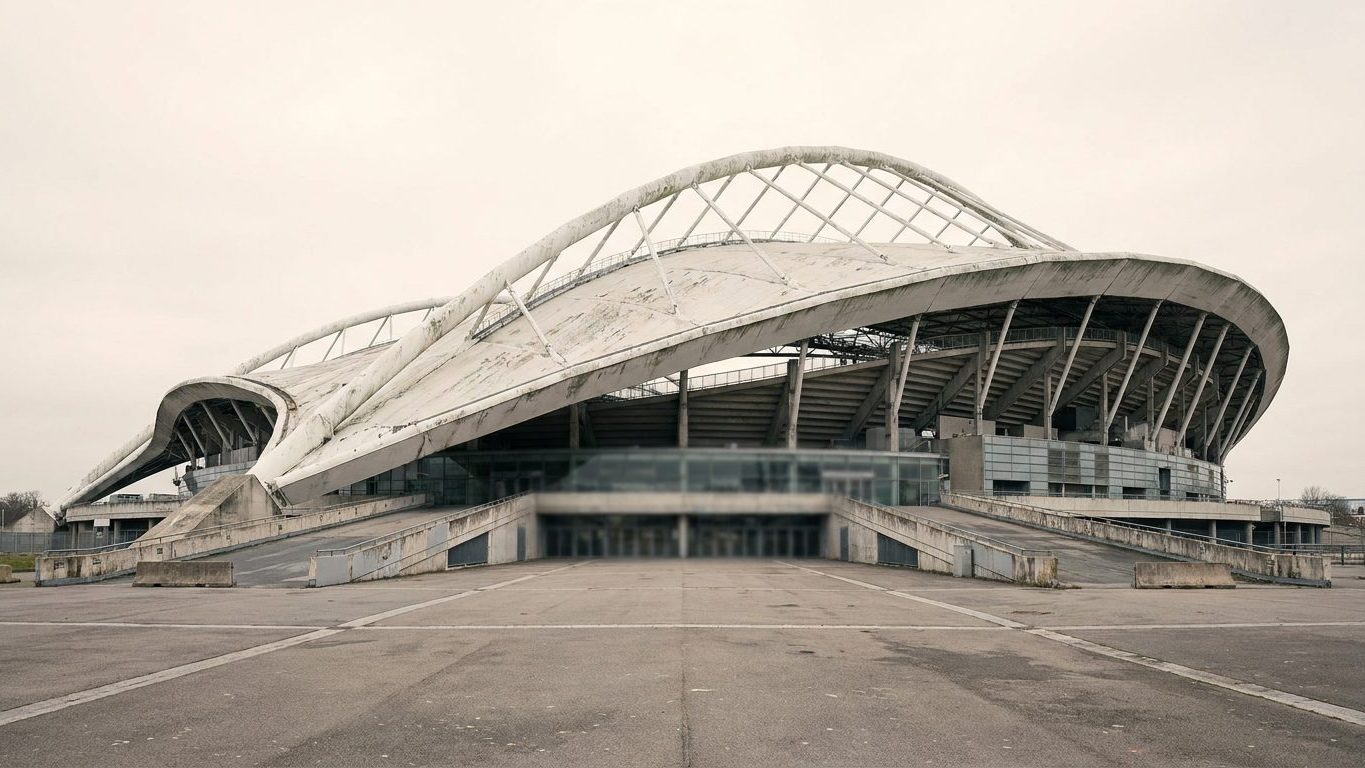
The Stade de France cost 305 million euros to build. From 1998 to 2012, the state paid the operating consortium 17 million euros each year due to the absence of a resident club on site. Combined, these indemnities amount to 289 million euros, almost the price of the project itself.
The story begins with an unkept promise. At the time the concession was signed in the 1990s, the state imagined that a major football club would settle in Saint-Denis once the 1998 World Cup was over. In the wake of the World Cup, the stadium’s business model collided with the reality of a persistent absence of a resident club, as no club could or would move to the venue given its size or location. Paris Saint-Germain remained at the Parc des Princes. No other professional club had the means, nor the desire, to fill 80,000 seats every year.
The concession contract had, however, everything planned out, up to the penalty. Between 1998 and 2012, the state had to pay 17 million euros per year in penalties to the consortium for the absence of a resident club, amounting to 5% of the Sports Ministry’s budget according to L’Équipe Magazine, cited by Slate. A fixed sum, paid without interruption, year after year, like a rent paid for an empty chair.
- The Stade de France cost 305 million euros to build in 1998.
- The state paid 17 million euros per year for 14 years to compensate for the absence of a resident club.
- Cumulative indemnities reached 289 million euros, nearly the price of the stadium itself.
- In 2013, Minister Valérie Fourneyron ended these payments as they became unsustainable.
A Stadium Built for 305 Million, a Bill That Rises Without It
The calculation is dizzying when laid out in black and white. Seventeen million euros per year, for fourteen years. That totals 289 million euros in all, a figure that nearly matches the 305 million spent to build the stadium itself.
The consortium in charge of operation, controlled by Bouygues and Vinci, collected this indemnity without needing to justify the presence or absence of a club. The government of Édouard Balladur had granted the stadium’s management, for 30 years, to this Bouygues-Vinci-led consortium. The mechanism shielded private interests while public finances bore the hit year after year, with no club ever moving in.
This clause was not a trivial detail tucked away in the fine print. It represented a significant portion of the Sports budget year after year, without ever achieving the intended effect: attracting a resident club. The stadium hosted the national team, the Stade de France itself, a few concerts, but never the dense schedule of a league club that would economically justify its size.
2013, the Year the State Cut Off the Funds
The turning point arrived with a change of minister. In 2013, Valérie Fourneyron, the Minister of Sports, managed to compel the consortium to stop paying the compensatory indemnity for the absence of a resident club. Fourteen years after the inauguration, the state finally stops funding a non-occurring arrangement.
The decision did not come out of nowhere. As early as 2012, voices in the National Assembly spoke out against the system. A written question addressed to the Minister of Sports recalled that the 2012 Finance Bill included a provision of 12 million euros intended for the indemnity for the absence of a resident club, and that from the stadium’s opening in 1998 through the end of 2012, nearly 114 million euros had been paid, after offsetting the fee due by the consortium to the state on its operating results. This net figure, lower than the gross indemnity, illustrates the mechanism’s complexity: a portion of the profits earned by the consortium returned to the state, reducing the real bill without ever eliminating it.
The budgetary turn was immediate. The 2013 Finance Bill contained no budget for this indemnity, marking the end of a system deemed unsustainable. The automatic cheque was thus finished. The consortium would henceforth bear the risk of operating a stadium without a fixed tenant on its own.
The Return of the Bill, a Few Years Later
The reprieve did not last forever. In 2016, the Court of Auditors warned of a risk that the bill could return. The additional burden on the state was then estimated at a minimum of 23 million euros per year, including 17 million for the possible return of the indemnity for the absence of a resident club. The mechanism suspended in 2013 was therefore not irreversible: it would take an unrenewed agreement with the sports federations to restart the mechanism.
Meanwhile, the consortium paid the halt of public payments in cash. It found itself in the red, posting a loss of 1.95 million euros in 2015 and a deficit of 5.98 million euros in 2016. The head of the operator compared that situation to a 40% drop in activity, hard to absorb for any company.
What this budget sequence reveals is the structural fragility of a facility conceived for a one-off event, the 1998 World Cup, but never truly adapted for daily operation. Even today, the Stade de France seeks its economic balance among concerts, rugby matches, and football matches, without a resident club year-round to fill the void in the calendar.
Sources: slate.fr | senat.fr | questions.assemblee-nationale.fr
