
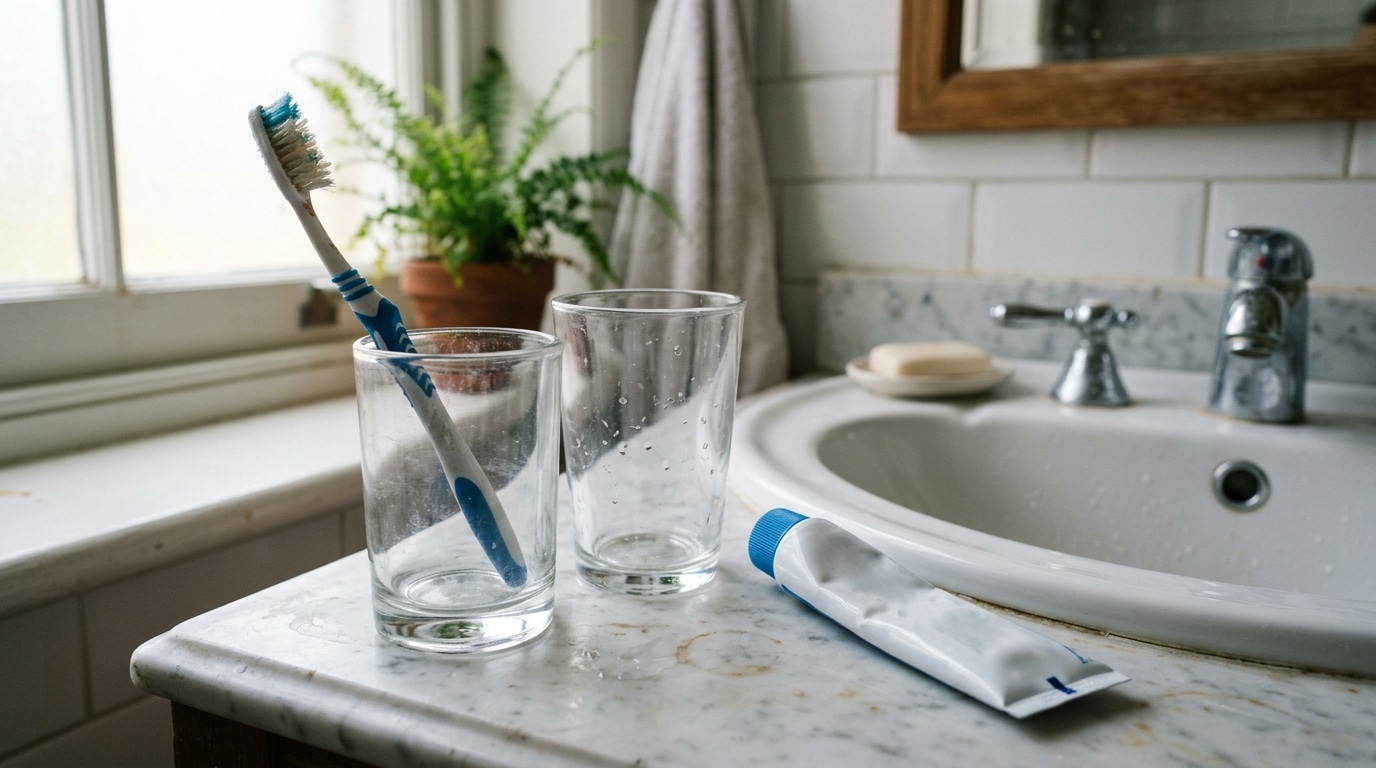
Not at all: it isn’t just a matter of fatigue or stress. More often, it is a commonplace object, kept within arm’s reach every morning and evening, that could be at fault. Each morning, the same gesture repeated almost unconsciously: we grab our toothbrush, we brush our teeth, and yet some people repeatedly find a painful canker sore on the tongue or inside the cheek. While stress and fatigue are frequently blamed, dentists today point to a much more banal culprit hidden in the bathroom’s toothbrush glass. Could a daily object really be the origin of these recurring lesions?
- Hard-bristled toothbrushes would double the risk of traumatic canker sores compared with soft or ultra-soft brushes.
- Three warning signals to monitor: bristle hardness, visible wear, and poor brush maintenance.
- It is recommended to replace your toothbrush every three months and to favor gentle brushing with soft bristles.
- The toothbrush, a long-neglected suspect in the appearance of canker sores
- Hard bristles, wear, poor maintenance: the three warning signals to watch
- The right reflexes to protect your oral mucosa on a daily basis
The Toothbrush, a Long-Neglected Suspect in the Appearance of Canker Sores
Canker sores affect up to 20% of the population across all ages, and their causes are multiple: stress, deficiencies, fatigue. These explanations, well known, have long eclipsed another plausible lead. Among the most frequent causes identified by dentists is the use of an unsuitable toothbrush: bristles too hard, a technique that is too aggressive, a worn or poorly maintained brush. All these factors weaken the mucosa and can trigger a painful episode. This is what is referred to as traumatic aphthae, caused by repeated local irritation rather than an internal imbalance. A study published in the Journal of Oral Pathology and Medicine further supports this finding: users of hard-bristled brushes would experience twice as many traumatic aphthae as those who opt for soft or ultra-soft brushes. A reason to reconsider this small everyday object, often chosen reflexively in the hygiene section of the supermarket.
Hard Bristles, Wear, Poor Maintenance: The Three Warning Signals to Watch
To know whether your toothbrush is working against you, three aspects deserve particular attention. First, the hardness of the bristles: it is advisable to prefer a soft brush, or even extra-soft, that is gentler on the gums and the oral mucosa. Next, visible wear: bristles that are deformed, splayed, or flattened no longer clean properly and can, on the contrary, injure the delicate tissues of the mouth. Finally, the tool’s cleanliness, too often neglected: a brush that is poorly rinsed or stored in a damp place becomes a true haven for bacteria. Add to this a detail that is easy to overlook: the replacement frequency. It is recommended to change your toothbrush every three months, and to avoid using it for more than four months. Dr. Sophie Marin, a dentist in Tours, notes that many patients suffering from chronic aphthae use a brush that is too rigid or worn, and that a simple switch can noticeably improve the situation.
The Right Reflexes to Protect Your Oral Mucosa on a Daily Basis
Adopting the right habits does not require near-impossible effort, just a bit of attention and consistency. Here are the main reflexes to adopt:
- Choose a toothbrush with soft or extra-soft bristles
- Replace it every three months, without waiting for it to become too worn
- Use gentle motions, without excessive pressure, and let the electric brush do the work if that is what you use
- Avoid toothpastes containing sodium lauryl sulfate (SLS), a foaming agent known to irritate sensitive mucosa
- Keep the mouth well-hydrated, as dryness promotes micro-lesions
- Monitor your diet by limiting acidic or highly salty foods
These steps, seemingly simple, actually act as a small daily protection routine for the oral mucosa. Combined with a gentler brushing technique, they help reduce the irritations that favor the appearance of traumatic aphthae.
Ultimately, before automatically blaming stress or fatigue, a quick glance at the toothbrush glass in the bathroom might be enough to understand the origin of these recurrent discomforts. A simple gesture, but one that can sometimes make all the difference.
