
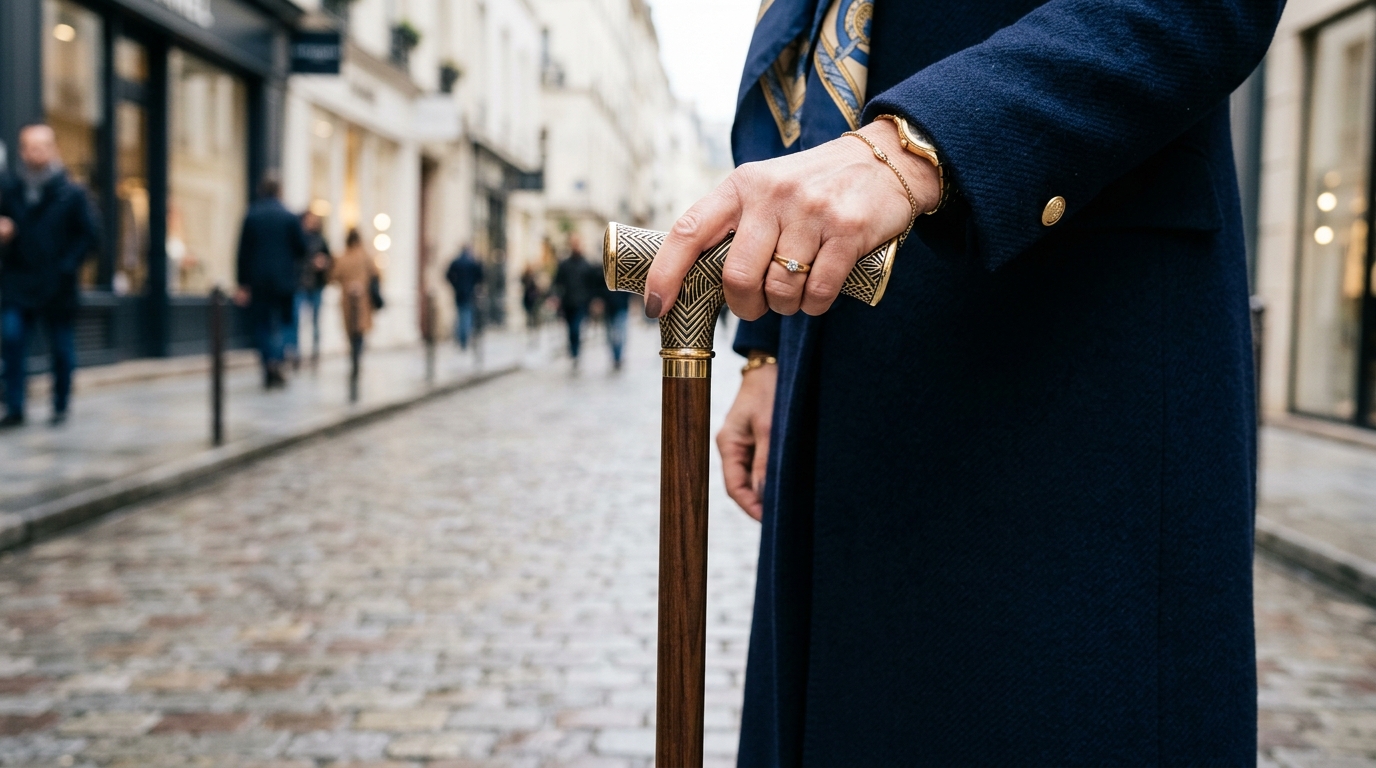
Why do so many people hold their cane on the side that seems most logical, even though this gesture actually worsens the problem they are trying to relieve? At the start of the school year, in physiotherapy clinics, this scene repeats relentlessly between two rehabilitation sessions. A patient relies on the cane on the side of the painful leg, convinced they are doing the right thing. Yet, this habit, as widespread as it is tenacious, goes against everything biomechanics teaches us about balance and the distribution of body weight. This misunderstanding, sometimes passed down from generation to generation, deserves attention, because it affects thousands of people each year, particularly after hip or knee surgery or in cases of advanced osteoarthritis.
The reflex that betrays our common sense
When pain settles in one leg, the first reflex is often to look for support on the same side as the weakened area. This logic seems intuitive: we protect what hurts by placing support nearby. This is exactly what many patients do, unknowingly, as they leave a consultation. The gesture seems natural, almost instinctive, as if the body seeks to surround its weakness with immediate protection. This reflex is reinforced by watching relatives or elderly people who have also adopted this habit without ever questioning it. As a result, this error is transmitted, normalized, and becomes a silent social norm. Yet, this choice, though it may seem coherent, rests on a faulty reading of the mechanics of the human body. Common sense, here, plays a trick, and it is precisely this contradiction that makes the topic so interesting to explore.
What biomechanics really reveals
Walking rests on a simple yet essential principle: with every step, the body’s weight must be distributed between both legs and the available points of support. When one leg is painful or weak, the objective is not to add support on that side, but to relieve that leg by transferring part of the weight elsewhere. This is where the true logic reveals itself: the cane should be held on the side opposite the painful leg, on the side of the healthy leg. This positioning creates a real triangle of support between the cane and the healthy limb, while freeing the fragile leg from part of the pressure it usually bears. concretely, when the sick leg advances, the cane, held on the opposite side, advances at the same time, providing stable support and reducing limping. Conversely, holding the cane on the same side as the pain only increases the imbalance and forces more on the already compromised joint. This mechanism, though counterintuitive, is the one that truly protects the body and limits painful compensations in the back, hips, or knees.
Adopting the right gesture, for good
Changing a habit that has been ingrained for a long time takes a bit of time and vigilance, but it is never impossible. It is often enough to spend a few days of conscious attention so that the right gesture becomes automatic. Here are a few simple guidelines to keep in mind daily:
- Hold the cane on the side opposite the painful or weakened leg
- Advance the cane at the same time as the sick leg, not the other way around
- Ensure the cane height allows for a slightly bent elbow, without straining the shoulder
- Adjust your step so that the cane, the healthy leg, and the weak leg form a regular and stable base of support
This simple adjustment can make a real difference in walking comfort, reduce muscle fatigue, and prevent secondary pains, notably in the back or the opposite shoulder. It is not an insignificant detail, but rather a foundational gesture that conditions the entire quality of the assisted gait. For people who have just undergone surgery, who suffer from osteoarthritis, or who are in a rehabilitation period, this adjustment deserves particular attention, even if it means asking for a reminder during the next physiotherapy session or from a pharmacist when purchasing the cane.
This detail, long underestimated, nicely illustrates how our intuition can sometimes lead us away from the right reflexes. Behind a simple gesture like holding a cane lies a genuine bodily logic, built on balance and weight distribution. As many people resume more regular physical activity after the summer, it is never too late to revisit this small daily detail. And what if the right gesture, once understood, became as natural as what we have always believed to be correct?
