
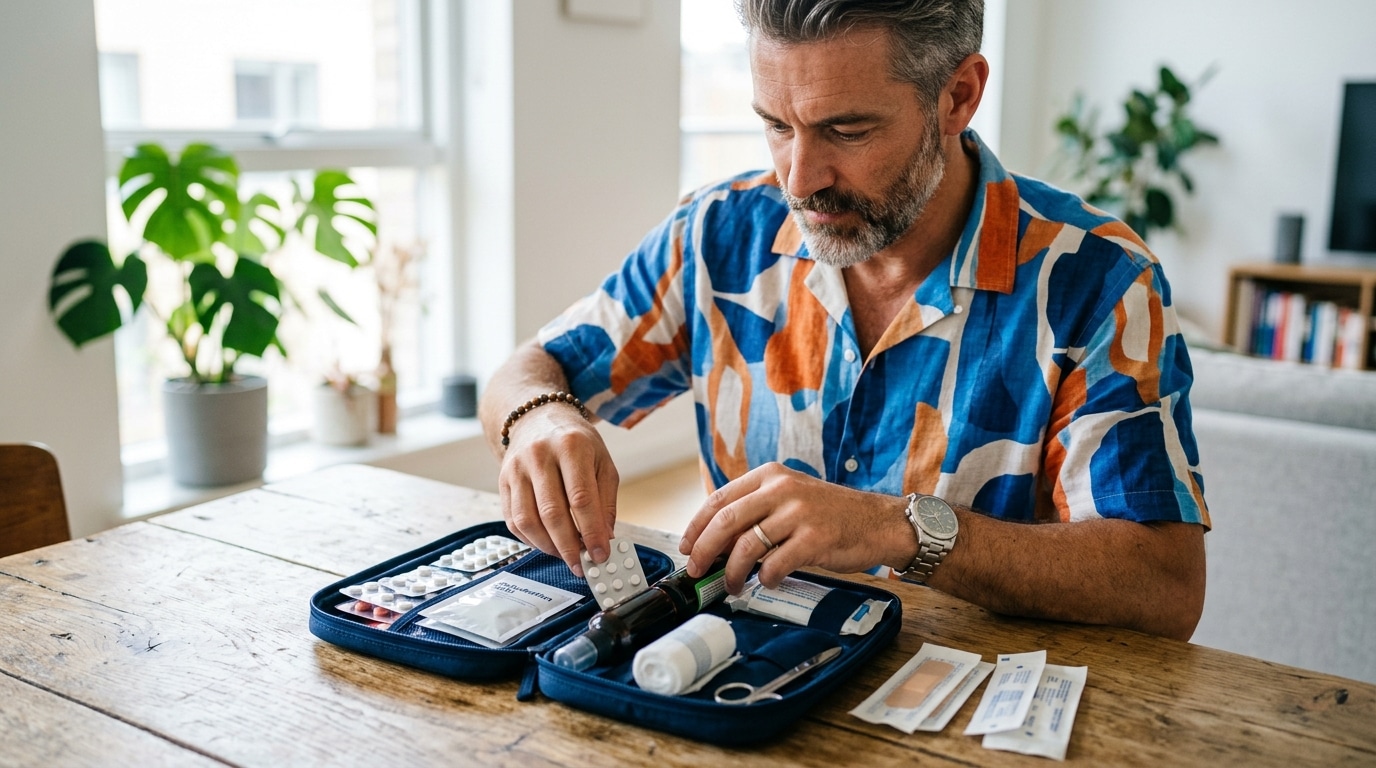
Preparing your medical kit before a departure is a bit like packing at the last minute: you toss into the bag what you know, what brings reassurance, what you have always seen at home. A tube of paracetamol, a few colorful bandages, a sunburn ointment forgotten since last summer. The ritual is nearly identical from one family to another. Yet those who live with emergencies day in and day out, especially during peak summer season, slip into their luggage a content that’s very different, designed to ward off the real travel hassles rather than imagined anxieties. And the gap between these two approaches deserves attention, especially at times of departures.
What an ER doctor’s kit really contains before takeoff
The logic of emergency physicians can be summed up in one sentence: address the common emergencies, not the rare scenarios. Practically, their typical kit gathers a few essential families. First, versatile analgesics: paracetamol for fever and ordinary pains, ibuprofen for inflammations and more stubborn aches. Then, a topical antiseptic accompanied by adhesive bandages, gauze pads and suture strips, capable of closing a small wound when no clinic is reachable. An antidiarrheal paired with oral rehydration sachets (ORS) completes the arsenal, just as a antihistamine to soothe bites, food allergies, or unexpected skin reactions. Finally, two protections indispensable depending on the destination: a mosquito repellent based on DEET or icaridine, and a high-protection sun cream. Nothing spectacular, but every item answers to a statistically probable travel risk.
The big oversights that make all the difference
Two blind spots routinely appear in improvised kits packed the night before departure. The first are the oral rehydration sachets. They’re often treated as a gimmick, while they are vital in cases of severe traveler’s diarrhea, especially for young children, pregnant women, or the elderly. Severe dehydration in hot weather can tilt quickly, and a single sachet dissolved in potable water can sometimes prevent hospitalization. The second omission, more discreet but just as problematic: medical documents. A recent prescription, a copy of regular treatments with the names of the molecules (not just the brand), the vaccination record, or even proof of health insurance. Without these papers, a pharmacy abroad may refuse to dispense a medication, customs may question an unidentified box, and a disruption of treatment can turn a minor setback into real trouble thousands of kilometers from home.
Tailoring your kit to your destination and to your profile
No universal kit fits all trips. A stay in a tropical zone, a hike at high altitude, a European city-break, or family vacations do not expose you to the same risks. For sensitive destinations, a consultation at an international vaccination center remains the best entry point: it allows you to adjust the kit according to the country, the monsoon season, the presence of malaria, or the local dietary precautions. Travelers with a chronic condition (diabetes, hypertension, asthma) should also plan a comfortable margin on their medications, anticipating flight delays or unexpected extensions. One final reflex, often neglected: check expiration dates every year, ideally when packing the summer suitcases. A well-thought-out kit weighs only slightly more than an improvised one, but it dramatically changes the traveler’s serenity. The true secret isn’t in its contents; it’s in the moment you prepare it: cold preparation, not the night before departure.
Carrying the right medicines isn’t about caving to panic, it’s simply anticipating what really happens on the road: traveler’s diarrhea, a sunburn, an unfortunate sting, a missing bandage. ER doctors don’t mime catastrophes; they prepare the traveler’s everyday life. And what if the next step were to open your current kit, take stock, and ask yourself honestly: is it ready to depart, or only ready to reassure?
