
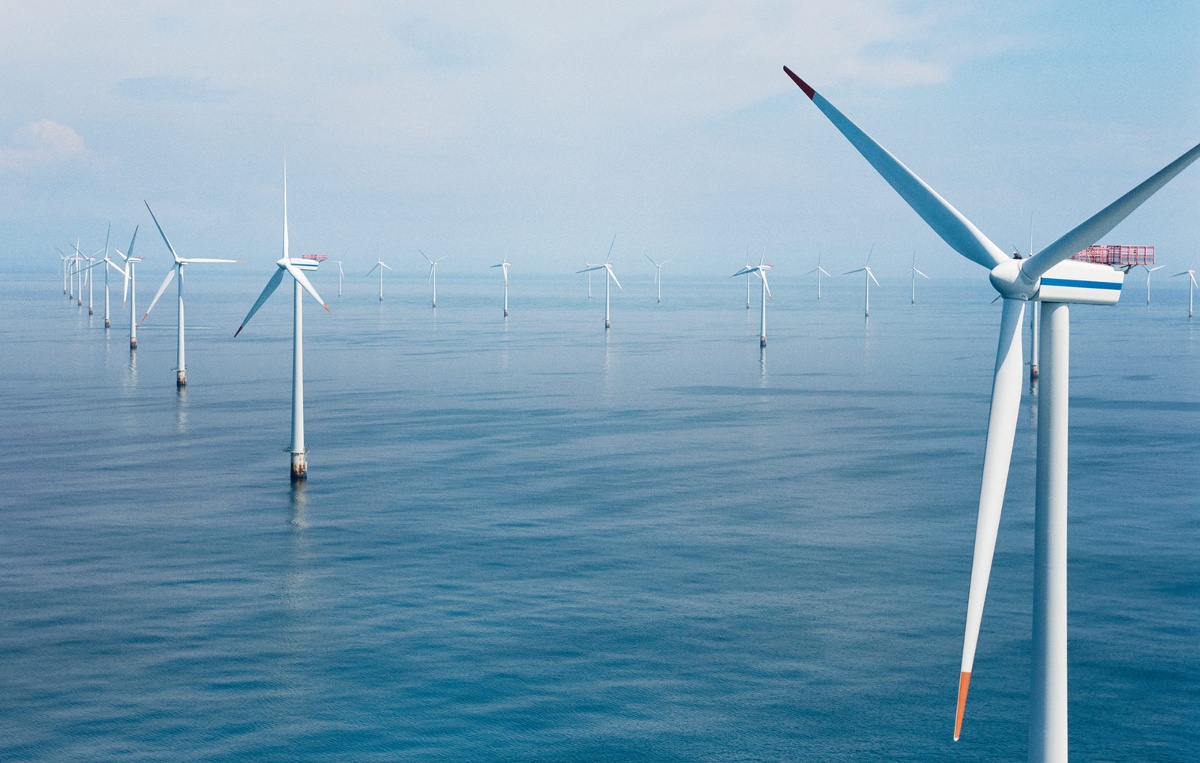
Near offshore wind turbines at sea, mariners are increasingly reporting highly variable visibility. The issue concerns disruptions to local weather conditions that severely affect visibility, a vital factor for the safety of maritime navigation. Beyond creating artificial fog and dissipating fog that already exists, these phenomena are also responsible for alterations in marine currents.
Episodes of fog and mist becoming more unpredictable
First, let us recall that the main advantage of offshore wind farms is their energy yield, considerably higher than onshore installations. Their visual and acoustic footprint is also smaller. Furthermore, their installation at sea helps avoid conflicts of land use on land. However, it turns out that offshore wind farms can sometimes disrupt maritime navigation, as the Spanish daily Ecoticias explained in an article dated August 29, 2026.
For more than fifteen years, sailors and maritime authorities have observed disturbances related to navigational conditions. Primarily, these involve episodes of fog and mist that are more unpredictable, as well as changes in currents and turbulence. Yet the topic is becoming increasingly worrying as offshore wind farms have tended to multiply in recent times.
Several different phenomena
Between 2008 and 2018, several studies were conducted around the Horns Rev (1 and 2) offshore installations in the North Sea, off the west coast of Denmark. The first of these studies presented unique images of long white bands and spirals of fog stretching behind each turbine. According to the researchers, a mass of cold and very humid air was stagnating just above the sea and the turbines were turning at a low rate. By generating vortices, the rotation of the blades drew in slightly warmer and humidity-saturated air from the water’s surface. Thus, this forced mixture caused immediate re-condensation, producing artificial wake fog.
The second study concerned conditions inverted relative to those of the first. Indeed, a natural marine fog layer already covered the area but warmer and drier air circulated aloft. By turning at full speed, the blades acted like gigantic mixers, pushing the dry air from above down toward the water surface. This fully dissipated and evaporated the fog behind the wind farm. The study thus showed that offshore wind turbines can also dissipate fog that already exists.
The third and final study on the subject dealt with a situation where fog had formed in front of the turbines. The researchers demonstrated the existence of a blocking effect. According to them, the immense physical barrier created by the wind farm slowed the upstream air mass. This generated a stagnant air zone, forcing the condensation process to occur before the wind even touched the blades.
Pourquoi les acteurs de la navigation maritime sont-ils si inquiets ?
Les marins et les autorités maritimes s’inquiètent principalement de l’extrême imprévisibilité des conditions de navigation, que les phénomènes évoqués ci-dessus introduisent. Cette inquiétude concerne même la dissipation de brouillards déjà existants. En pratique, un même alignement d’éoliennes peut dissiper la brume un jour et l’entretenir ou la générer le lendemain, de manière totalement aléatoire. Effectivement, tout réside dans les conditions de température que le vent transporte.
Ces phénomènes génèrent donc des transitions rapides, parfois en seulement quelques dizaines de minutes. Ils provoquent des ruptures brutales de visibilité à l’approche ou au sein même des parcs éoliens, ce qui empêche les marins d’anticiper sereinement leurs trajectoires. De plus, les éoliennes peuvent ralentir les courants marins locaux jusqu’à 20%. Ce changement inattendu complique encore un peu plus les prévisions de dérive pour la navigation mais également, la gestion d’éventuelles opérations de sauvetage.
Enfin, l’éolien en mer est sans aucun doute un élément essentiel de l’actuelle transition énergétique. Cependant, les acteurs de la navigation maritime demandent tout de même un suivi renforcé, principalement à l’aide de meilleures capteurs, de modèles météorologiques plus précis mais aussi, d’un contrôle du trafic et d’une anticipation en ce qui concerne les alertes.
