
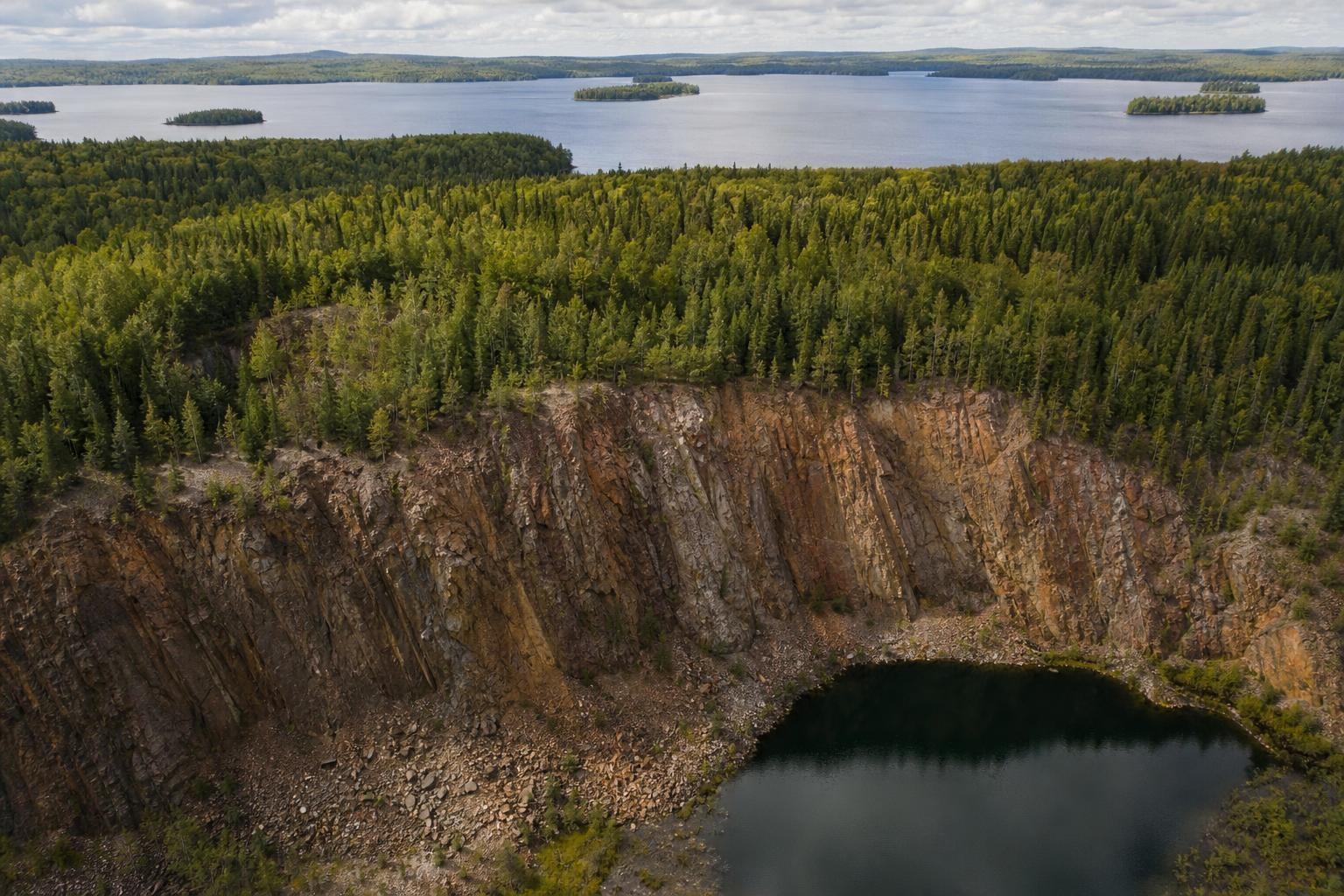
Canoes skim across quiet water while loons call from shadowed islands. Beneath that stillness waits a geologic story written in heat, pressure, and deep time, a cache of critical metals that could wire the energy transition—and rewrite the fate of a beloved water wilderness.
A buried fortune of metal
Here, the ancient basement rock of the Superior shield holds a vast trove of nickel, copper, cobalt, and platinum‑group elements. Geologists call it a magmatic sulfide system, layered like a slow‑cooled symphony of ore.
For battery makers, nickel is backbone material, the element that boosts range and efficiency in many EV chemistries. Global demand is rising, and so are concerns about supply security.
“Energy transitions run on minerals, not wishes,” goes a frequently repeated refrain in mining circles. The metal is there, silent, dense, and tempting, just a few hundred meters down.
Water above, ore below
At the surface spreads a labyrinth of lakes, portages, and pine, a canoe country where silence is a kind of currency. The watershed is exceptionally connected, a chain of glass‑clear bowls that pour into one another with seasonal pulse.
Sulfide‑bearing mines can generate acid, releasing dissolved metals when rock meets air and water. In a landscape built of sponges and seams, containment is a challenge that lasts longer than any corporate charter.
“Up here, water travels sideways, backwards, and forever,” an old paddler likes to say. One leak is not a headline; it is a legacy.
The case for digging
Proponents see a chance to supply allies with clean‑standard nickel, reduce dependence on fragile chains, and create high‑wage work on the Range. They point to modern engineering—dry‑stack tailings, lined impoundments, paste backfill, and tight water circuits.
National policy sweetens the math, from tax credits to domestic content rules that reward nearer, cleaner sourcing. “If we want EVs, we have to build them from somewhere,” say advocates, “and better to do it under strong laws.”
Jobs, taxes, and downstream shops could ripple through towns where mines once set the clock of daily life.
The case for restraint
Opponents answer that no sulfide‑ore mine has ever been perfect, and that this watershed is the wrong laboratory for learning. Acid drainage can outlive any permit, demanding perpetual treatment long after profits move on.
Tribal nations assert treaty rights and steward wild rice—manoomin—that suffers under sulfate loads and shifting hydrology. “You cannot reclaim a lake, only a pit,” goes another local saying.
Wilderness tourism supports guides, outfitters, and quiet economies that depend on waters staying simple and clear. What looks like empty space on a map is, in practice, full of value.
A political pendulum
In recent years, leases have been canceled, boundaries withdrawn from drilling, then revisited as administrations change. The policy metronome swings between caution and urgency, each swing leaving new documents and old tensions.
One nearby project has edged forward outside this particular watershed, a reminder that geology ignores lines while governance must draw them. Markets add their own weather, with nickel prices spiking, slumping, then spiking again.
“Investment hates uncertainty, but water hates mistakes,” says a regional observer. Both can be true at the same time.
What it would take to say yes
If development is to earn any public trust, the bar must be set high, then raised higher. Guardrails could look like this:
- Truly no‑discharge designs, verified by independent review and enforceable real‑time monitoring
- Financial assurance that covers worst‑case closure, indexed to inflation, and untouchable by bankruptcy
- Free, prior, and informed consent from affected Tribal nations, not mere consultation
- Baseline studies that span full seasons, full cycles, and the full network of interconnected waters
- A plan for centuries‑scale stewardship, funded now, not later, with public data and open audits
“Show your model, show your assumptions, and fund your failure,” environmental engineers like to say. Anything less is a bet with someone else’s home.
Paddles, pickaxes, and the long view
The smartest transition blends sources and strategies: recycling today’s scrap, redesigning for future loops, and diversifying supply so no one watershed carries the whole risk. Battery chemistries that lean on LFP can take pressure off nickel while we scale recycling.
There is room for careful mining in some places and permanent restraint in others, chosen by hydrology, not headlines. The canoe country argues with its own existence that some maps should remain mostly blue and green.
“Leave something for later, so later can happen,” reads a note on a trailhead board. The ore is patient, the lakes are not. In deciding between them, we are really choosing what kind of future feels wealthy, and what kind of silence we want to still hear.
