
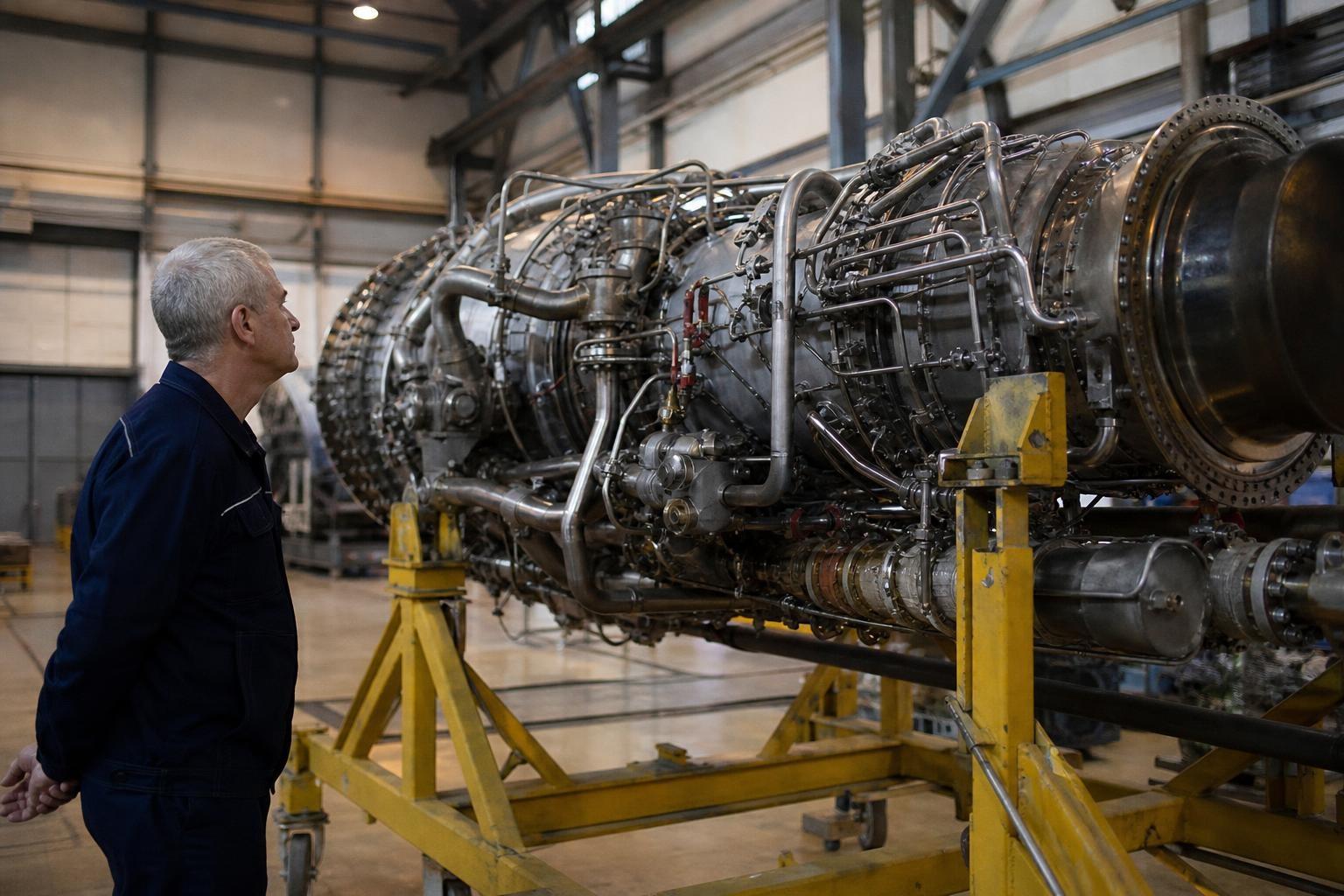
It remains one of aerospace’s most remarkable paradoxes: a quintessentially American launch vehicle propelled by a Russian heart. For over two decades, a marriage of Cold War legacies and late‑1990s pragmatism put high‑stakes national missions on a pillar of international engineering. The result was a period of reliability so steady that many forgot how fragile the politics of propulsion could really be.
How a U.S. rocket got a Russian heart
In the late 1990s, Lockheed Martin sought a first‑stage engine that was both powerful and proven. The Russian RD‑180—built by NPO Energomash and descended from the RD‑170 family—offered oxygen‑rich staged combustion the United States did not then field. It ran hot, clean, and astonishingly efficiently, with twin chambers feeding a single thrust structure.
Paired with the modular Atlas V airframe, that engine gave the fledgling Evolved Expendable Launch Vehicle program exactly what it needed: performance headroom, schedule confidence, and costs that penciled in a pre‑SpaceX era. When ULA formed in 2006, Atlas V became half of the nation’s “assured access to space” strategy, the other half being the Delta family.
From the first flight in 2002, the machine built its reputation the old‑fashioned way: one precise countdown, one clean ascent, one accurate injection at a time. In a business where risk is never truly zero, the launch team’s unofficial motto felt true: “reliability is the ultimate payload.”
Reliability as currency in orbit
Atlas V became the vehicle you booked when failure simply could not be an option. Classified reconnaissance satellites, billion‑dollar communications craft, and science probes that would never come home all rode that patient, kerosene‑fed flame.
A partial roll of honor reads like a catalog of American deep‑space ambition:
- New Horizons to Pluto, Juno to Jupiter, Curiosity and Perseverance to Mars, OSIRIS‑REx to an asteroid, and Lucy to the Trojan swarm
Add to that GPS, AEHF, MUOS, TDRS, and—more recently—commercial constellations and experimental payloads. Even crew aspirations brushed the stack, as Boeing’s Starliner paired its capsule with Atlas V’s human‑rated pedigree. When mission managers said “no engine, no mission,” nobody argued; the calculus was brutally simple.
When geopolitics entered the flame trench
The bargain held until it didn’t. After the 2014 crisis in Ukraine, and again after Russia’s 2022 invasion, U.S. policy makers moved to unwind reliance on foreign propulsion for national security launch. Legislative limits, procurement ceilings, and carefully managed inventories turned what had been a steady supply into a sunset plan.
The irony was stark and a bit painful: the engine that had maximized U.S. mission assurance suddenly looked like a liability on Capitol Hill. “We have to chart a path off foreign engines,” became a mantra in hearing rooms and strategy memos. ULA buffered the shift by allocating already‑purchased RD‑180s to a finite manifest while accelerating a replacement core.
Policy and engineering rarely move at the same speed. Warehoused engines were husbanded like fine whiskey, poured only for missions that justified every marginal risk. Meanwhile, competitors with domestic engines captured an increasing share of urgent assignments.
The handoff to a new era
The successor arrived with a different chemistry. ULA’s Vulcan pairs a redesigned core with Blue Origin’s methane‑fueled BE‑4 engines, trading kerosene for a cleaner‑burning propellant and a fully domestic supply chain. Certification flights began the slow, necessary climb from “it works” to “it works every time,” the only standard that ultimately matters.
Atlas V, for its part, is running out the clock. The remaining missions are spoken for, the engines counted, the stacks scheduled with the pragmatism of a program that knows its end. Some customers will ride Atlas one last time for continuity, others will shift to Vulcan, Falcon, or emerging options as schedules, risk profiles, and politics dictate.
For crewed flights, the path is even more careful. Ratings, escape scenarios, and abort envelopes add layers of validation that resist simple one‑to‑one swaps. The lesson is obvious but often inconvenient: upgrading propulsion is the easy part; upgrading trust takes years.
What the partnership taught—and what it cost
There is a quiet, unflashy lesson in all of this. Cross‑border cooperation gave American missions world‑class performance when it was most needed, and it did so safely, affordably, and with admirable consistency. It also exposed a strategic vulnerability that the nation ultimately decided it could no longer tolerate.
Engine rooms are where physics meets policy. “Assured access to space” is not just a slogan; it is a supply‑chain strategy, a manufacturing base, a workforce, a test stand, and a politics of national priorities. The RD‑180 era made that vivid—both in what it enabled and in what it constrained.
Looking forward, the benchmark the old workhorse set remains the bar the new fleets must clear. Launch after launch, quiet pad operations, perfect staging events, second stages that hit the mark—these are the boring miracles customers pay for. If Vulcan, Falcon, and the next generation achieve that cadence with fully domestic engines, then a strange, fruitful chapter of aerospace history will have done its job twice: first by flying, and then by ending.
