
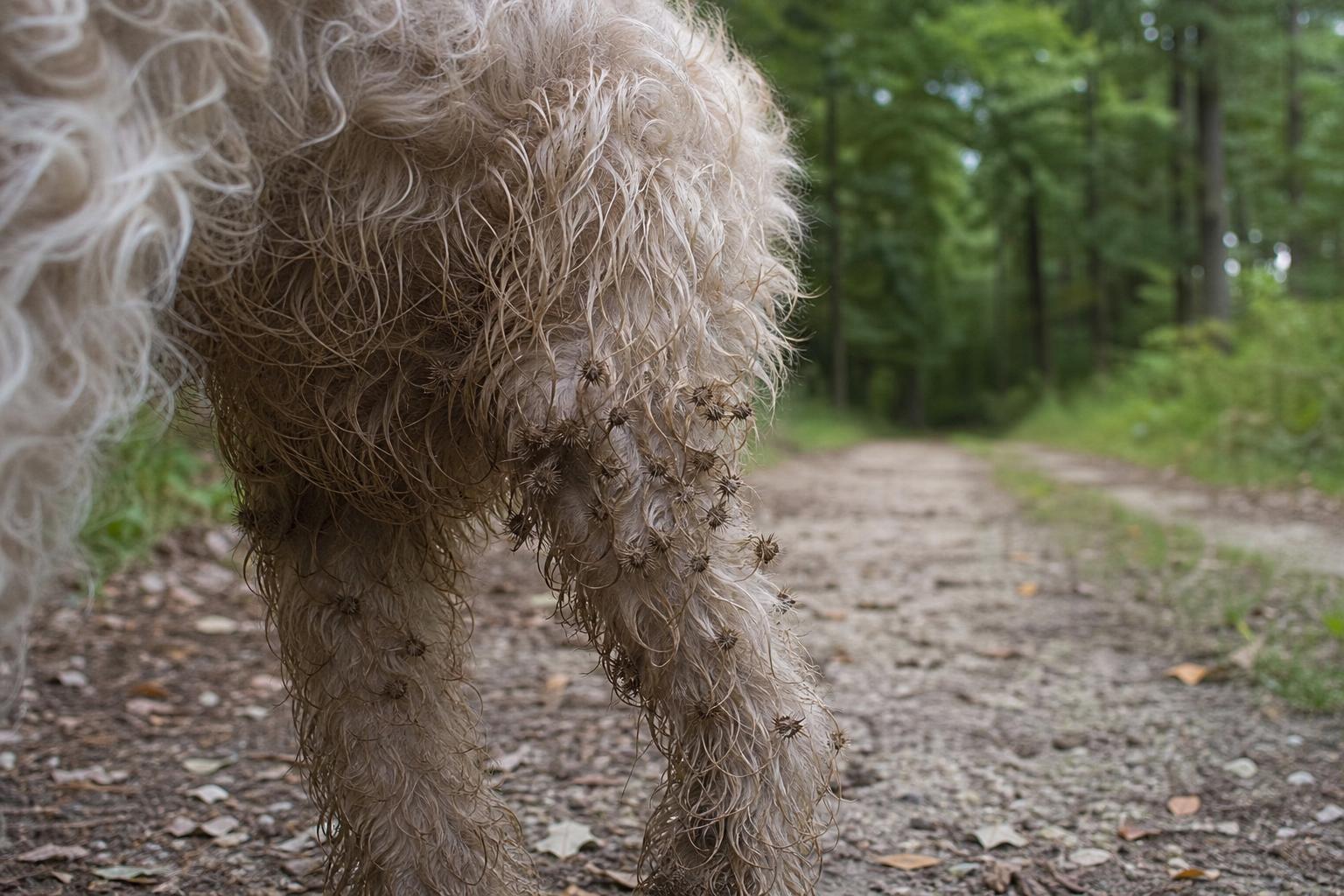
A walk in the woods can turn into a laboratory, and a stubborn tangle can become a revelation. In the early 1940s, a Swiss engineer and his dog returned from a hillside trek carrying an army of clinging burrs. Instead of cursing at the mess, he reached for a microscope and asked a deceptively simple question: Why do these little hitchhikers hold so well?
What he saw looked like a map to a new kind of fastener. Nature wasn’t merely decorative; it was quietly engineering. “Innovation,” he might as well have noted, “is often a scratch you cannot easily remove.”
A snag that sparked a system
Those alpine burrs were from burdock, a hardy plant with tiny hooks on each seed head. Under magnification, the engineer observed hooked filaments ready to grab anything fibrous. Clothes, socks, and a dog’s fur were perfect targets.
He imagined a partner surface made not of fur but of orderly loops. If hooks met loops, they could engage repeatedly, hold firmly, then pull apart with a satisfying peel.
Reverse-engineering the burr
Turning that idea into a durable product took years of careful tinkering. Early attempts with cotton worked, yet the hooks bent and lost their bite. The system needed a stronger, springier material.
Enter nylon, a synthetic with just the right memory. With controlled heat and cutting, nylon threads could be coaxed into resilient hooks. “Copy the burr,” the logic went, “but make it repeatable.”
From workshop to worldwide
A patent was filed in 1955, securing the design for a hook-and-loop fastener that could be manufactured at scale. The brand name that followed would become famous, even shorthand for the entire fastening category.
Adoption wasn’t instant. Tailors were skeptical, and shoemakers were cautious. But engineers noticed the fastener’s unique blend of reliability, lightness, and speed, and curiosity turned into orders.
Space gave it lift
The 1960s brought a formidable ally: the aerospace industry. Crews needed gear that attached quickly in zero gravity without buckles or complex latches. Hook-and-loop shone in that weightless theater.
Astronauts used it to secure tools, panels, and even floating pens. “In space,” one might quip, “everything wants to drift—except what’s held by hooks.”
Why shoes fell in love with it
Footwear designers valued speed, adjustability, and child-friendly closures. Here was a closure that could be opened and shut with one hand, even with cold fingers. It didn’t rust, jam, or demand fine motor skills.
- Quick on, quick off for busy mornings
- Adjustable fit across changing swelling
- Durable under sweat, dirt, and motion
- Safe for kids, elders, and adaptive needs
- Easy to clean, easy to replace
The sound of certainty
That peel-and-press “rip” became an audible assurance. It said: fastened, then free. Runners heard it at the gym bench, parents heard it by the school door, technicians heard it over machine hum.
“Closure,” as designers like to say, “is a small moment of trust.” Hooks meet loops, and your foot meets the world.
Tiny architecture, big effects
At heart, this is micro-architecture. The hook shape, the loop density, the thread thickness, the heat setting—all are calibrated variables. Change one, and you change strength, longevity, and feel.
Too many hooks can snag fabric; too few can lose grip. The craft lies in tuning that little ecosystem, so everyday life feels effortless.
When friction is a feature
Hook-and-loop thrives where frequent access beats permanent bonding. It excels when mud, sweat, or gloves would make zippers a hassle. It creates closures that are forgiving yet firm.
Think of it as programmable friction: on when you press, off when you peel. Simple, tactile, and surprisingly elegant.
The brand that stuck to language
Success brought an unusual side effect. The brand name slid into everyday speech, often used for the generic idea. It’s a sign of cultural stickiness, even as manufacturers diversify variants.
Industrial versions now handle heavy loads; soft versions protect delicate fabrics. Fire-resistant lines enter harsh environments, while micro-profiles serve medical and wearable tech.
Lessons from a burr
This is classic biomimicry: not copying nature’s looks, but extracting nature’s logic. The burr didn’t just cling; it did so with repeatable geometry. That geometry became a system.
As one design maxim goes, “Don’t ask what to build—ask what the problem is doing.” Burrs cling, so the product should cling, too.
Still evolving, still clicking
Today’s versions aim for quieter peels, stronger bonds, and better recyclability. Some use plant-based polymers, others integrate conductive threads for sensors that open up smart closures.
Yet the essence remains unchanged: a meeting of tiny shapes that convert contact into confidence.
A casual walk, a curious glance, and a handful of stubborn burrs reset how we fasten our lives. Each time your shoe closes with a quick, certain press, you’re stepping on a small piece of Swiss insight—proof that the path from question to answer can be as short as a tug at a dog’s fur.
