
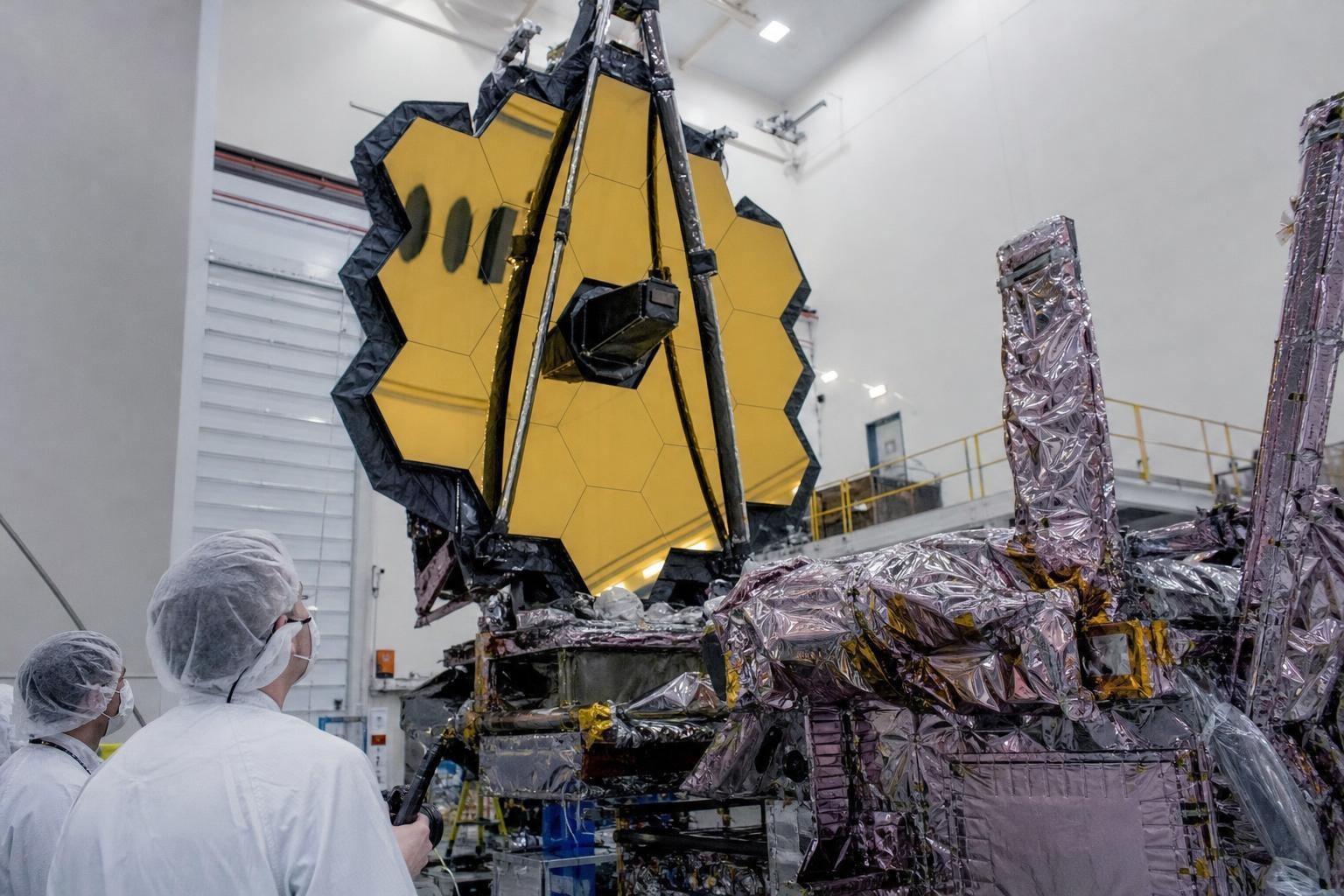
Astronomers are buzzing about a galaxy that blazed to life when the Universe was only about 280 million years old. Detected by the James Webb Space Telescope, this object appears startlingly bright, punching above the limits of what most cosmological models say should be possible. “It’s like finding a bonfire in a landscape where we expected only sparks,” said one observer, distilling the mood across the community.
A window into the cosmic dawn
At such early times, light stretches with the expanding Universe, pushing galaxies into extreme redshifts that are invisible to traditional telescopes. That’s where Webb’s infrared eyes come in, tuned to catch this elongated glow from the first cosmic structures. The data suggest an object so luminous and so compact that it rewrites our sense of how fast complexity can appear after the Big Bang.
Brighter than the playbook allows
Standard models predict that the first galaxies should be modest, with star-formation throttled by limited fuel and fierce feedback from newborn stars. Yet the observed luminosity implies an intense burst of formation, and perhaps a population of unusually massive and metal-poor stars burning hot and blue. “If the numbers hold, we’re staring at a rule-breaker,” as one researcher put it in a candid remark.
What could make an infant galaxy glow so much?
There are several scenarios that could explain the signal’s punch without tearing up physics from scratch:
- A top-heavy stellar initial mass function, favoring enormous, short-lived stars that flood space with UV light.
- Extremely low metallicity, which lets stars burn hotter and shine more efficiently.
- A dust-poor, compact starburst, concentrating formation into a dense core that acts like a cosmic spotlight.
- Subtle gravitational lensing, where intervening matter adds a quiet magnification that makes the source seem brighter.
- An actively feeding black hole adding extra light atop the stellar glow.
How Webb pulled this off
Webb’s NIRCam imager and NIRSpec spectrograph are purpose-built for this era, isolating faint galaxies behind curtains of time and distance. Photometric redshifts provide the first flag, using color breaks from the Lyman limit to estimate distance. Spectroscopy then nails the redshift, turning a candidate into a benchmark. Even with these tools, analysts must fight biases, subtract tricky backgrounds, and run exhaustive checks to guard against mirages.
The models feel the heat
If this brightness truly reflects raw starlight, then early galaxy growth was more efficient than our best simulations allow. That would ripple into reionization timelines, the pace of early metal enrichment, and the birth-mass spectrum of stars in pristine gas. “Our recipes for feedback and cooling may be undercooked,” joked one theorist, hinting that nature took a more aggressive route to structure formation.
Ruling out cosmic tricks
Astronomers now chase three checks above all: precise spectra, sharper imaging to map the source’s shape, and mass models of any foreground lenses along the line of sight. A tiny amount of lensing could nudge the brightness upward without breaking physical limits. But if lensing is weak, the result points firmly to intrinsic power—compact, young, and extraordinarily efficient at making stars.
What this means for the first stars
The object’s color and intensity hint at extremely blue, perhaps metal-poor populations, nudging us toward the long-hypothesized Population III regime. While definitive Pop III signatures remain elusive, even a tilt toward hotter, larger stars helps reconcile the startling flux with known physics. In that reading, early galaxies weren’t just flickers—they were lean, high-octane engines.
The road ahead
More Webb time, deeper exposures, and careful spectroscopy will tell us whether this is a rare outlier or the tip of a much larger iceberg. If many such objects exist, our cosmic timeline gets a shake-up: denser early starfields, faster reionization, and a Universe that learned to build light in a hurry. “Every fresh dataset feels like opening a sealed letter from the primordial past,” said one astronomer, “and the message keeps getting bolder.”
For now, the safe bet is caution and curiosity in equal measure. The signal is real, the implications are big, and the next rounds of analysis will either tame the surprise—or reveal that the dawn of galaxies was brighter, denser, and more ambitious than we ever dared to model.
