
According to a recent study, merely gazing at a dark red light for only three minutes daily could markedly enhance vision among individuals over 40.
Our retinas contain two types of photoreceptor cells known as rods and cones. The former enable peripheral vision and help us see in low-light conditions. Cones, on the other hand, provide the capacity to perceive colors.
To function, these two types of photoreceptor cells draw their energy from a compound called adenosine triphosphate (ATP) produced by their mitochondria. However, from around the age of 40, our mitochondria begin to become less efficient. As a result, our cells receive less energy. That’s why nearly all humans are prone to some degree of vision loss as they age.
That said, it has previously been suggested that long-wavelength light spanning 650 to 1000 nanometers (deep red) could enhance mitochondrial performance. A team of researchers from the Institute of Ophthalmology at University College London (UCL) therefore conducted an experiment to test this idea. To do so, 24 volunteers aged 28 to 72 were recruited.
Fixating on a Deep Red LED for Three Minutes
In the framework of this study, all participants first underwent a series of tests aimed at determining how well their rods and cones were functioning.
The sensitivity of the rods was first examined by asking participants to try to detect faint light signals in the dark. Next, cone function was determined via a color-contrast test. Roughly, subjects were asked to identify colored letters against a background of a very similar hue.
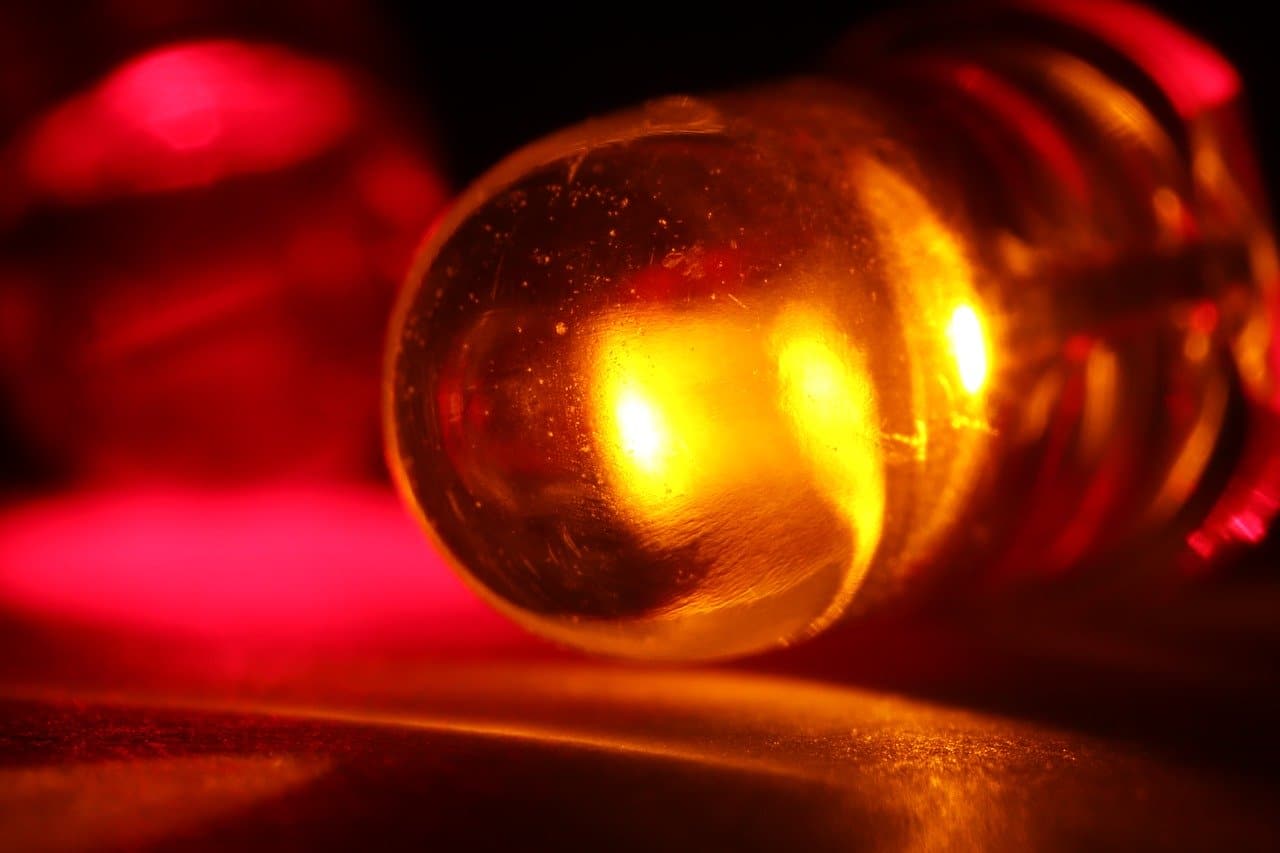
Once these data were collected, each participant was then instructed to fixate on a small LED emitting a deep red light (wavelength of 670 nanometers) three minutes per day for two weeks. It should be noted that since our eyelids do not filter light at these wavelengths, all subjects could fixate the small lamp with their eyes closed.
Improved Color Perception
At the end of this experience, all participants subsequently retook the initial tests to determine the sensitivity of their photoreceptor cells. According to the study, all subjects over 40 exhibited a 22% average improvement in cone function.
According to the study, color sensitivity was particularly pronounced at the blue end of the spectrum. The researchers were not surprised, as this range of color vision is especially affected by mitochondrial decline.
It should be noted that the sensitivity of the rods also improved in these same subjects, but to a lesser extent.
“Our study shows that it is possible to significantly improve vision in older people by using brief exposures to certain wavelengths of light capable of recharging the declining energy system of retinal cells,” notes Glen Jeffrey.
The results of this study therefore appear very promising, particularly since the technology used in these studies remains affordable. “Our devices cost us £12 (about €13) to manufacture, so the technology is very accessible to the public,” concludes the researcher.
Source
