
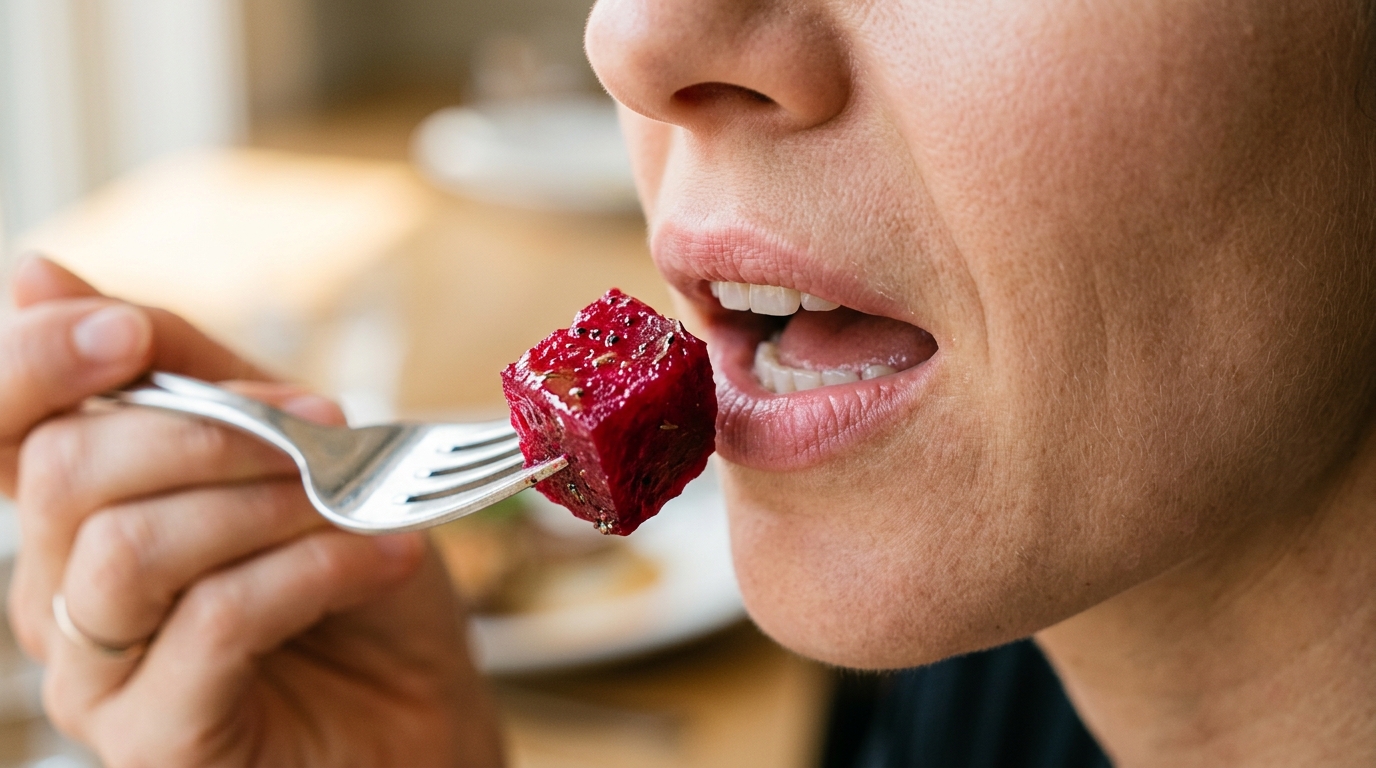
A kidney is a bit like an underground river: as long as the water keeps flowing freely, all is well. But when a little sand starts to accumulate in the same spot year after year, a tiny pebble forms, then grows, until it becomes a true obstacle. This is exactly what happens, quietly, in millions of French people who think they are doing right by piling spinach, beets, and almonds onto their plates. These foods indeed carry a solid reputation as superfoods—rich in fiber, antioxidants, and minerals. Yet they conceal a substance less familiar to the general public, capable of turning a good nutritional intention into a genuine kidney stone.
- The oxalates in spinach, beets and almonds bind to urinary calcium to form crystals responsible for around 80% of kidney stones
- Removing dairy reduces the intestinal calcium available to trap oxalates, increasing the risk of stones; a normal-calcium diet halves the recurrence risk
- Consuming calcium and oxalates at the same meal reduces intestinal absorption of oxalates by 30 to 50%, alongside good hydration and moderate salt intake
- The Invisible Trap of Oxalate-Rich Foods
- Why the “Healthy” Habit Worsens the Problem
- Calcium, an Unforeseen Ally Against Kidney Stones
The Invisible Trap of Oxalate-Rich Foods
Spinach, beets, almonds, but also walnuts and dark chocolate share a discreet common feature: they are naturally high in oxalates, compounds present in many plants. After ingestion, these oxalates pass into the intestine where they can be absorbed and filtered by the kidneys. The problem arises when these oxalates encounter the calcium present in urine: they then form calcium oxalate crystals, which alone account for about 80% of all kidney stones. A French study analyzing more than 51,000 stones confirmed this figure, with nearly 72% of stones composed of this substance. In France, kidney stone disease would affect between 10 and 12% of the population, and its frequency has been rising for roughly fifty years, across industrialized countries. Men, between 20 and 60 years old, are twice as affected as women, a detail that still puzzles researchers.
Why the “Healthy” Habit Worsens the Problem
Here is the paradox that sits at the heart of this story: in striving to adopt a healthier diet, many French people have also taken to reducing, or even eliminating, dairy products from their daily routine. Alleged intolerance, distrust of animal fats, or mere fashion—there are many reasons. Yet this removal of dietary calcium backfires on the kidneys. In the intestine, calcium’s role is to bind oxalic acid to form insoluble complexes, eliminated directly in the stool, never reaching the bloodstream or the urine. With less calcium in the diet, there are more free oxalates heading toward the kidneys. A five-year trial among men prone to recurrence clearly demonstrated that among those following a low-calcium diet, nearly four out of ten developed stones again, versus about one in five in the group that maintained a normal calcium intake. This result, confirmed by the landmark Borghi study published in 2002, challenged conventional wisdom by showing that a normal-calcium diet halves the risk of recurrence compared with strict calcium restriction.
Calcium, an Unforeseen Ally Against Kidney Stones
The remedy is actually almost deceptively simple. Adding a dairy product to the same meal allows calcium to bind oxalates in the intestine: they pass into the stools rather than heading toward the kidneys. This act, as mundane as a yogurt beside a spinach salad or a bit of cheese accompanying a handful of almonds, reduces the intestinal absorption of oxalates by 30 to 50%. The key is to consume calcium and oxalates during the same meal, and not at different times of the day, so that the chemical encounter occurs where it is useful—in the intestine. The recommendations to prevent recurrences rest on three simple pillars: drink enough to produce more than two litres of urine per day, maintain a normal calcium intake of about 800 to 1,200 mg per day, and limit salt to around 4 to 5 grams per day. It is also interesting to note that a recent American study, using connected hydration bottles intended to encourage more drinking, did not show a significant effect on recurrences despite a real increase in water consumption, evidence that stone prevention is not reducible to a mere hydration reflex. Another line of research challenging established certainty: studies published in the journal PNAS have recently revealed live bacteria inside calcium oxalate stones, suggesting their formation may not be as purely chemical as previously thought.
Ultimately, this tale of kidney stones echoes a fairly universal nutrition lesson: no single food is inherently good or bad in isolation; it is all about balance and combinations. Rather than banning dairy in the name of a supposedly healthier diet, it is wiser to invite them to the table with spinach and almonds, where they play a discreet but incredibly effective protective role.
