
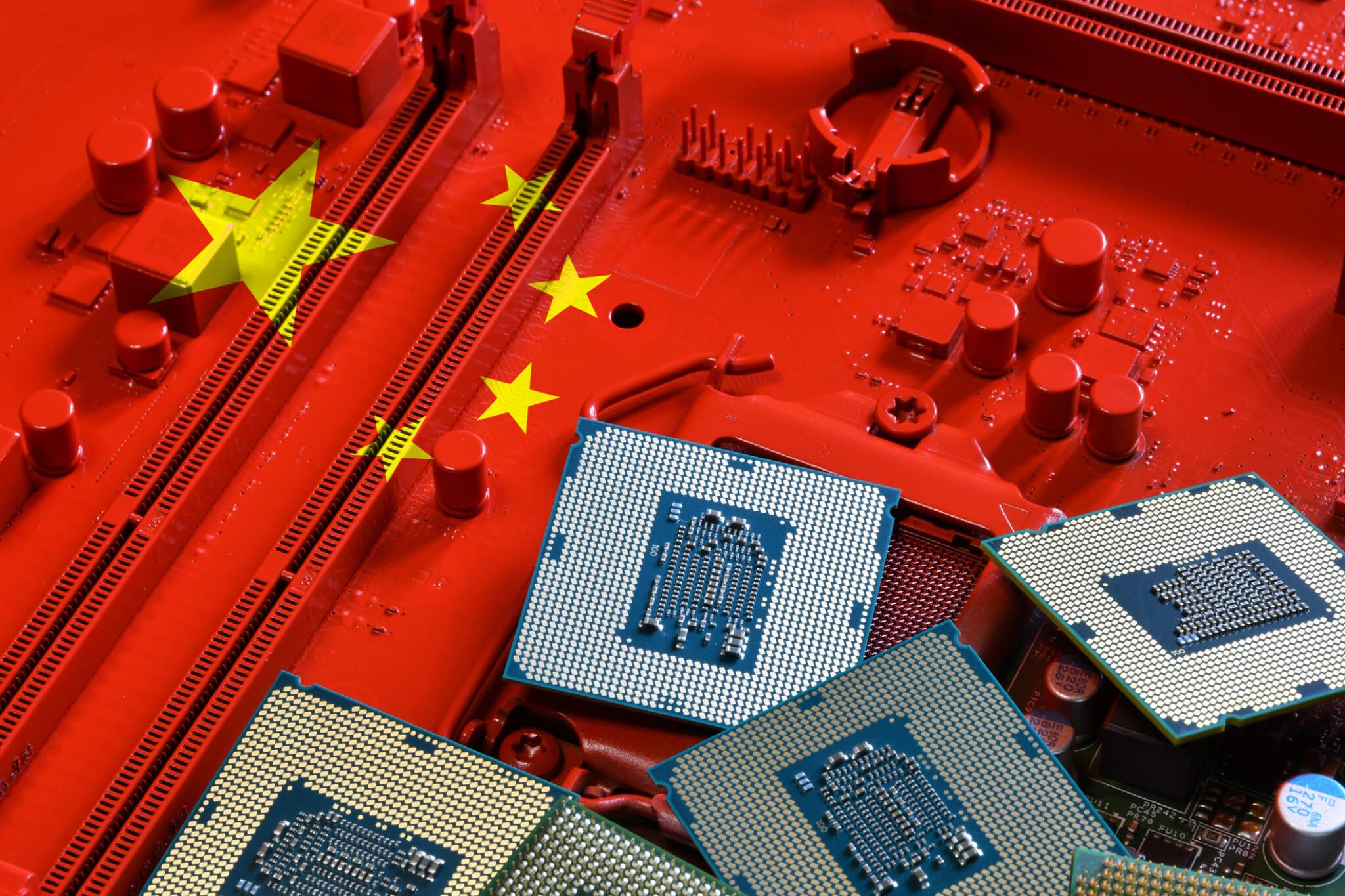
Recently, a media outlet revealed a major breakthrough in China’s electronics fabrication. Shanghai Yuliangsheng Technology announced the industrial production of deep ultraviolet (DUV) immersion lithography machines. The news has not failed to cause a true seismic shift in global markets.
China to Produce DUV Lithography Machines!
First, recall that immersion lithography machines in deep ultraviolet (DUV) are used to etch microscopic circuits onto silicon wafers to create processors or memory chips. These complex machines initially allowed the manufacturing of 28-nanometer-class chips, but thanks to repeated exposure techniques, it is now possible to obtain engravings of 7 or even 5 nanometers.
Up until now, the Dutch company ASML held a near-global monopoly on producing these machines. However, this may not last much longer, as revealed by an article from The Information on July 27, 2026. The startup Shanghai Yuliangsheng Technology put into industrial production of DUV lithography machines, signaling a very serious step forward in the pursuit of Chinese technological self-sufficiency.
Panic on Global Markets
The announcement sent shockwaves through global markets at a time when investors had begun to view tech and AI valuations as excessive. Moreover, the fear of China permanently closing its market to Western suppliers triggered a mass sell-off.
In fact, China represented 16% of ASML’s revenues. On the eve of the end of its monopoly, the company experienced a roughly 7–8% drop on July 27. U.S.-based Nvidia and AMD also declined by about 5%, following concerns about Chinese autonomous and cheaper AI chips arriving on the market. Directly threatened on the global memory chip market, South Korean Samsung and SK Hynix fell by 12–13%. Lastly, already fragile against Chinese flash memory manufacturers, Japan’s Kioxia saw a sharp plunge (18%).
A Not-So-Alarming Announcement?
According to certain observers and analysts like JPMorgan, Western leaders should not panic. Indeed, there are several reasons to downplay the Chinese announcement. For example, Shanghai Yuliangsheng plans to produce five DUV machines by the end of 2026 and about twenty in 2027. By comparison, ASML delivered 131 machines in 2025.
Moreover, the Chinese startup says it has mastered DUV, but the level of expertise would be on par with ASML in 2008. The Dutch company today masters the production of lithography machines in the extreme ultraviolet (EUV), enabling engravings of less than 3 nanometers. Put differently, Shanghai Yuliangsheng is for now unable to manufacture machines capable of producing the most advanced chips. Additionally, chip fabrication requires other chemical components and tools (resins, metrology) for which China still depends on foreign suppliers.
Thus, it seems global markets overreacted to the Chinese announcement. Nevertheless, it remains a major geopolitical turning point. In fact, the technological barriers imposed by the West did not stop China but accelerated the development of a wholly independent domestic chip industry.
