
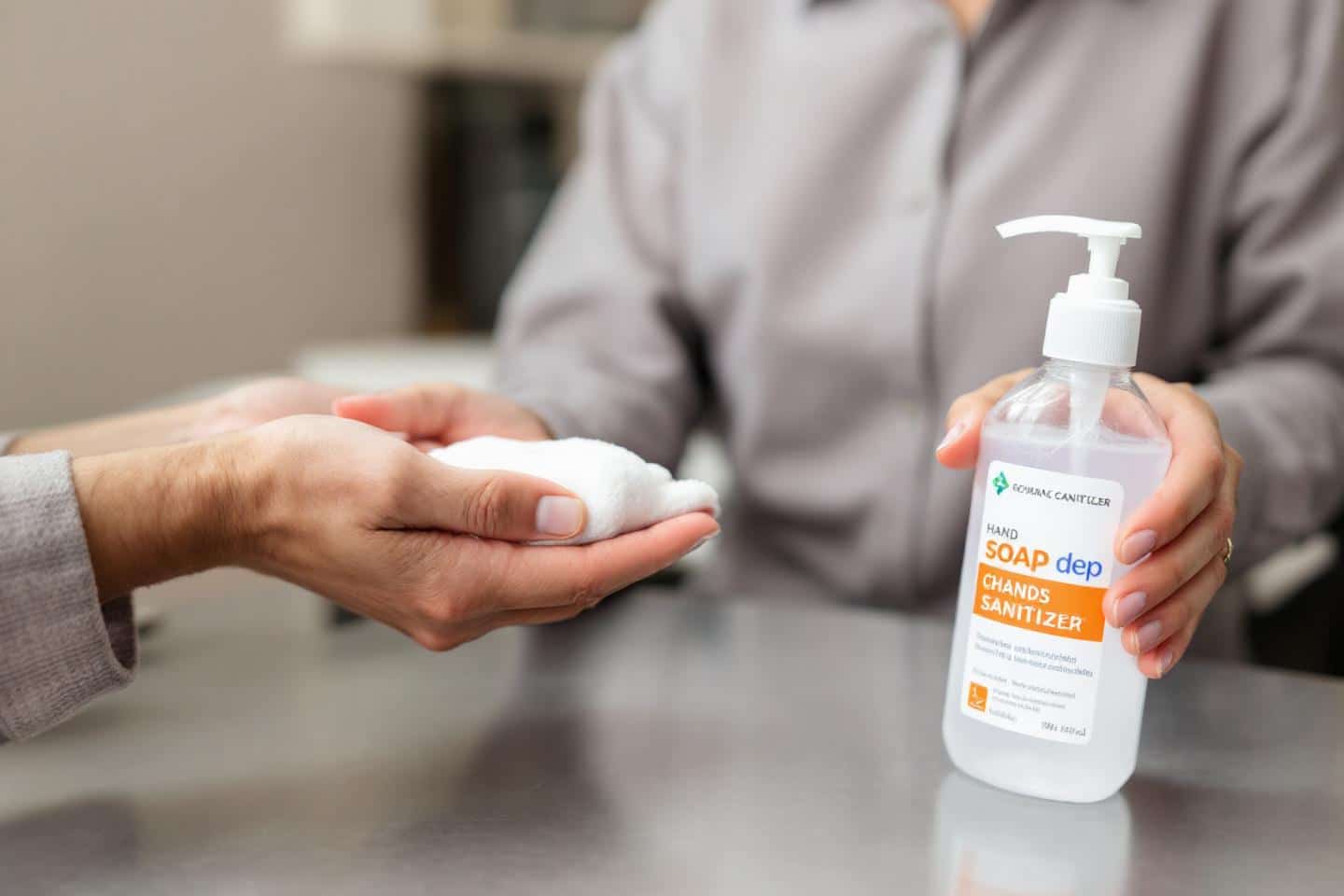
As winter approaches and the season of colds and viruses reemerges in France, the question becomes all the more relevant: should one rely on traditional soap or yield to the reflex of alcohol-based gel? Behind these two gestures, a quiet reality quietly asserts itself: between practicality and effectiveness, not all means are equal. The benches of science, far from the clamor of habits, reveal differences that can be surprising. Ready to rethink your routines?
Hand washing: ordinary gestures under close scrutiny
A daily ritual turned into a global issue
Washing hands is an act that everyone repeats almost mechanically. Yet this simple reflex has become, through health crises, one of the fundamental pillars of the fight against infections. In transit, at the office, at school or at home, these few seconds spent rubbing the palms have established themselves as a salutary and universal measure.
The emergence of alcohol-based gel: fad or genuine alternative?
Alongside, alcohol-based gel has insinuated itself everywhere: in our bags, on countertops, near entry doors. Praised for its speed and mobility, it presents itself as the champion of modern times, sometimes even displacing traditional soap from the bottom of the sink. But behind this enthusiasm, the question of its real effectiveness continues to challenge specialists.
Science under the magnifying glass: when viruses reveal their weaknesses
How soap demolishes the structure of microbes
Under a seemingly innocuous exterior, soap hides formidable power: it attacks directly the envelopes of viruses and the membranes of bacteria. In a few seconds, its molecules insinuate themselves and fragment this lipid shell, literally causing the microbe to collapse. This active cleansing also removes dirt, sweat and substances that could hide dangerous pathogens.
Alcohol gel: a formidable adversary, but not infallible
Alcohol-based gel works differently. Its action rests on a high concentration of alcohol, which neutralizes many viruses and bacteria. This weapon is powerful but limited: some germs resist while organic matter (sweat, grease, dirt) can significantly reduce its effectiveness. The result: gel does not wash, it disinfects, but leaves residues still present on the skin.
The situations where soap beats all cards
From nursery to kitchen: residues that only soap can make disappear
Cooking, DIY, caring for children or gardening expose us to a multitude of invisible dirt and hard-to-eliminate traces. In these situations, only washing with water and soap manages to remove ingrained or greasy stains. In nurseries, hospitals or homes, this gesture guarantees truly clean hands, free as much of microbes as of stubborn dirt.
Water and soap: the winning tandem against the toughest viruses
The combination of water (to rinse) and soap (to lift and disintegrate) creates a remarkable synergistic effect. Even facing particularly resistant viruses, this duo remains the most reliable solution, because it cleans, disinfects and eliminates almost all undesirables, visible or not. This is why, nearly three years after the last epidemic wave, soap remains recommended by public hygiene protocols in France.
Hygiene on the go: can we really rely on gel?
The limits of gel use in the “real life”
In daily life, it is impossible to carry a sink and soap wherever you go. Alcohol-based gel offers a handy emergency solution in transit, after touching a stair railing or handling money. However, its effectiveness decreases considerably on greasy, sticky or visibly dirty hands: in these situations, only traditional washing truly fits.
Common mistakes that sabotage the effectiveness of alcohol gel
Too often, one squeezes a small amount of gel, rubs for barely ten seconds… and considers the hands clean. Yet, to be fully effective, the product must coat the entire surface of the hands and dry completely in the air. In trying to save a few seconds, one risks seriously compromising the protection expected! So proceed with caution: the gesture alone is not enough, especially when hands are dirty or after using the toilet.
Myths and realities under the magnifying glass: what studies really say
Disinfection and cleanliness: false beliefs about gel
Many misconceptions surround hydroalcoholic gel. Contrary to some beliefs, it does not eliminate traces of paint, garden mud or the grease from a cooked dish. Its effectiveness, often perceived as absolute, actually depends on the context and proper use. Hand cleansing with soap is not merely disinfection: it combines visible cleanliness with the elimination of pathogens.
Skin matters: risks, allergies, and tolerance to soap
Some fear using soap too often because it might dry out or irritate the skin. Yet, most modern soaps are formulated to minimize skin reactions. A few simple recommendations: opt for a mild soap, rinse well and dry gently. As for gel, excessive application can weaken the skin barrier, potentially causing redness or itching, especially in winter. Being attentive to how your skin responds remains, in any case, a prudent approach.
Taking action: choosing the right gesture in daily lifeWhich moments absolutely require soap washing
Certain situations call for particular vigilance: before preparing or consuming food, after using the toilet, after handling waste, touching animals, or returning from the garden… For all these moments, the priority remains clear: water and soap first. It is the foundation of rigorous daily hygiene, where gel gel cannot substitute a full wash.
Tips and good practices to make effectiveness simple
For optimal hand hygiene, favor a wash of at least 30 seconds, paying particular attention to the backs of the hands, the fingertips and under the nails. Keep a gentle soap within reach, ideally one that is over-rich if your skin tends to dry out. Gel-based hand sanitizer retains its relevance in situations where water is inaccessible: public transport, outings, queues… provided you apply it meticulously, without rushing.
Scientific reasoning at the service of our hygiene
Key evidence revisited: why soap keeps the edge
At the end of this analysis, one thing is evident: soap remains, according to scientific data and official recommendations, the most comprehensive method for freeing hands from impurities and infectious agents. Its dual action – mechanical and chemical – makes it the ideal daily tool, surpassing the simple disinfection offered by alcohol gel.
Towards an informed routine: tips and perspectives for better daily protection
Between the practicality of gel and the proven effectiveness of soap, the essential task is to adapt practices to each context: prioritize washing with soap as soon as possible and reserve gel-based hand sanitizer for emergency situations. In this autumn period, as virus circulation intensifies, revising hygiene habits to align with scientific recommendations means adopting a thoughtful approach to collective protection.
And if this simple gesture, repeated several times a day, could be our first line of defense against seasonal infections? Keeping these scientific principles in mind helps us face winter with greater serenity, balancing effectiveness and simplicity in our daily hygiene routines.
